Lake Garda Weather For Boat Trips: Wind, Water Temperature And Season Month By Month
Lake Garda sits far enough south to feel Mediterranean in July and far enough north to catch alpine winds every afternoon, and both facts shape every boat trip on the water. This guide sets out the month by month numbers, the wind cycle that drives the daily schedule, and what a booking means when the sky changes.
Short answer
Boats run on Lake Garda from early April to early October at full frequency, with the summer ferry timetable spanning 16 May to 4 October. July averages a 29.2 °C maximum at the nearest national station, the water reaches about 26.6 °C in August, and afternoon winds pick up reliably around noon.
Lake Garda weather is the single biggest variable in any plan for the water, and it behaves differently from the weather a short drive inland. The lake sits at the foot of the Alps, so it gets hot, settled summers, a genuine wind cycle that repeats almost daily, and a boating season with hard edges at each end. The public ferry timetable, the private operators and the swimming season all follow that calendar, and a traveller who understands it can pick a month, a departure time and a boat format that match each other.
The temperature and rainfall figures in this guide come from the long-term averages recorded at Verona, the nearest national station of the Italian met service, about 25 km from the lake. Lakeside towns run slightly milder than Verona in both directions, so treat the numbers as a reliable baseline rather than a street-level forecast. Everything about wind, water temperature, timetables and cancellation terms below is drawn from operator pages, regional law and the national met record.
What Is The Weather Like For A Boat Trip On Lake Garda?
Expect warm, dry summers with a daily breeze, mild shoulder seasons and a winter when almost nothing on the water runs. July and August average 29.2 °C and 28.8 °C maximum at Verona with only 5.5 and 5.8 rain days, while April still reaches 17.2 °C but on 8.9 rain days. The lake rarely turns violent, but the wind changes character twice a day, every day.
The shape of the lake explains most of the weather. Garda is 54 km long and lies north to south, funnelled between mountain walls, which is why the wind blows from the north in the morning and swings to the south after noon on almost every fine day. The southern basin around Sirmione, Peschiera and Desenzano is wide and relatively sheltered, so short cruises there run in conditions that would cancel a sailboat in the north. The northern basin around Malcesine, Limone and Riva is narrower, windier and cooler at the edges of the day.
For a first boat trip, the geography argues for starting small and short. The 25-minute peninsula cruise from Sirmione, rated 4.7 from 3,495 reviews and priced from $13.77 per person, loops the headland past the Grotte di Catullo and the thermal spring and is over before an afternoon breeze has time to build. Because it is short, cheap and loops close to shore, it is the format least exposed to a forecast that changes.
A longer day on the water rewards a different kind of planning. Half-day and full-day formats cross open water, so the departure hour matters as much as the month, and the sections below break both down. If you have never taken a boat on the lake before, the guide to what a Lake Garda boat ride involves covers the practical side, from boarding to what to bring.
Which Months Do The Boats Run?
The core boating season runs from early April to early October, with the full summer ferry timetable spanning 16 May to 4 October 2026 and a reduced spring service from 1 April to 15 May. Private tours follow a similar arc, the Isola del Garda season runs 29 March to October, and by early November the water is quiet.
The public ferry network is the clearest calendar on the lake because it publishes its windows. The operator lists two timetables for 2026: a spring sheet from 1 April to 15 May, and the full summer sheet from 16 May to 4 October, when sailings reach their maximum frequency across all 28 landing stages. After 4 October the service drops to the reduced autumn and winter structure, and the northern fast services thin out first. The operator's own tickets and timetables page carries the current sheets.
| Service or season anchor | 2026 window | Notes |
|---|---|---|
| Navigazione Laghi spring timetable | 1 April to 15 May | Reduced frequency before the summer sheet |
| Navigazione Laghi summer timetable | 16 May to 4 October | Maximum frequency, all landing stages |
| Isola del Garda guided visits | 29 March to October | No visits on Saturdays or Mondays, booking required |
| Funivia Malcesine to Monte Baldo | 4 April to 1 November | Last ascent 18:00, or 16:00 from 5 October |
| Bardolino wine festival | 1 to 5 October | Lakefront stands open through the evening |
Skippered tours, sunset cruises and private charters publish their own calendars on their listings, and most align with the ferry arc: running daily from late spring to early autumn, with reduced or weekend-only departures in the shoulder months. A half-day cruise with lunch from Peschiera del Garda, rated 4.4 from 849 reviews and from $72.30 per person, is a good example of a summer-season product that pairs a long spell on the water with a meal, which makes the weather matter less than it would on an open speedboat.
The shoulder months deserve a note of caution and a note of praise. April and October can deliver beautiful, empty days on the water, but the schedule is thinner and the water is cold, so check the departure days before building a day around a specific tour. The deep winter is a different lake altogether, and the guide to Lake Garda in winter covers what still runs when the season closes.
How Warm Is It Month By Month?
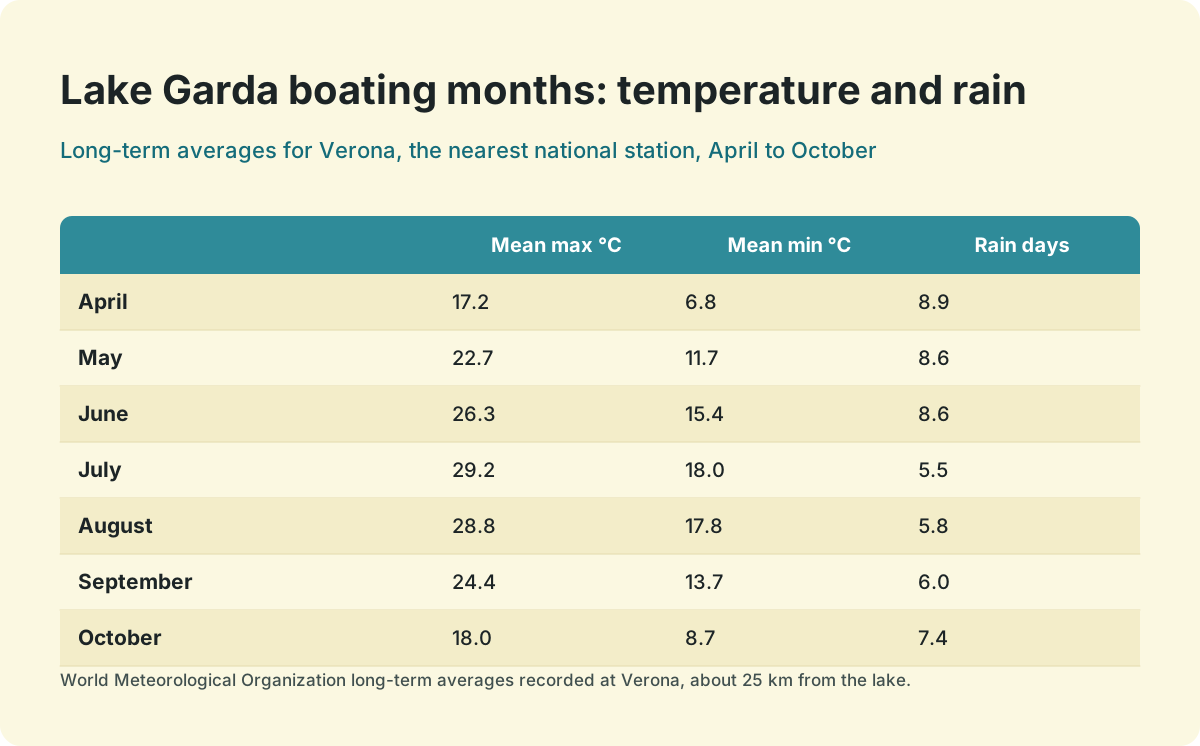
The boating months warm from a 17.2 °C April average maximum to 29.2 °C in July, then cool through 24.4 °C in September to 18.0 °C in October. Nights stay above 10 °C only from June to September. Rain falls on 8 to 9 days a month in April and October but only 5 to 6 days in high summer.
The table below is the long-term record for Verona, the nearest national station of the Italian met service, as published by the World Meteorological Organization. The lakeshore runs a degree or two milder than these figures in both summer and winter, but the pattern is the lake's pattern.
| Month | Mean maximum °C | Mean minimum °C | Rain mm | Rain days |
|---|---|---|---|---|
| January | 6.1 | -1.2 | 50.9 | 6.8 |
| February | 8.9 | 0.1 | 43.3 | 5.1 |
| March | 13.4 | 3.4 | 48.7 | 6.0 |
| April | 17.2 | 6.8 | 70.4 | 8.9 |
| May | 22.7 | 11.7 | 74.2 | 8.6 |
| June | 26.3 | 15.4 | 87.2 | 8.6 |
| July | 29.2 | 18.0 | 62.6 | 5.5 |
| August | 28.8 | 17.8 | 81.7 | 5.8 |
| September | 24.4 | 13.7 | 76.2 | 6.0 |
| October | 18.0 | 8.7 | 91.0 | 7.4 |
| November | 11.0 | 3.2 | 64.8 | 7.1 |
| December | 6.7 | -0.4 | 52.5 | 6.2 |
Read for a boat trip, the numbers say three things. June to August is genuinely hot, with nights that stay warm enough for an evening cruise without a jacket. May and September are the comfortable middle, warm in the afternoon and cool at the edges. April and October are shirt-sleeve months at midday that turn crisp by the time a sunset cruise returns to port, so layers matter more than the daily maximum suggests.
How Warm Is The Water?
The lake surface averages about 13.98 °C in February and about 26.62 °C in August, its warmest and coolest long-term months, so the swimming season off a boat runs roughly from late June to mid September. By early October the water is cooling fast, and a swim stop is a brief dip rather than a bath.
Those two figures are the ten-year February and August averages published by the blended dataset on SeaTemperatures.net, and they frame the year. In practice, the water becomes pleasant for swimming sometime in late June, peaks through July and August, and holds enough warmth into the first half of September that a swim stop on a half-day tour still works. Before June, swimmers are brave rather than comfortable, and the guides on swimming in Lake Garda cover the beaches, the bays and the season in more detail.
Water temperature is only half the swim question, though. The other half is where a boat can legally stop and where the water is clean, and both change with the weather. Heavy rain in the surrounding mountains raises the lake level and can push debris and runoff into the swimming bays for a day or two afterwards, which is why a swim stop after a storm is a judgement an operator makes on the day, not a guarantee in a listing.
Sunset matters here too, because a swim stop is usually the warmest part of a cruise and the return leg often lands near dusk. At Sirmione in 2026, sunset falls at 18:31 on 21 March, 20:24 on 1 May, 21:09 on 21 June, 20:25 on 15 August, 19:28 on 15 September and 18:32 on 15 October. The full picture, including how late you can sail in each month, is in sunset times on Lake Garda.
What Do The Daily Winds Do To The Water?
Two winds rule the lake: the Pelèr blows from the north from about 2 a.m. until noon, then the Ora blows from the south from around noon until sunset, sometimes above 10 m/s in the north. This cycle repeats almost daily in fine weather, so the morning is flat and the afternoon is choppy, especially north of Malcesine.
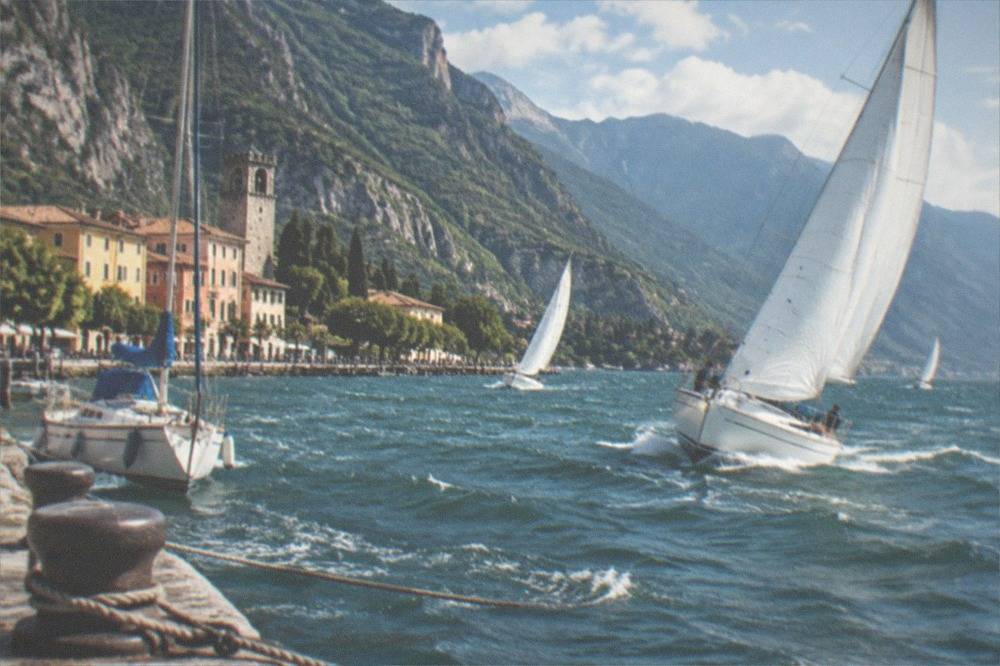
The pattern is documented by the regional tourism board's guide to the lake's winds, and every skipper on Garda plans around it. The Pelèr fills the northern basin first thing in the morning, when the water is at its calmest and clearest. Around midday the wind swings and the Ora builds from the south, funnelling through the narrow northern reaches where the Venturi effect can push it past 10 m/s and raise real waves. Two further winds matter less often: the Balinot, a descending north-west wind that can exceed 20 m/s and raise higher waves than the Pelèr, and the Vinessa, a south-east wind tied to Adriatic weather that can persist for two or three days.
| Time of day | Wind | What it does to the water | Best format for it |
|---|---|---|---|
| Early morning to noon | Pelèr, from the north | Flattest water of the day, clearest light | Photography cruises, private tours, swim stops |
| Noon to sunset | Ora, from the south | Building chop, strongest in the north | Sailing trips, which use the wind, and short loops close to shore |
| After a front | Vinessa, from the south-east | Two or three days of persistent blow | Sheltered southern-basin cruises only |
| Unstable weather | Balinot, from the north-west | Sudden steep waves in the north | Wait it out, or sail the south instead |
The wind cycle is why sailing has its own logic here. A two-hour panoramic cruise on a historic sailboat from Malcesine, rated 4.2 from 335 reviews and from $45.90 per person, is built around the Ora: it wants the afternoon breeze, and a flat calm day is a disappointment rather than a blessing. Motorboat tours and swim stops want the opposite, the glassy Pelèr hours before noon.
For travellers choosing a departure time rather than a format, the guide to the best time of day for a Lake Garda boat trip walks through the trade-offs in full: morning for calm and photographs, late afternoon for light and warmth, the golden hour for a sunset cruise with a glass of wine. The one rule worth carrying everywhere is that the north gets rougher in the afternoon, so if your tolerance for chop is low, book a northern departure before noon or a southern one at any hour.
How Much Rain Should You Plan For?
Rain falls on 8 to 9 days a month in April, May and June, easing to 5.5 days in July, then rising again to 7.4 days in October. Summer rain tends to arrive as short afternoon or evening thunderstorms rather than all-day drizzle, so a wet forecast rarely means a written-off day, just a wet hour.
The monthly totals in the table above tell the honest story: no month in the boating season is dry, and no month is a washout. June carries the highest total rainfall of the whole year at 87.2 mm, but it falls in concentrated showers between long sunny spells, and the lake rarely stays grey for a full day in high summer. October's 91.0 mm arrives differently, as frontal rain that can settle in for a morning, which is one reason the month divides opinion among regulars.
Thunderstorms deserve a paragraph of respect. When the Alps build clouds on a hot afternoon, the storm can arrive over the northern basin quickly, and every skippered operator on the lake watches for it. A responsible operator will delay a departure, shorten a route or move a swim stop rather than sail into one, and a self-drive renter should do the same. The daily wind cycle helps here as a forecasting tool: a morning that fails to produce the usual Pelèr, or an afternoon that goes unnaturally still, often means the normal pattern has broken and something bigger is coming.
For the shoulder months, the guide to Lake Garda in October is the detailed companion to this one, covering what still runs, what the light is like and how the month compares with the summer peak. The practical planning rule for rain anywhere in the season is simple: book the boat for the day you want, keep the cancellation terms open, and let the operator make the weather call on the water.
What Happens To A Booking If The Weather Turns?
Most listings on the lake allow a full refund if you cancel more than 24 hours before departure, and if the operator cancels for weather, the price you paid is refunded. Some products are final sale, so the cancellation section of each listing is the part worth reading before booking, not after.
The standard terms that govern most bookable tours work this way: cancel more than 24 hours ahead and you receive a full refund, cancel inside 24 hours or fail to show and you do not, and if the supplier cancels because conditions make the trip impossible or unsafe, the booking price is refunded. Weather is explicitly among the circumstances an operator may invoke. The exact wording varies by product, and a minority of listings are marked final sale, so the cancellation section on the live listing is the authoritative version for the tour you are considering.
Operators on the lake handle weather calls in practice rather than in theory. A small-craft cruise around the Sirmione peninsula can run in conditions that would stop a sailboat in the north, because the southern basin is sheltered and the route stays close to shore. A skippered sunset cruise may shift its departure time by half an hour to sit ahead of a front. A full-day private charter has the most exposure of all, and skippers will usually propose an alternative date or a shortened route before they cancel outright. None of this is a promise any specific operator will make, but it is how the system works, and asking at booking is free.
The cheapest way to keep flexibility is to book the tours that already carry it. The 25-minute peninsula cruise from Sirmione, from $13.77 per person, shows free cancellation on its listing, so a forecast that turns overnight costs nothing.
One planning habit ties this section to the rest of the guide: book the weather-exposed parts of your itinerary early in your stay, not on your last day. If a storm takes out Wednesday, you still have Thursday. Travellers who leave the boat trip to the final afternoon have no second chance, and the operator has no slot to move you to.
Which Month Should You Aim For?
Late June to early September is the safest answer for warmth, water temperature and daily departures, but late May and mid September are the connoisseur's picks: nearly the same warmth, fewer crowds, and the full summer timetable still running. April and October suit travellers who want the lake quiet and do not mind cool water.
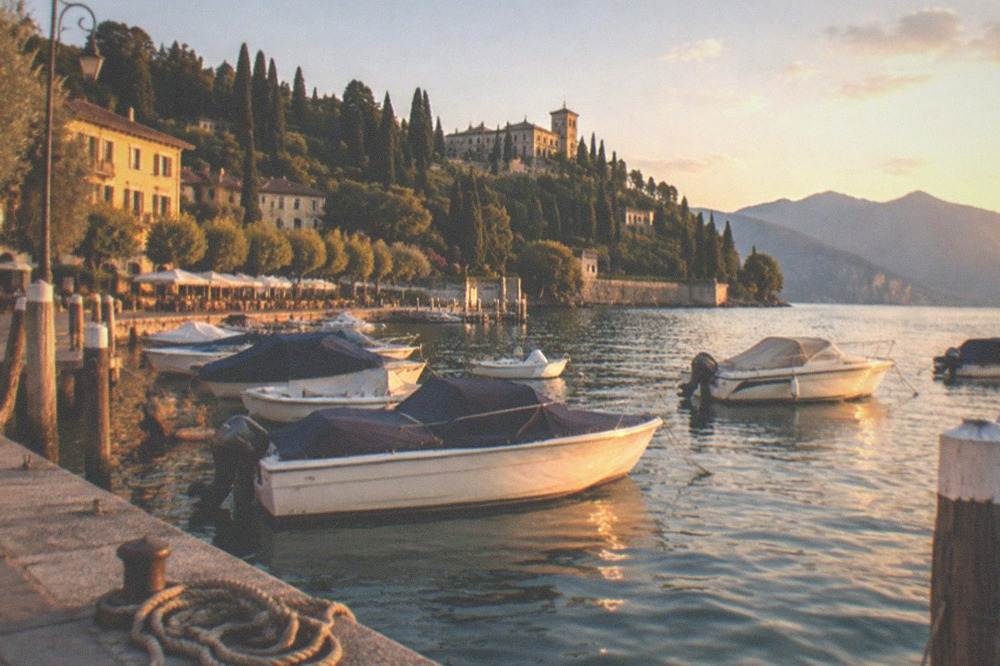
The honest ranking depends on what the trip is for. For a family swim-stop day, aim at July or August, when the water is at its warmest and the afternoon breeze is a relief rather than a nuisance. For a sailing trip or a photography cruise, aim at the shoulder months, when the light is softer and the moorings are emptier. For a sunset aperitivo cruise, any month from May to September works, because the sunset simply slides from 20:24 on 1 May to 19:28 on 15 September and the operator adjusts the departure to follow it.
Crowding tracks the German school holidays as much as the weather, and the Bavarian summer holidays run from 3 August to 14 September 2026, which is why the first half of September stays busier than its temperatures alone would suggest. Late May and the first week of July sit in the gaps. The month by month comparison, including the events that fill the lake in early September, is in what month is best to visit Lake Garda.
Whatever month you choose, the format should match the forecast, and this site exists to help with exactly that. Lake Garda Boat Tours covers every way out on the water, from the shared loops around Sirmione to private charters and sunset sailings, and the wind, water and season numbers in this guide apply to all of them.
Common Questions About Lake Garda Weather For Boat Trips
What Is The Weather Like For A Boat Trip On Lake Garda?
Hot, mostly dry summers with a reliable daily breeze, and mild shoulder seasons. July averages a 29.2 °C maximum at the Verona national station on just 5.5 rain days, while April reaches 17.2 °C on 8.9 rain days. The wind blows from the north in the morning and the south from noon, so conditions change character twice a day.
Which Months Do The Boats Run?
The core season runs from early April to early October. The public ferry summer timetable spans 16 May to 4 October 2026, with a reduced spring service before it, and most private tours follow a similar arc. The Isola del Garda season runs 29 March to October, and by early November the water is largely quiet.
How Warm Is The Water?
The lake surface averages about 13.98 °C in February and about 26.62 °C in August on the ten-year record, so the comfortable swim season off a boat runs roughly from late June to mid September. After a storm, runoff can affect the swimming bays for a day or two, which is why swim stops are always an operator's on-the-day call.
What Do The Daily Winds Do To The Water?
The Pelèr blows from the north from about 2 a.m. until noon, giving the flattest water of the day, then the Ora blows from the south from around noon until sunset, sometimes above 10 m/s in the northern basin. Motor tours and swim stops suit the morning, sailing trips suit the afternoon.
What Happens To A Booking If The Weather Turns?
Most listings allow a full refund if you cancel more than 24 hours before departure, and if the operator cancels for weather the price paid is refunded. A minority of products are final sale, so read the cancellation section of the specific listing before booking.
Which Month Should You Aim For?
Late June to early September for warmth and full schedules, late May or mid September for similar weather with fewer crowds, April or October for a quiet lake and cool water. Bavarian school holidays from 3 August to 14 September 2026 keep early September busy despite its milder air.