Swimming In Lake Garda: Beaches, Water Temperature And Swim Stops By Boat
Lake Garda is a swimming lake with rules attached. The first 100 metres off the Veneto shore belongs to swimmers in the bathing season, motorboats hold a line 300 metres out, and the clearest, deepest water sits beyond both, which is exactly where a boat takes you.
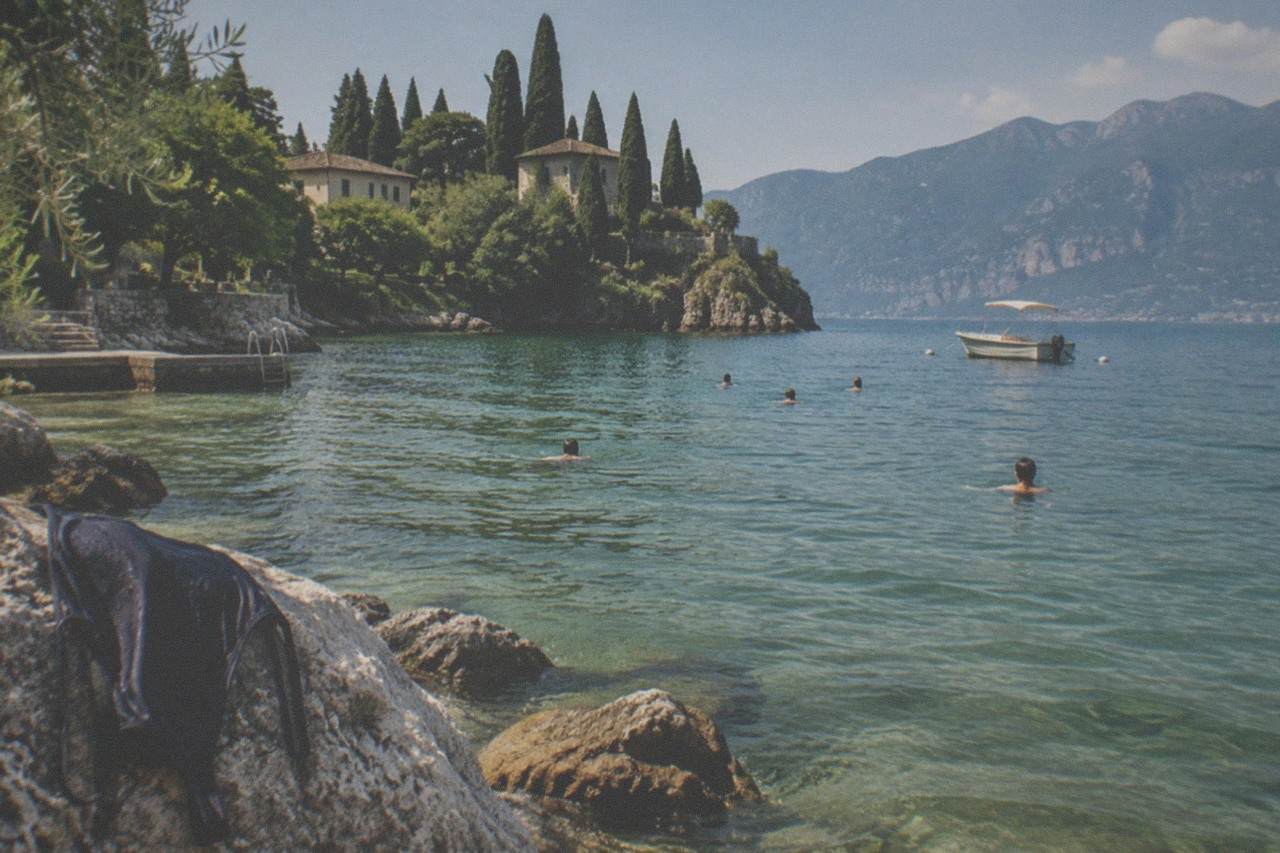
Short answer
Yes, you can swim in Lake Garda, and the water is officially clean: ARPAV rated all 65 bathing sampling points on the Veneto shore excellent in 2026. Swimming is regulated in bands, with the first 100 metres reserved for bathers in season and motorboats held outside a 300 metre protection zone. Boat trips reach the deep water shore swimmers cannot.
Lake Garda is the largest of the Italian lakes, 54 km long and up to 18 km wide, and its water is the reason most people come. What many visitors do not realise is that swimming here is organised water: the lake is split into bands that decide who may be where, and the bands are the reason the deep, clear water in the middle of the lake stays deep and clear. This guide covers the shore beaches, the month by month temperatures, the rules where boats and swimmers meet, and the boat trips that put you in water no beach can reach.
Can You Swim In Lake Garda?
Yes, swimming in Lake Garda is allowed, officially monitored and, on the Veneto shore at least, in excellent condition. ARPAV analysed 65 official bathing water sampling points along the Veneto coast in 2026 and rated every single one excellent, so the water quality is not a guess, it is a classification. The lake is swimmable from late spring through early autumn, and in the deep middle basin all year for the hardy.
The official picture is strong but not uniform. ARPAV, the Veneto environmental agency, tested all 65 of its official sampling points along the Veneto shore and reported excellent bathing water quality across the lot, a result the regional government published in its June 2026 update. Four Lake Garda municipalities also hold the Bandiera Blu 2026 award, the international Blue Flag label: Gardone Riviera, Limone sul Garda, which is a new entry for 2026 with the beaches of Tifù and Cola, Sirmione and Toscolano Maderno.
There is a second, less flattering data set worth knowing about. Legambiente's Goletta dei Laghi campaign sampled six points on the Veneto shore in its 2026 survey and found three within legal limits, two polluted and one strongly polluted, with the problem points sitting at the mouths of torrents where river water enters the lake. The two results are not contradictory: the official ARPAV classification covers the designated bathing areas, while the Legambiente sampling deliberately targets inflows and other vulnerable spots. The practical lesson is simple. Swim at the designated beaches and the classified water, and think twice about swimming directly in front of a stream mouth.
The lake is deep as well as clean, with a maximum depth of 346 metres, which is why the water stays startlingly clear even in August. That depth also means it warms slowly: the swimming season on the shore runs roughly from late May into late September, with the water at its warmest after several weeks of summer heat.
Where Are The Best Places To Swim From Shore?
The best shore swimming on Lake Garda is at the four Blue Flag towns: Sirmione, Limone sul Garda, Gardone Riviera and Toscolano Maderno, all recognised in 2026 for water quality and services. Beyond those, nearly every town has a lungolago beach, and the eastern shore between Bardolino and Peschiera del Garda has the warmest, shallowest water for families. Choose pebble beaches on the west shore for clarity, grass and gravel beaches on the east for ease.
The Blue Flag label is the one independent quality mark that covers the whole beach experience, not just the water. The Foundation for Environmental Education awarded it to four Garda municipalities in 2026, and Limone sul Garda is the newest of them, recognised for its Tifù and Cola beaches. Sirmione holds the award for its Spiaggia Giamaica and Lido delle Grotte. These are the safest default choices if water quality is your priority.
The rest of the lake splits by character. The southern and eastern shore, from Sirmione around through Peschiera del Garda, Lazise and Bardolino, has the gentlest access: shallow shelves, gravel and grass beaches, and water that warms earliest because it is the shallowest basin. The western shore, from Desenzano del Garda up through Salò, Gardone Riviera and Gargnano, tends towards pebble and rock, which means clearer water and better snorkelling but a sharper entry. The northern basin around Limone, Malcesine and Riva del Garda is the deepest and most dramatic, with mountain water that stays cooler later into the year.
If you are basing yourself around the lake rather than day tripping, the choice of town matters as much as the beach, and our Lake Garda towns guide compares them all. Swimming from shore is also one of the genuinely free pleasures of the lake, and the free things to do guide lists the beaches and lakefront walks that cost nothing.
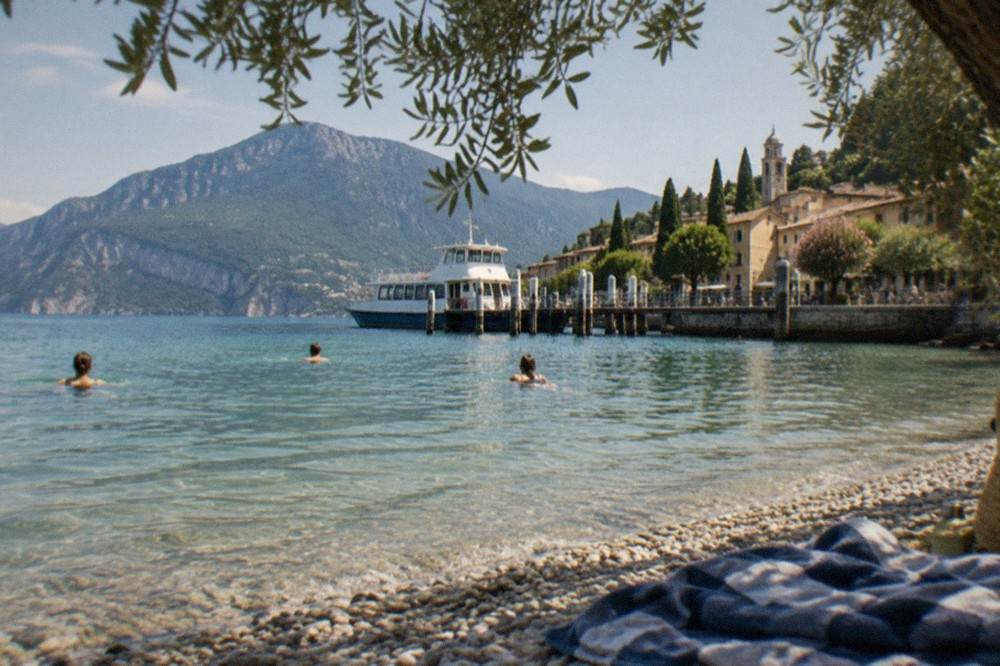
A note on the shore itself: Lake Garda is not a sandy lake. Most beaches are pebble, gravel or grass, and flat shoes you can swim in make every entry and exit easier, especially on the rocky western shore. A towel or mat that can cope with pebbles is worth packing too.
How Warm Is The Water Through The Year?
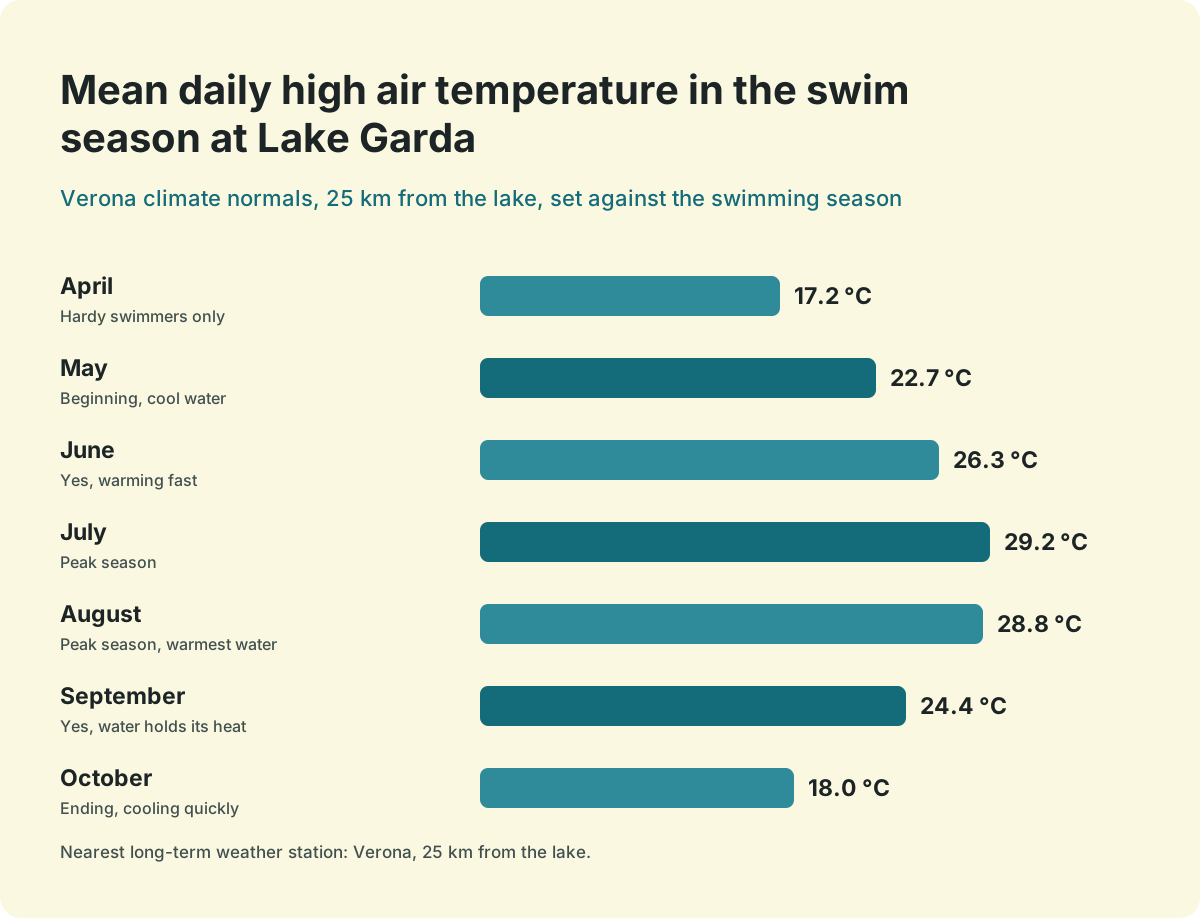
The air at Lake Garda averages a high of 29.2 °C in July and 28.8 °C in August, the two months when the lake is at its warmest for swimming, and the water follows the air with a lag of several weeks. June is warm on land but the deep lake is still warming; September is the reverse, the air cools first while the water holds its heat. Plan the season as late June to mid September.
The nearest national weather station with long-term averages is at Verona, 25 km from the lake, and its climate normals give the most reliable month by month picture. Lakeside towns run slightly milder than Verona, but the pattern holds. The table below sets the air temperature against what it means for swimming.
| Month | Mean daily high | Mean daily low | Rain days | Swimming season |
|---|---|---|---|---|
| January | 6.1 °C | -1.2 °C | 6.8 | No, cold water |
| February | 8.9 °C | 0.1 °C | 5.1 | No, the coldest water |
| March | 13.4 °C | 3.4 °C | 6.0 | No |
| April | 17.2 °C | 6.8 °C | 8.9 | Hardy swimmers only |
| May | 22.7 °C | 11.7 °C | 8.6 | Beginning, cool water |
| June | 26.3 °C | 15.4 °C | 8.6 | Yes, warming fast |
| July | 29.2 °C | 18.0 °C | 5.5 | Peak season |
| August | 28.8 °C | 17.8 °C | 5.8 | Peak season, warmest water |
| September | 24.4 °C | 13.7 °C | 6.0 | Yes, water holds its heat |
| October | 18.0 °C | 8.7 °C | 7.4 | Ending, cooling quickly |
| November | 11.0 °C | 3.2 °C | 7.1 | No |
| December | 6.7 °C | -0.4 °C | 6.2 | No |
The key thing the table cannot show is the lag. Lake Garda is deep, and deep water takes weeks to warm and weeks to cool. The air peaks in July, but the water usually reaches its comfortable peak in August and holds real warmth well into September, which is why early September often delivers the best swimming of the year: warm water, softer light and thinner crowds. May is the mirror image, warm afternoons on the beach and water that still carries winter.
Rain matters less than you might expect for swimming itself, since the lake is enormous and dilutes what falls, but a heavy summer thunderstorm can cool the surface and cloud the shallows for a day. For the fuller picture on wind, storms and which conditions stop boat trips, read the Lake Garda weather for boat trips guide.
What Are The Rules Where Boats And Swimmers Meet?
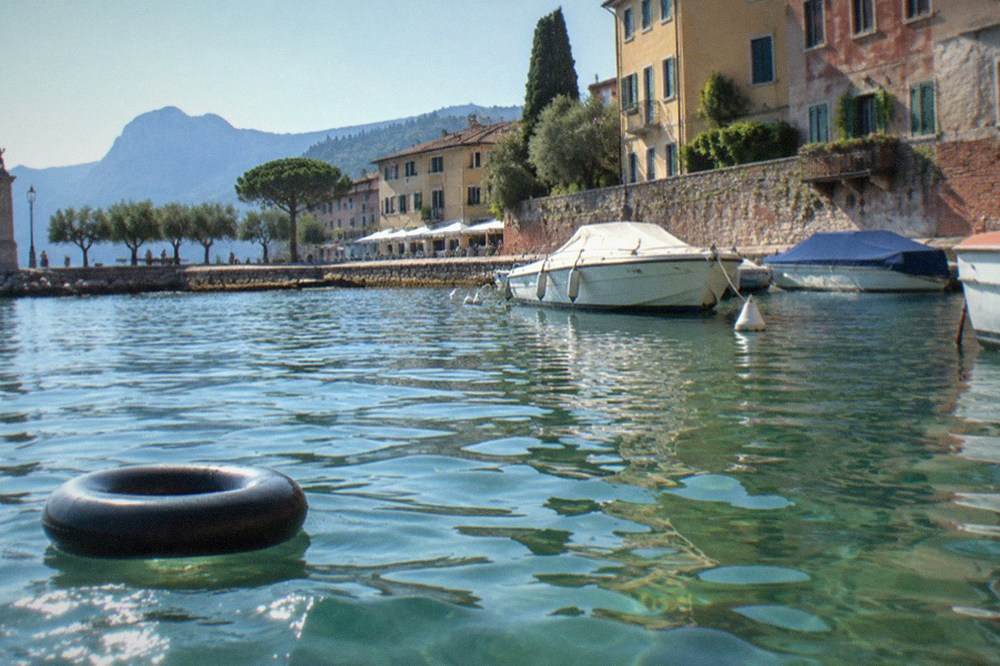
During the bathing season, the first 100 metres off the Veneto shore between Malcesine and Peschiera del Garda is reserved for swimmers, with no boats at all except rowed craft, paddleboards and pedalos. Outside that, a Veneto law holds motorboats beyond a 300 metre coastal protection band, which they may cross only perpendicular to the shore at no more than 3 knots. The bands are why the water off the beaches stays calm and clear.
The two rules come from two different texts and it is worth knowing both. The 100 metre bathing band is set by the Veneto regional navigation safety ordinance for the bathing season, which reserves the water off the Veneto shore between Malcesine and Peschiera for bathers, even where it is not marked out in the water. No craft may navigate or moor inside it apart from rowed and paddled craft, stand-up paddleboards, pedalos and service boats, and motor and sailing boats reach the shore only through launch corridors, crossing perpendicular at no more than 3 knots.
The 300 metre band is older and permanent. The Veneto regional law of 1989, number 52, article 12, allows only sailing dinghies with under 4 square metres of sail, rowing boats, pedal boats and windsurfers within 300 metres of the shore, and motorboats may cross that band only to approach or leave, perpendicular to the coast, at 3 knots or less. The band shrinks to 150 metres in the named gulfs, including the Gulf of Salò, around Isola del Garda and off the tip of the Sirmione peninsula. You can read the rule in the text of the Veneto regional law and the bathing-season provisions in the regional safety ordinance.
| Zone | Distance from shore | Who may be there | Speed limit |
|---|---|---|---|
| Bathing band (Veneto shore, in season) | 0 to 100 metres | Swimmers, rowed craft, SUPs, pedalos, service boats only | Not applicable, no motorboats |
| Coastal protection band | 0 to 300 metres | Sail under 4 sq m, rowing, pedal boats, windsurfers; motorboats crossing to approach or leave | 3 knots, perpendicular to shore |
| Reduced band in named gulfs | 0 to 150 metres | Same as the 300 metre band, in the Gulf of Salò, around Isola del Garda and off Sirmione's tip | 3 knots crossing |
| Open lake | Beyond 300 metres | All craft, including motorboats and tour boats | 20 knots by day, 5 knots by night |
| Trentino waters (Riva and Torbole) | Whole northern tip | Motor navigation banned; sailing, rowing and paddling only | Not applicable |
Two more rules complete the picture. Navigation with any craft is banned inside properly marked bathing areas, and in the Trentino waters at the northern tip of the lake, between Riva del Garda and Torbole, motor navigation is banned outright under provincial law, which is why that corner of the lake belongs to sailors, windsurfers and swimmers. Malcesine, on the other hand, is in Veneto, and Limone sul Garda is in Lombardy: neither town sits in the motor-free zone.
For families, the bands are good news. The water within 100 metres of the Veneto beaches is effectively a swimming pool with a view, and the boat trips with kids guide covers which tours work best when children are swimming off the stern.
Why Is Swimming From A Boat Different?
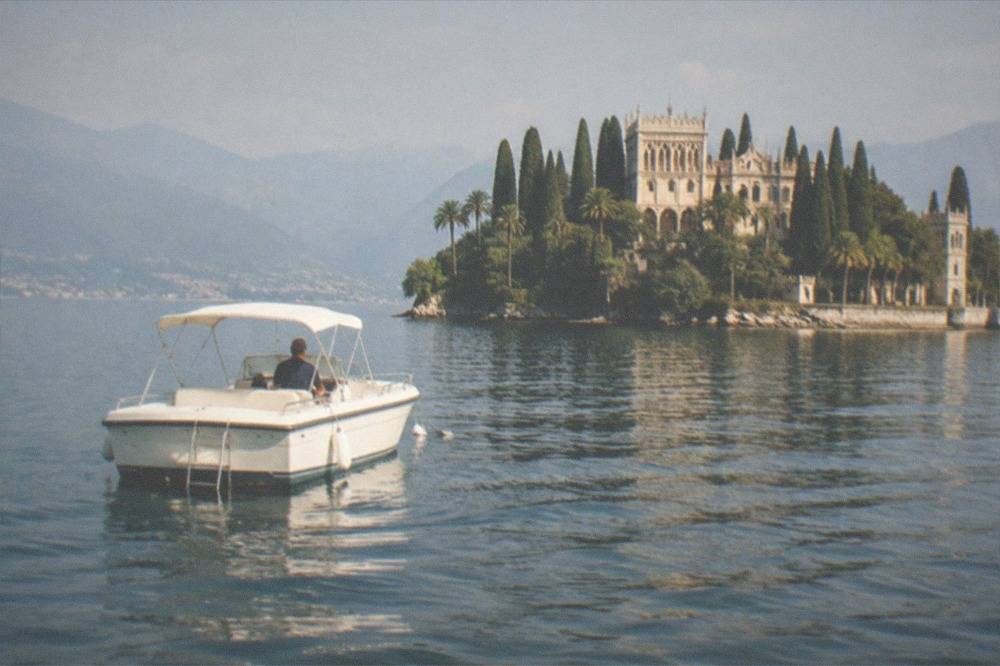
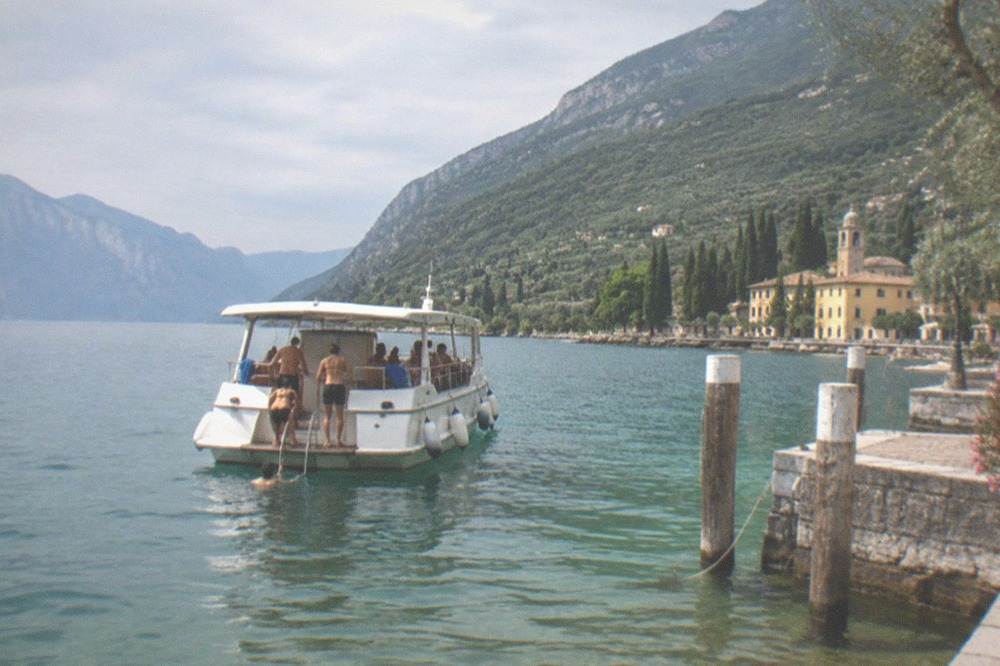
Swimming from a boat puts you in water no shore swimmer can reach: beyond the 300 metre band, over the deep basin, where the water is clearest and calmest because motor traffic is thin and the bottom is far below. It removes the pebbles, the crowds and the walk, and on a private cruise the skipper picks the bay to suit the wind on the day. The trade-off is deep water and a ladder.
The shore experience and the boat experience are genuinely different products. From shore, you enter gradually, over pebbles or gravel, into the warm shallow shelf, sharing the bathing band with everyone else on that beach. From a boat, you step or dive straight into deep water that has been warming all summer but never touched the shallows' churn of sand and weed. Visibility is the clearest difference: swimmers on boat tours regularly report seeing several metres down, which the busy southern beaches rarely offer in August.
The bands explain why the difference exists. Because motorboats cannot loiter inside 300 metres, the water just beyond that line is quiet, and a skipper who anchors at the edge of the band gives swimmers clear, still water with the shore close enough to see. A private operator chooses the spot on the day around the wind, which matters more than people expect: the morning Peler from the north and the afternoon Ora from the south change which bays are flat and which are choppy.
The practical differences are worth listing honestly. You cannot touch the bottom, so confident swimming helps, and entry back aboard is by ladder. Children need lifejackets for the water and an adult beside them, whatever their swimming level. And the decision to swim is the skipper's, based on conditions and the schedule, not a promise in a brochure. If a swim stop is the whole point of your trip, the dedicated Lake Garda boat trip with a swim stop guide compares the options in detail. This site, Lake Garda Boat Tours, lists the cruises where swimming is part of the plan rather than a bonus.
Which Boat Trips Include A Swim Stop?
The swim-stop trips are the longer shared cruises: the 3-Hour Islands Tour with Aperitif from Sirmione, from $105.37 per person with a cap of 20 guests, and the Half-Day Cruise with Lunch from Peschiera, 4 hours from $72.30 per person. Private boats, such as the 2-Hour Private Island Cruise for up to six, let the skipper anchor for a swim, though you should confirm the swim stop on the live listing first.
The shared tours put you on the open lake for long enough that swimming is realistic. The Boat Tour of the Islands of Lake Garda with Aperitif runs about 3 hours from Sirmione with a group cap of 20, from $105.37 per person, and carries a 4.5 rating from 25 reviews plus free cancellation on the listing. It is a sunset-and-aperitivo format, which in practice means warm water, calm evening air and a drink waiting when you climb back aboard. Whether the crew anchors for a swim depends on the day and the group, so ask on the listing.
The Peschiera Half-Day Lake Garda Cruise with Lunch is the other strong candidate: 4 hours on the southern lake from $72.30 per person, rated 4.4 from 849 reviews, with lunch included and free cancellation on the listing. A half-day loop has the time for a pause in a quiet bay, and the southern basin's shallower water is the warmest for swimming.
Private boats change the arithmetic completely. The 2-Hour Private Island Cruise from Sirmione to Isola del Garda, from $585.37 for the whole boat with a cap of 6 people, is your boat: the skipper builds the route around what you want, and on a private cruise that usually includes anchoring in the clear water near the island for a swim. It carries a 4.6 rating from 47 reviews and free cancellation on the listing.
| Listing | Departs | Duration | Group size | Price |
|---|---|---|---|---|
| Islands Tour with Aperitif | Sirmione | 3 hours approx. | Cap 20 | From $105.37 per person |
| Half-Day Cruise with Lunch | Peschiera del Garda | 4 hours | Shared | From $72.30 per person |
| 4-Hour Private Cruise | Lazise | 4 hours | Cap 11 | From $401.66 per person |
| Private Island Cruise, Aperitif | Sirmione | 2 hours approx. | Cap 6, whole boat | From $585.37 for the boat |
The 4-Hour Private Cruise from Lazise, from $401.66 per person with a cap of 11, is the longest private option in this set and the one that most reliably leaves room for swimming, simply because four hours on a private boat is rarely all motoring. Its rating is 4.8 from 22 reviews, a small pool, so treat it as a promising listing rather than a proven one.
What Should You Take For A Swim Stop?
Take swimwear you can get into quickly, a towel, flat shoes for pebble decks, sun cream applied before boarding, a dry bag for phones, and water. On a shared tour, a light layer for the return leg matters because the evening breeze arrives fast after sunset; on a private boat, ask the skipper for lifejackets in children's sizes when you book, not on the pier. Everything else is operator-provided or unnecessary.
The deck of a boat is a pebble beach with a rail. Flat shoes that can get wet serve for boarding, swimming and walking the deck, and they matter more here than on shore because the ladder is the only way back up. A dry bag beats a plastic bag for the ride out, and sun cream belongs on before you leave the harbour, since the water doubles the exposure off a reflective surface.
Clothing is the item people get wrong. A swim stop on a late-afternoon cruise is warm in the water and cool ten minutes after you climb out, and the wind that fills the sails of the evening sailors also finds a wet swimmer quickly. The what clothes to pack for Lake Garda post covers the layers in detail; the short version is a dry top layer in your bag, always.
For toddlers and small children, the honest advice is that a shared sunset cruise is a long sit and a private boat is the better swim platform, and the is Lake Garda good for toddlers post works through the age-by-age choices. Lifejackets in the right size are the non-negotiable item on any boat with a child, whatever the crew provides.
Which Swim Trip Should You Book?
Book the Islands Tour with Aperitif from Sirmione if you want a shared, social evening with a swim chance and a drink, from $105.37 per person. Book the Peschiera Half-Day Cruise with Lunch for a family-friendly daytime loop at $72.30 per person. Book a private cruise, from $585.37 for the boat, when the swim stop itself is the point and you want the skipper's day to revolve around it.
The choice comes down to who controls the anchor. On a shared tour, the route and the stops are fixed by the operator and the clock, and a swim happens if the schedule and the group allow it. That is a reasonable trade for the price, and both shared listings here carry free cancellation on the listing, so a weather change does not cost you the fare.
The Peschiera half-day is the value pick and the family pick at once: 4 hours, lunch included, 4.4 from 849 reviews, which is one of the larger review pools on the lake, and a southern-basin route over the warmest water.
The private options are where swimming becomes the itinerary. The 2-Hour Private Island Cruise from Sirmione, from $585.37 for the whole boat for up to six people, is the sharpest tool for the job: two hours is enough to reach the clear water off Isola del Garda, anchor, swim and drift back with an aperitif.
Whichever format you choose, two questions settle it on the listing page: does the operator mention a swim stop or swimming at all, and what is the cancellation window. If swimming is mentioned, the crew plans for it. If it is not, assume it is weather-and-schedule dependent and ask before you pay.
Common Questions About Swimming In Lake Garda
Can You Swim In Lake Garda?
Yes. Lake Garda is a swimmable, officially monitored lake, and ARPAV rated all 65 of its bathing water sampling points on the Veneto shore excellent in 2026. The swimming season runs roughly from late May to mid September, with the warmest water in August and early September.
Is Lake Garda Water Clean?
At the designated bathing areas, yes: the official classification for the Veneto shore is excellent across all 65 sampling points. Legambiente's independent 2026 sampling found pollution at some stream mouths where rivers enter the lake, so swim at recognised beaches rather than directly in front of a torrent mouth.
How Warm Does Lake Garda Get For Swimming?
The air averages a daily high of 29.2 °C in July and 28.8 °C in August at the nearest national station, and the deep lake warms with a lag, so the water is usually at its best from late July into mid September. May and June are warm on land but the water is still heating.
Can You Swim From A Boat On Lake Garda?
On many tours and private cruises, yes, at the skipper's discretion. Shared listings mention swimming on their pages where it is planned; private boats, such as the whole-boat cruises from Sirmione and Lazise, can build a swim stop into the route. Confirm on the live listing before booking.
Where Are The Cleanest Beaches On Lake Garda?
The four Blue Flag towns hold the recognised standard for 2026: Sirmione, Limone sul Garda with the beaches of Tifù and Cola, Gardone Riviera and Toscolano Maderno. All four are rated for water quality, safety and services.
Do You Need Water Shoes For Lake Garda?
They help a lot. Most Garda beaches are pebble, gravel or grass rather than sand, and the rocky western shore has sharp entries. Flat wet-suitable shoes also make boat ladders and decks safer when you swim from a boat.