Why Is Lake Garda So Famous?
The largest Italian lake, a two-wind sailing engine, a Roman villa on a peninsula and a private island reached only by boat: the real reasons Lake Garda is famous, with verified figures.
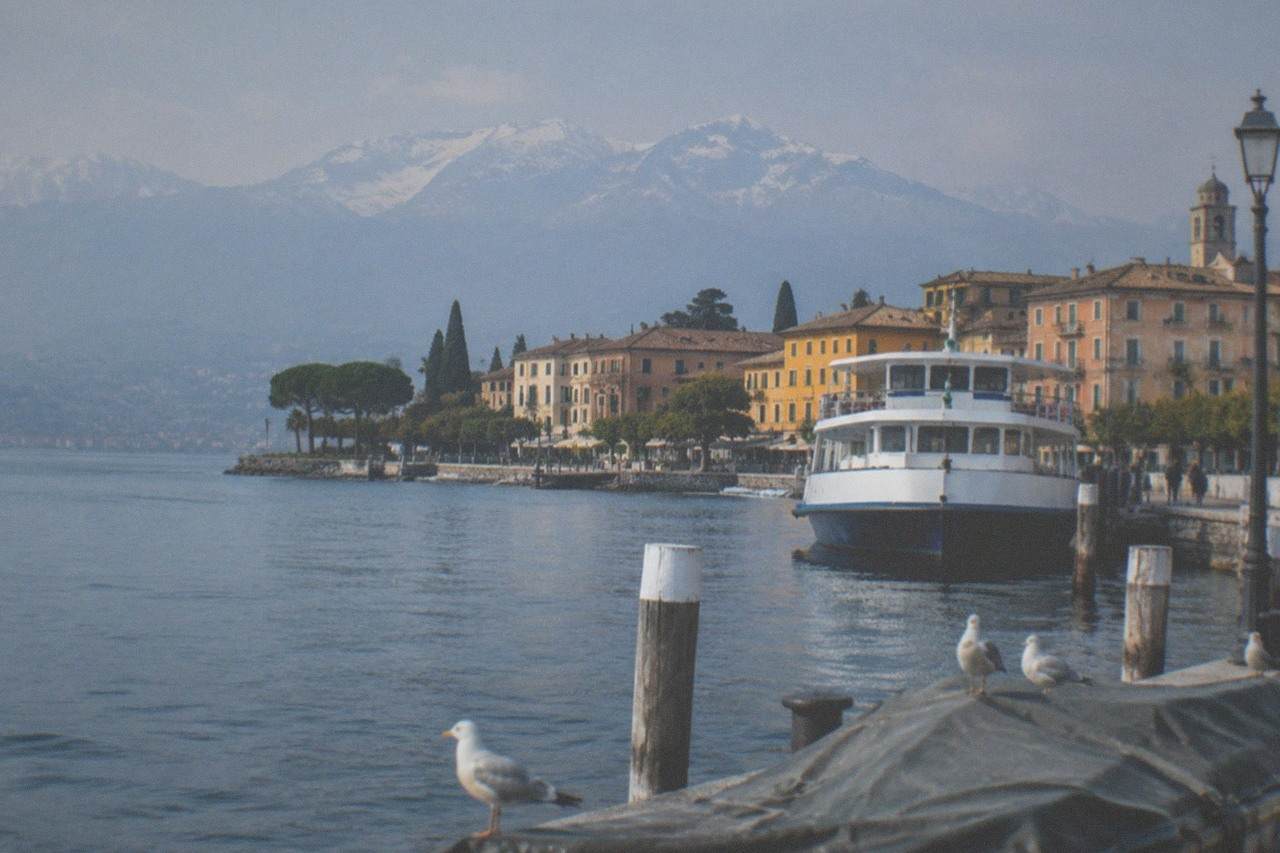
Why Is Lake Garda So Famous?
Lake Garda is famous for a combination no other Italian lake matches: it is the largest lake in the country at 370 square kilometres, 54 kilometres long and 346 metres deep, with 28 public ferry landing stages, a peninsula holding a Roman villa and a medieval castle, and a private island you can only visit on a guided boat tour. Add reliable daily winds and an Alpine setting, and the lake earns its reputation on geography alone.
The Encyclopaedia Britannica describes it plainly: the largest of the Italian lakes, lying at an elevation of 65 metres, 54 kilometres long, between 3 and 18 kilometres wide, with 125 kilometres of shoreline. Those numbers matter because they explain everything else. A body of water that size, fed by the Sarca river and drained by the Mincio, behaves less like a lake and more like an inland sea. It holds enough heat to soften the winters on its shores, enough surface for a full public ferry network, and enough depth that the water stays clear and cold in the middle even when the beaches are warm.
The fame is not one thing. It is a stack: Roman ruins on the Sirmione peninsula, the Scaliger castle that guards its harbour, the island villa of the Borghese family at Isola del Garda, the lemon groves and olive terraces of the western shore, the winds that pull sailors and windsurfers to the northern basin, and a literary afterlife that runs from Goethe to D'Annunzio to a Bond car chase along the western cliffs. Each of these earns a section below, with the figures that support it.
The lake also spans three administrations, Lombardy on the west and south, Veneto on the east, and Trentino in the mountain-ringed north, which is why its rules, its character and even its weather change from end to end. Sirmione, the most visited town, sits on a peninsula in the south; Riva del Garda, the sailing capital, sits where the mountains close in at the north. A traveller who has only seen one end has genuinely seen half a lake.
If you want the shortest possible answer to the question in one afternoon, the water is where it lives. The three boat experiences below, a cheap peninsula loop, a sail under the mountain, and a half-day cruise with lunch, each show a different face of the same reputation.
For readers planning an actual visit rather than a history lesson, the practical questions follow: whether the lake justifies the travel time, covered in is Lake Garda worth visiting, and how it compares with its famous northern rival in Lake Como or Lake Garda. The rest of this page stays on the question of fame itself, because the answer is more interesting than the postcard version suggests.
How Big Is It Compared With The Other Lakes?
Lake Garda covers 370 square kilometres, which makes it the largest Italian lake by surface area, ahead of Lake Como at roughly 146 square kilometres and Lake Maggiore. It is 54 kilometres long, up to 18 kilometres wide, with 125 kilometres of shoreline and a maximum depth of 346 metres. Its public ferry network alone serves 28 landing stages.
Size is the foundation of the fame, and the comparison with Como is the one every traveller asks. Encyclopaedia Britannica puts Como at about 47 kilometres long with a maximum depth of 414 metres, so Como is deeper in its trench-like basin, but Garda is wider, larger overall and far more varied along its length. Garda's width swings between 3 and 18 kilometres, which means the lake changes character as you move along it: a broad, island-dotted southern basin, a narrowing middle where the ferry network carries cars at Maderno, and a fjord-like northern end under 2,000-metre walls.
The depth figure, 346 metres, does quiet work in the background. Deep water stores summer heat and releases it in winter, which is why olive trees and lemon groves survive on shores that lie north of many Alpine ski towns. The same thermal mass smooths the air temperature, so the lakeside towns run milder than the inland plain in both seasons.
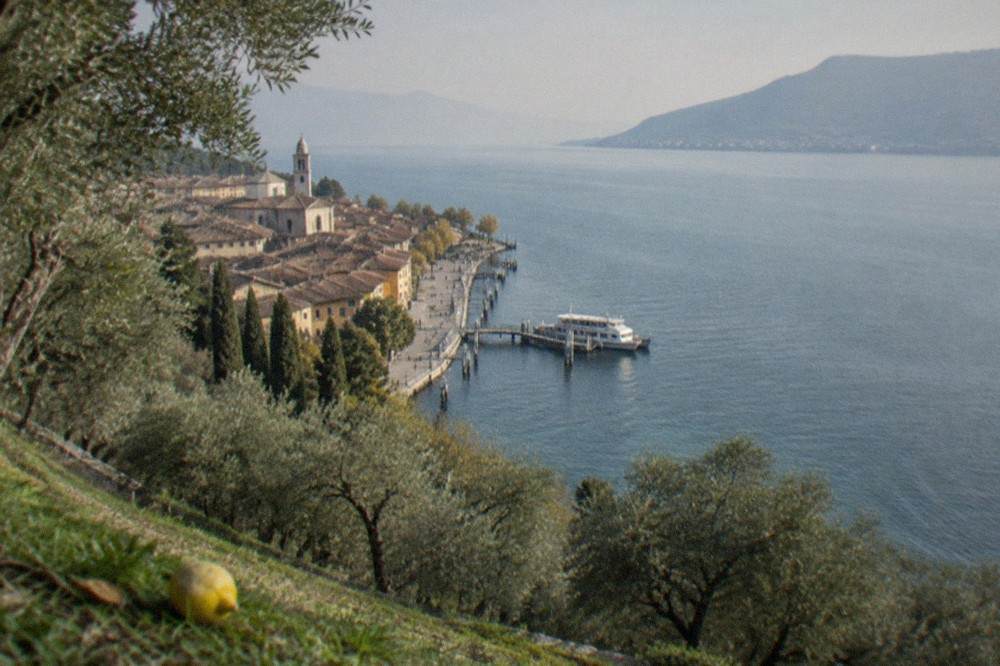
The 28 landing stages deserve their place in the numbers table because they are the proof of scale. The 2026 fare matrix of the public operator, Gestione Governativa Navigazione Laghi, runs from Desenzano and Peschiera in the south to Riva and Torbole in the north, touching Salo, Gardone Riviera, Malcesine, Limone sul Garda and more than a dozen smaller ports between. Few lakes anywhere run a scheduled public boat network of that density. The same state operator runs the ferries on Como and Maggiore, but Garda's route map is the largest of the three.
| The lake in numbers | Figure |
|---|---|
| Surface area | 370 square kilometres |
| Length | 54 kilometres |
| Width | 3 to 18 kilometres |
| Shoreline | 125 kilometres |
| Maximum depth | 346 metres |
| Elevation of the surface | 65 metres |
| Public ferry landing stages | 28 |
| Main inflow / outflow | Sarca river in, Mincio river out |
For anyone weighing the two lakes against each other, the honest summary is that Como trades on drama and Garda trades on range. Garda holds a Roman ruin, a theme park, a sailing capital, wine towns and a mountain cable car within one shoreline, and the practical comparison, including rail access, is worked through in Lake Garda versus Lake Como. The town-by-town character of each shore is laid out in the guide to Lake Garda's towns.
What Is The History On Its Shores?
The historical fame of Lake Garda rests on three layers: a Roman villa complex on the Sirmione peninsula, the Grotte di Catullo, the largest private Roman dwelling in northern Italy; the Scaliger castle at Sirmione's harbour, still moated by the lake; and Isola del Garda, a private island villa open only to guided boat visits. The regional museums service runs the first two at 10 euro full price each.
Sirmione is where most of the history is concentrated, and it is concentrated precisely because of the water. The peninsula juts four kilometres into the lake from the southern shore, and its tip held a vast Roman residential complex, now the Grotte di Catullo e Museo Archeologico. The Direzione regionale Musei nationali Lombardia lists full tickets at 10 euro, reduced EU tickets at 2 euro for 18 to 25 year olds, and a combined seven-day ticket covering the villa, the Castello Scaligero and the Roman villa of Desenzano at 20 euro. Opening hours run to 19.30 on most days, with last entry 40 minutes before closing.
The Castello Scaligero, the fortress that photographs so well from the water, guards the harbour channel where the tour boats moor. The same museums service lists it at 10 euro full price, closed Mondays, with the dockyard interior visitable only on guided tours. The castle is the reason the 25-minute boat loop around the peninsula became the single most-booked short trip on the lake: from the water you get the fortress walls reflected in the moat, the Roman ruins on the headland, and the sulphurous thermal spring bubbling at the waterline, all inside half an hour.
That short cruise, from $13.77 per person with a rating of 4.7 from 3,495 reviews, is in practice the lake's introductory history lesson, and it is the trip most often recommended to first-time visitors who want to understand what they are looking at.
The third historical layer is Isola del Garda, and it is the most exclusive. The island belongs to the Borghese Cavazza family, and their own site is unambiguous: visits are guided only, booking is compulsory, and the 2026 season runs from 29 March to October with no visits on Saturdays or Mondays. Adult prices including the return boat, the guided tour and a welcome drink run at 39 euro from the nearest ports, 46 euro from Sirmione, Garda, Bardolino and Torri, and 49 euro from Desenzano and Lazise. The guided visit lasts about two and a quarter hours, with a boat transfer of 15 to 40 minutes each way depending on the departure port.
Beyond those three, the shores carry a later history: the Venetian republic's lake fleet, the lemon houses of the western shore that gave the coast its microclimate industry, the Austrian fortifications of the north, and the twentieth-century literary cult of the lake, from Goethe's travels to Gabriele D'Annunzio's self-monument at Gardone Riviera. The film industry noticed too, and the films shot at Lake Garda include a well-known opening car chase along the western cliffs and tunnels, with location databases naming Navene, Limone sul Garda, Malcesine and Tremosine among the roads used.
Why Do Sailors Come Here?
Sailors come for the wind, and the wind is unusually reliable. Two named winds dominate: the Pelèr, which blows from the north through the first half of the day, and the Ora, which blows from the south from around noon until sunset, reaching speeds above 10 metres per second in the northern basin. On a good-weather day the pattern repeats like a timetable.
The official tourism board for the northern lake, Garda Trentino, describes the mechanism: the Pelèr usually starts between 2 and 3 a.m. and stops around noon, covering a large part of the lake's surface. At midday the direction flips, and the Ora pushes up from the south, accelerated by the narrowing of the lake toward Riva and Torbole, a Venturi effect that can produce significant waves even under blue sky. The same source names two further winds: the Balinot, a north-west fall wind that can exceed 20 metres per second, and the Vinessa, a south-east wind that can persist for two or three days when Adriatic weather pushes in.
| Named wind | Direction and timing | What it does on the water |
|---|---|---|
| Pelèr | From the north, roughly 2 a.m. to noon | Fills the morning with steady sailing wind across much of the lake |
| Ora | From the south, around noon to sunset | The afternoon workhorse, strongest in the north where the lake narrows |
| Balinot | North-west descending wind | Strong and gusty, produces higher waves than the Pelèr |
| Vinessa | South-east, can last 2 to 3 days | Storm-adjacent wind triggered by Adriatic weather systems |
This is why the northern basin, Riva del Garda, Torbole and Malcesine, became one of Europe's densest concentrations of sailing clubs, windsurf schools and regatta calendars, and why the lake's fame among sailors predates its fame among package travellers by a century. A beginner can sail the calm morning and watch experts on the afternoon Ora from the same shore. The Garda Trentino winds page is the reference the clubs themselves cite.
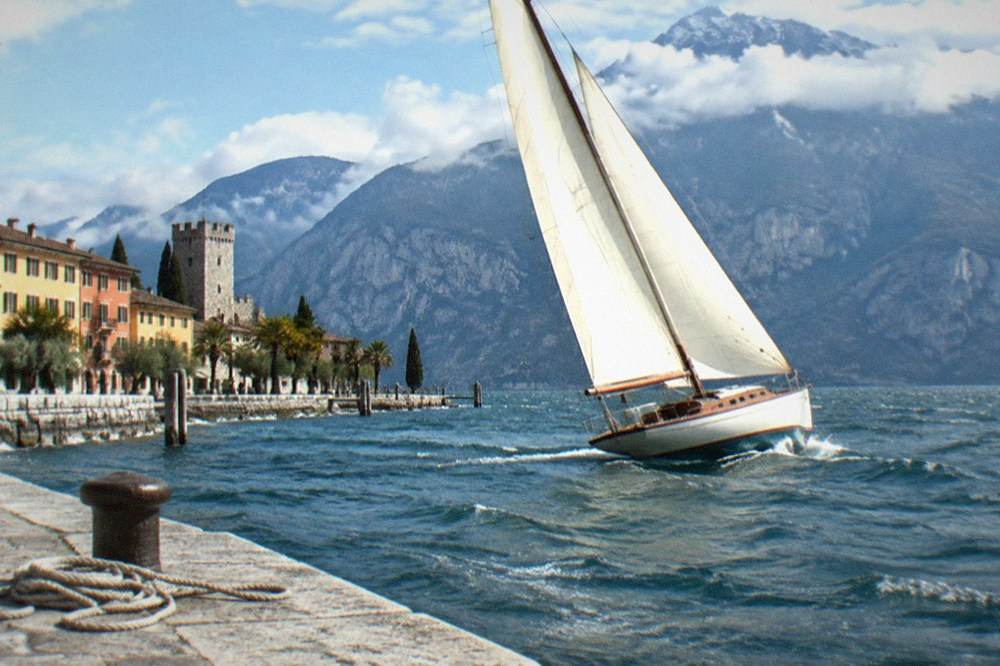
You do not need to own a boat to feel the pattern. The two-hour panoramic cruise from Malcesine aboard a historic sailboat, from $45.90 per person with a rating of 4.2 from 335 reviews, is built around exactly this: a traditional wooden vessel working the afternoon breeze under the Monte Baldo ridge. It is the gentlest entry into the sailing side of the lake's reputation.
For travellers who want to go further than a cruise, the sailing trips on Lake Garda cover the format in detail, from shared historic sailboats to full-day charters. The broader point for this article is simpler: without the two daily winds, the lake would still be beautiful, but it would not be famous in the sailing world, and half the international visitors who first came for the wind would never have arrived.
What Makes The Landscape Change End To End?
Lake Garda transforms more over its 54 kilometres than most regions do over 200: the wide, Mediterranean south of olive groves and reedy shallows narrows to a garden shore of villas and lemon terraces, while the north from Limone and Malcesine up to Riva becomes an Alpine fjord beneath rock walls nearing 2,000 metres, and the water shifts from green to deep blue as depth approaches 346 metres.
The southern shore, Peschiera, Sirmione, Desenzano, Lazise and Bardolino, is where the lake feels like a holiday sea: warm shallow bays, beaches, promenade towns and the wine country of Lugana and Bardolino just behind. This is also the end with the theme-park economy and the best rail access, and the flat cycle paths that link the towns.
The middle lake is the villa belt. Gardone Riviera, Salo, Toscolano Maderno and the islets off San Felice del Benaco hold some of the most photographed gardens and lakefront residences in Italy, including the Vittoriale degli Italiani, D'Annunzio's hillside monument to himself above Gardone. The lemon houses, stone terraces with high pillars that once held glass roofs over citrus trees, survive all along the Brescian coast and are the visible proof of the lake's mild microclimate.
The north is the part that surprises first-time visitors. At Malcesine the Monte Baldo cable car leaves from the harbour and climbs to the ridge; at Limone the cliffs drop straight into water so deep the colour turns navy; at Riva and Torbole the mountains close the horizon entirely. This is where the winds funnel, where the sailing fleet gathers, and where the lake stops resembling any Mediterranean postcard and starts resembling a Norwegian fjord with better weather.
The practical consequence of all this variety is that "Lake Garda" is not one destination but at least three, and advice for one end is often wrong for another. The water temperature, the wind, the crowd type and even the boat availability all differ between Peschiera and Riva. The things to do around Lake Garda guide splits the lake by zone for exactly this reason, and it is the right place to plan once the fame question has been answered.
Who Visits And When?
The lake recorded almost 28 million tourist presences in 2025 by preliminary regional counts, and the visitor profile is strongly international, with German travellers the largest single market. The full summer ferry timetable runs 16 May to 4 October 2026, and the climate data supports a long season: long-term Verona averages show July and August near 29 degrees, but May, June and September all sit in the low twenties.
The season structure matters as much as the totals. The public ferry network runs its maximum timetable from 16 May to 4 October 2026, which is effectively the lake's official summer. Outside that window the service thins, though the southern routes keep running. The Verona climate normals, the nearest national station about 25 kilometres away, show why the shoulder months work: mean daily maxima of 22.7 degrees in May, 26.3 in June and 24.4 in September, with rainfall spread fairly evenly and July actually one of the drier months.
| Month (Verona normals, nearest station) | Mean daily max | Mean daily min | Rain days |
|---|---|---|---|
| May | 22.7 °C | 11.7 °C | 8.6 |
| June | 26.3 °C | 15.4 °C | 8.6 |
| July | 29.2 °C | 18.0 °C | 5.5 |
| August | 28.8 °C | 17.8 °C | 5.8 |
| September | 24.4 °C | 13.7 °C | 6.0 |
| October | 18.0 °C | 8.7 °C | 7.4 |
The visitor profile skews German and northern European, which shapes the lake's rhythm: August is the peak of the peak, but June and early September are busy too, and the towns are built for a season that starts before the Italian school holidays and ends after them. Lakeside towns run slightly milder than the Verona figures, thanks to the water's thermal mass.
The fame feeds itself in a way worth naming. The most visited towns, Sirmione above all, are famous partly because they are famous: the crowds are part of the evidence. Sirmione's own administration now runs 31 pedestrianisation days of its historic centre in the 2026 season, between April and September, precisely because the afternoon footfall in the old town exceeds what its medieval streets were built to carry. The lake's popularity is not a marketing claim; it is a municipal management problem, which is the strongest proof of fame a place can offer.
For the timing question specifically, the monthly trade-offs, crowds, water temperature, ferry frequency and events, are compared in the best month to visit Lake Garda, and the autumn window in particular is covered in the October guide.
What Is It Most Famous For Today?
Today the lake is most famous for Sirmione's peninsula and its castle, seen from the water; for Isola del Garda, the private island reachable only by guided boat; for sailing and windsurfing in the north; and for a growing list of environmental credentials, with four Lake Garda towns holding the Bandiera Blu 2026 award and the Vittoriale estate at Gardone setting an all-time visitor record of 303,403 in 2025.
The modern reputation is a blend of the historical and the practical. On the historical side, the Vittoriale degli Italiani, D'Annunzio's estate above Gardone Riviera, recorded 303,403 visitors in 2025, a new all-time high, as reported by Gardapost, and the estate hosted eight new exhibitions and 35 cultural events that year. A hillside museum house breaking its attendance record a century after its owner's death is about as clear a signal of enduring fame as a lake can produce.
On the environmental side, the 2026 Bandiera Blu awards went to four Lake Garda municipalities: Gardone Riviera, Sirmione, Toscolano Maderno and Limone sul Garda, with Limone a first-time entrant, among 257 Italian localities recognised by the Foundation for Environmental Education, as covered in the award announcement. Clean-water credentials matter to a lake whose economy is now as much about swimming and beaches as about boats.
But the honest answer to "what is it most famous for today" for most visitors is simpler: the photographs. The Castello Scaligero reflected in its moat, the peninsula from the water, the cliffs at Limone, the sail fleet at Torbole. Those images circulate constantly, and they all have one thing in common, which is that the best vantage point is a boat deck. That is the quiet engine of this site, Lake Garda Boat Tours: the fame is visible from the shore but legible only from the water.
Should you be weighing the lake against other Italian destinations, the fuller argument, including costs and what the lake does not do well, is in is Lake Garda worth visiting.
Which Boat Trip Shows You Why?
If one trip has to carry the whole answer, it is the 25-minute peninsula cruise from Sirmione: for $13.77 per person, rated 4.7 from 3,495 reviews, it passes the Castello Scaligero, the Grotte di Catullo, the thermal spring and the cliff villas in a single loop, the compressed history and geography of the lake in half an hour. The half-day cruise from Peschiera with lunch, from $72.30, adds the southern basin.
The peninsula loop works as an argument because it layers everything in the right order. The boat leaves the harbour channel under the castle walls, runs the eastern shore past the Roman ruins on the headland, rounds the tip where the thermal spring disturbs the surface, and returns along the western shore where the villas and gardens sit above the water. Roman history, medieval power, geology and money, in 25 minutes, for less than the price of a museum ticket.
The alternatives each frame a different part of the fame. The sailing cruise from Malcesine, discussed above, frames the wind. The half-day cruise from Peschiera, from $72.30 per person with a rating of 4.4 from 849 reviews, frames the scale: four hours on the southern basin with lunch on board, crossing the same water the public ferries serve but with time to look at it. The Isola del Garda visits, at 39 to 49 euro depending on the departure port, frame the exclusivity: a private island, a guided villa tour, and a welcome drink on a terrace that cannot be reached any other way.
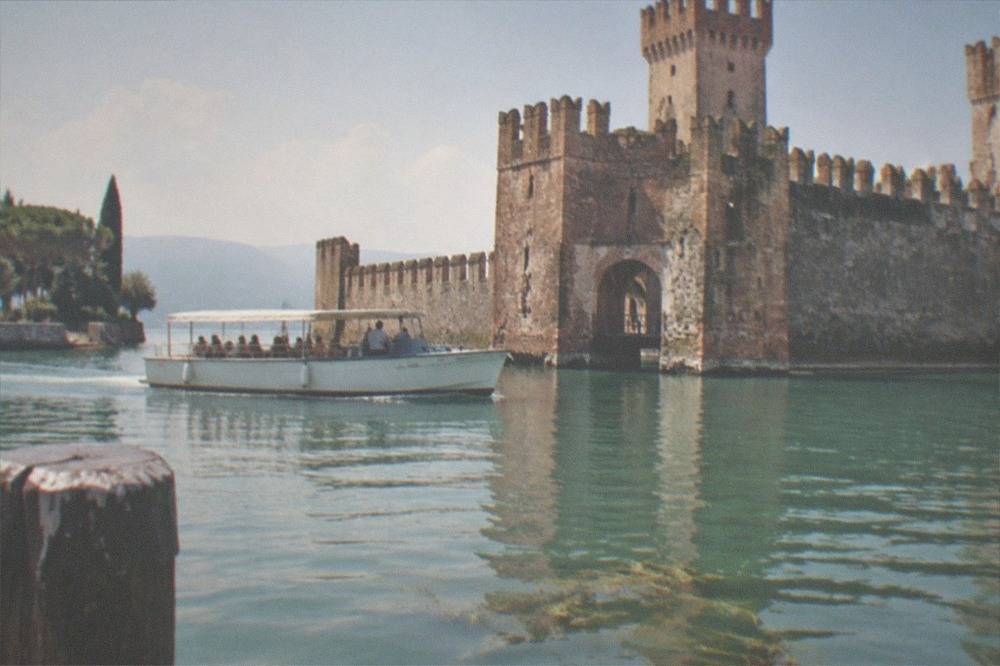
The choice between them is really a choice of which half of the fame you want to touch first. The southern trips, Sirmione and Peschiera, deliver history and warm-water ease. The northern trips, Malcesine and Riva, deliver wind and mountains. A visitor with two days can do one of each and see the whole argument of this article pass by from the deck rail, which is, in the end, how the lake made its reputation in the first place.
Common Questions About Why Is Lake Garda So Famous?
Why Is Lake Garda So Famous?
It is the largest Italian lake at 370 square kilometres, with a Roman villa and a Scaliger castle on the Sirmione peninsula, a private island open only to guided boat visits, reliable daily sailing winds in the north, and a 28-landing-stage public ferry network. History, geography and climate stack together on one shoreline.
Is Lake Garda the largest lake in Italy?
Yes. The Encyclopaedia Britannica lists it as the largest of the Italian lakes at 370 square kilometres, 54 kilometres long with a maximum depth of 346 metres and 125 kilometres of shoreline. Lake Como is deeper in places, reaching 414 metres by Britannica's figures, but Garda is larger by surface area.
Why is the northern end so popular with sailors?
Two named winds run on a near-daily cycle: the Peler from the north through the morning and the Ora from the south from around noon until sunset, accelerating through the narrowing northern basin where it can exceed 10 metres per second. Riva del Garda and Torbole built their sailing and windsurfing reputation on that reliability.
Can you visit Isola del Garda?
Yes, but only on a guided boat visit with a compulsory booking. The 2026 season runs from 29 March to October with no visits on Saturdays or Mondays. Adult prices including the return boat, guided tour and welcome drink are 39, 46 or 49 euro depending on the departure port, with Sirmione in the 46-euro band.
Which boat trip shows the most in the least time?
The 25-minute peninsula cruise from Sirmione, from $13.77 per person and rated 4.7 from 3,495 reviews, passes the Castello Scaligero, the Grotte di Catullo and the thermal spring in one short loop. It is the fastest way to see the three landmarks most responsible for the lake's fame.
When is the best time to see the lake by boat?
The full ferry and tour season runs from spring to early October, with the maximum public ferry timetable from 16 May to 4 October 2026. Long-term Verona averages show May, June and September in the low to mid twenties with plenty of sun, while July and August are the warmest and busiest. The live listing for each tour shows its operating season.