Boat Trips With A Swim Stop On Lake Garda: Where The Boats Anchor
A swim stop is the part of a Lake Garda boat trip people remember longest, and it is also the part the law shapes most: two protected bands decide where a boat may drop anchor and where the water belongs to swimmers alone.
Short answer
Boat trips that work for swimming on Lake Garda include the 3-hour islands tour with aperitif from Sirmione (from $105.37 per person, cap 20), the 4-hour Peschiera half-day cruise with lunch (from $72.30 per person) and private charters such as the Isola del Garda tour from $509.27 for the boat, up to five people. Motorboats anchor outside a 300 metre shore band, so the swimming happens in deep, clear water.
Lake Garda covers 370 square kilometres and reaches a maximum depth of 346 metres, which is why the water a boat floats in and the water a beach stands in are two different experiences. The lake spans three administrations, Lombardy, Veneto and Trentino-Alto Adige, and each applies its own rules to boats and bathers. On the Veneto shore, where most of the lake's boat trips depart, two protected bands decide everything about where a skipper can stop and let people swim.
This guide names the boat trip formats that pair well with a swim, explains where the boats anchor, sets out the rules in plain language and tells you what the water is doing month by month. The prices and group sizes below come from the operators' own listings, and the legal figures come from the regional law and the bathing-season ordinance that govern the Veneto shore.
Which Lake Garda Boat Trips Stop For A Swim?
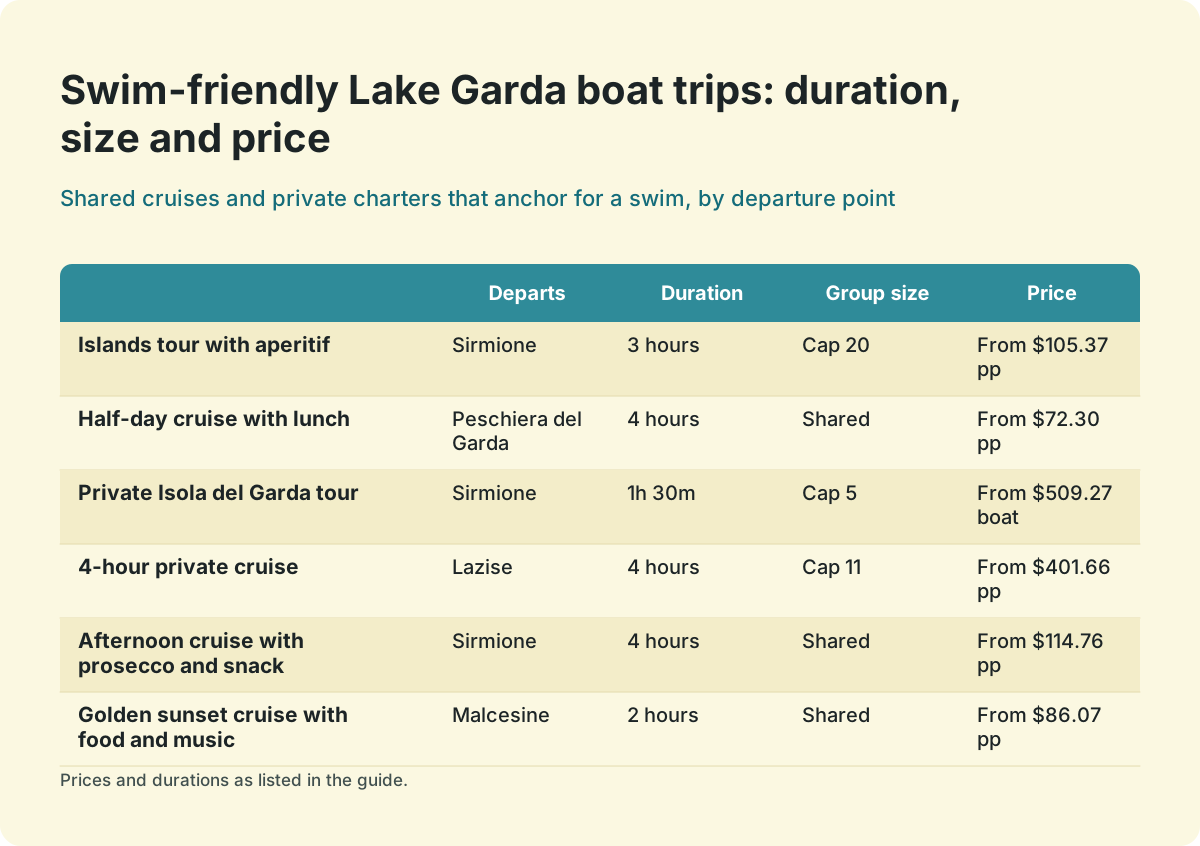
The formats that work for swimming are the longer shared cruises and almost any private charter. A 3-hour islands tour with aperitif from Sirmione, from $105.37 per person with a cap of 20 guests, gives the skipper time to anchor. The 4-hour Peschiera half-day cruise with lunch, from $72.30 per person, runs the same logic at lower cost. Private charters anchor wherever the rules allow, on your schedule rather than a fixed route.
Shared short loops, the 25 and 30-minute peninsula tours, are sightseeing runs: they keep moving and there is no window for swimming. Anything from about two hours upward changes the character of the trip, because the boat has time to reach quieter water, cut the engine and let people in. The islands tour with aperitif from Sirmione is the strongest example in the shared category. It runs about 3 hours, carries a group cap of 20, is rated 4.5 from 25 reviews and costs from $105.37 per person, and the listing carries free cancellation. The route reaches the Isola del Garda area, where the water is deep and clear, and the aperitif on board turns the swim into the middle act of the afternoon rather than an afterthought.
The Peschiera half-day cruise takes a different route to the same result. It departs Peschiera del Garda, runs 4 hours, is rated 4.4 from 849 reviews and starts from $72.30 per person with lunch included, which makes it the easiest swim-friendly option for families who want food handled. Four hours on the southern lake means the boat can push out past the busy shore near Peschiera and find anchorage in open water. Check the listing for the day's plan, since the skipper sets the stop according to conditions.
Private charters are the third route, and the one where swimming is most flexible. The Isola del Garda private tour from Sirmione runs about 1 hour 30 minutes, is rated 4.9 from 413 reviews and costs from $509.27 for the whole boat, up to five people. The 4-hour private cruise from Lazise, rated 4.8 from 22 reviews, costs from $401.66 per person with a cap of 11. On a private boat the swim stop is a conversation with the skipper, not a fixed line on a timetable.
| Boat trip | Departs | Duration | Group size | Price |
|---|---|---|---|---|
| Islands tour with aperitif | Sirmione | 3 hours | Cap 20 | From $105.37 per person |
| Half-day cruise with lunch | Peschiera del Garda | 4 hours | Shared | From $72.30 per person |
| Private Isola del Garda tour | Sirmione | 1h 30m | Cap 5 | From $509.27 for the boat |
| 4-hour private cruise | Lazise | 4 hours | Cap 11 | From $401.66 per person |
| Afternoon cruise with prosecco and snack | Sirmione | 4 hours | Shared | From $114.76 per person |
| Golden sunset cruise with food and music | Malcesine | 2 hours | Shared | From $86.07 per person |
Where Do The Boats Anchor To Let You Swim?
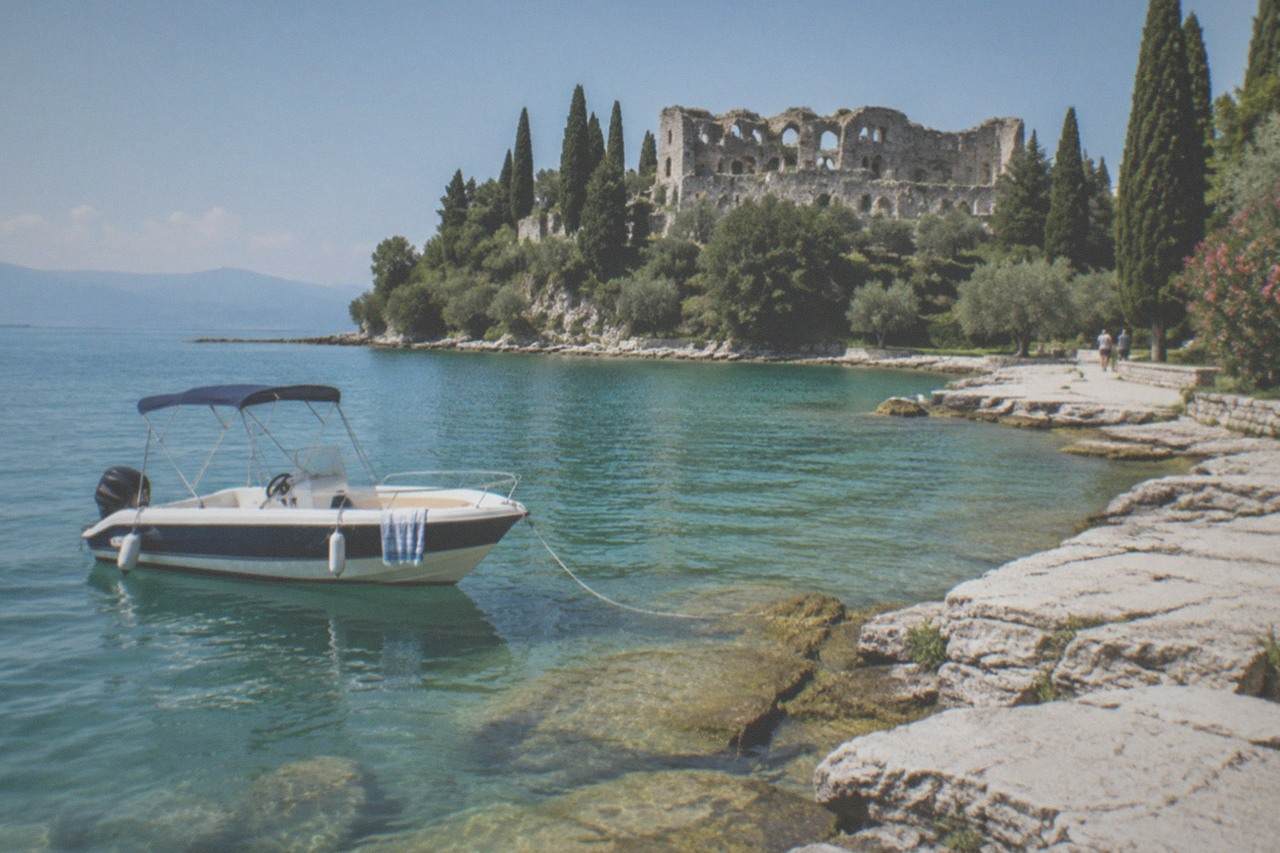
Boats anchor in open water, outside the protected shore bands, typically a few hundred metres off the beaches and bays. On the Veneto shore the law reserves the first 300 metres from land for paddle and sail craft, so a motorboat must stop beyond that line, which is precisely why the water is deep, calm and clear where you get in. Near Sirmione's peninsula tip and Isola del Garda the band shrinks to 150 metres.
That geometry is worth understanding before you book, because it explains why a swim from a boat feels so different from a swim from a beach. The boat is not parked next to the sand. It sits in water deep enough that the bottom is far below you, away from the churn of near-shore sediment, the sun creams and the crowds. When the engine cuts, the silence is total and the water below is the lake's own temperature, not the shallow bathtub the beach offers in August.
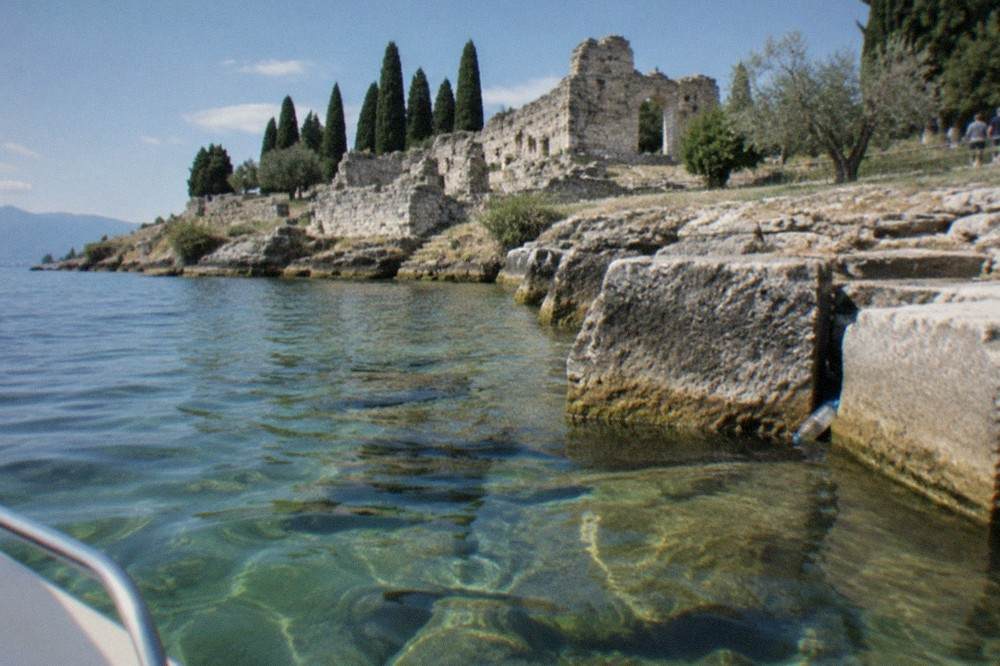
Skippers choose their anchorage by conditions on the day: wind direction matters more than scenery. The lake has two working winds, the Pelèr from the north in the morning and the Ora from the south from around noon until sunset, and the Ora can exceed 10 metres per second and raise significant waves in the upper lake. A skipper anchoring for a swim will look for the lee shore, the side the wind is not hitting, and will move if the breeze fills in. If you want the full picture of where swimming happens on this lake, shores included, the guide to swimming in Lake Garda covers the beaches and the water quality town by town.
The best anchorages are therefore moving targets rather than named spots, and any article that promises one fixed swim location is guessing. What stays constant is the rule the skipper works inside: outside the band, engine off, swimmers in view, ladder down on the sheltered side. Ask at booking where the boat usually stops given the forecast, and you will get a real answer rather than a brochure one.
Why Is Offshore Water Better Than The Beach?
Offshore water is deeper, cleaner and quieter. The official 2026 bathing classification rated all 65 sampling points on the Veneto shore excellent, yet the environmental group Legambiente still flags river and stream mouths as the weak points, and those are exactly the features a beach sits next to. A boat anchored in open water avoids the run-off zone, the warm shallow layer and the crowds, and gives you clear water over a deep bottom.
The contrast is real rather than romantic. Beach water at Lake Garda is genuinely good, that is what the official classification says, but a beach is also where a lake collects what the land sends it: warm surface layers, stirred sediment, sun cream slicks and the foot traffic of a summer afternoon. Offshore, the water column is undisturbed. Swimmers report the clarity as the single thing that surprises them, and a recent traveller report on a Sirmione rental described the half-day around the peninsula in terms of the water, not the sights.
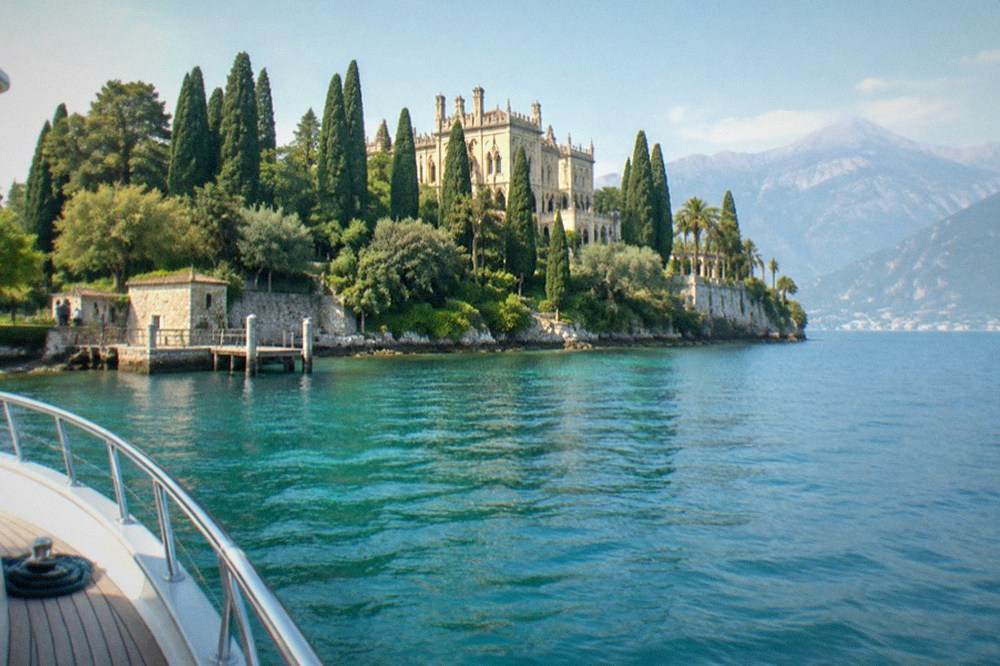
There is a second, quieter advantage: nobody else is there. The southern lake's most visited towns draw enormous summer crowds, and Sirmione in particular now runs 31 pedestrianisation days of its historic centre in the high season to manage the flow. Out on the water, a few hundred metres from all of that, the same lake is close to empty. Four Lake Garda towns, Gardone Riviera, Limone sul Garda, Sirmione and Toscolano Maderno, hold the Bandiera Blu 2026 award for water quality, and the cleanest experience of that water is the one a boat gives you.
When Is The Water Warm Enough?
The surface water is warmest in August and swimmable from late June through September. Air temperatures on the lake's own scale, measured at the nearest national station 25 kilometres away, average 28.8 degrees by day in August against 17.8 at night, and September still averages 24.4 by day. The boats and ferries run their full summer season from 16 May to 4 October, which brackets the swimming window almost exactly.
The lake warms slowly because it is deep, so spring lags behind the air. May feels warm on the pier and cold in the water. June is the turning point, July and August are the reliable months and the first half of September is the connoisseur's choice: the water has had all summer to warm, the crowds have thinned and the light is lower and better. By October the air averages 18 degrees by day and the water has begun its long cool-down, so a swim becomes a quick one rather than a long one.
| Month | Mean day air (C) | Mean night air (C) | Water for swimming | Boats running |
|---|---|---|---|---|
| April | 17.2 | 6.8 | Too cold for most | Spring ferry timetable from 1 April |
| May | 22.7 | 11.7 | Bracing, for the brave | Summer timetable starts 16 May |
| June | 26.3 | 15.4 | Warming fast by late month | Full season |
| July | 29.2 | 18.0 | Comfortable | Full season |
| August | 28.8 | 17.8 | Warmest of the year | Full season |
| September | 24.4 | 13.7 | Still good early month | Full season to 4 October |
| October | 18.0 | 8.7 | Cooling quickly | Reduced timetable after 4 October |
Air figures are long-term averages for Verona, the nearest national station, 25 kilometres from the lake; lakeside towns run slightly milder. If you want to plan around wind, rain and temperature in more detail, the Lake Garda weather for boat trips guide breaks the year down by what it does to a day on the water.
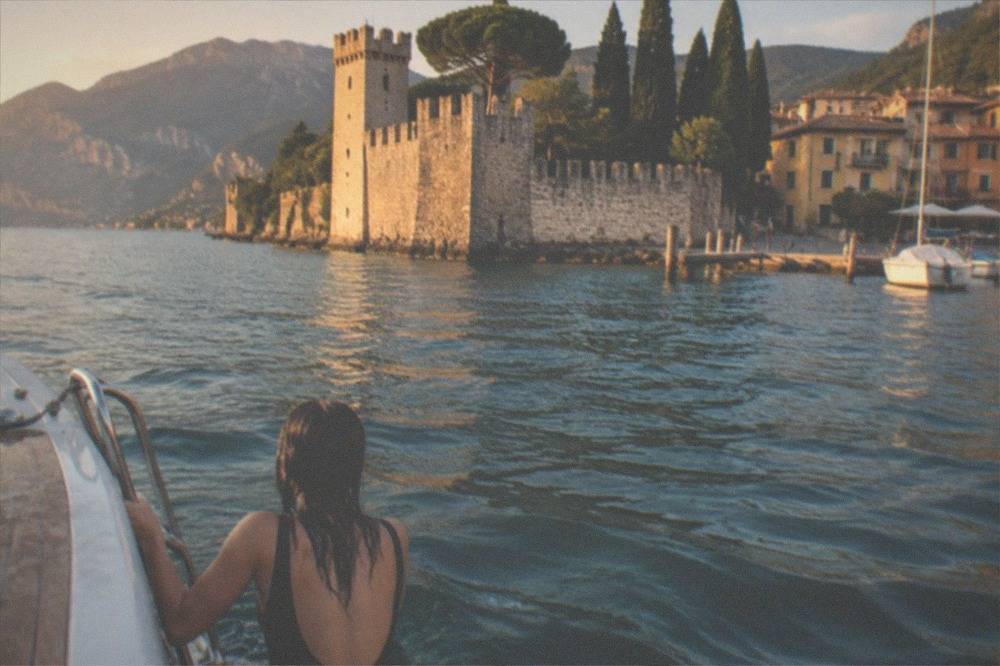
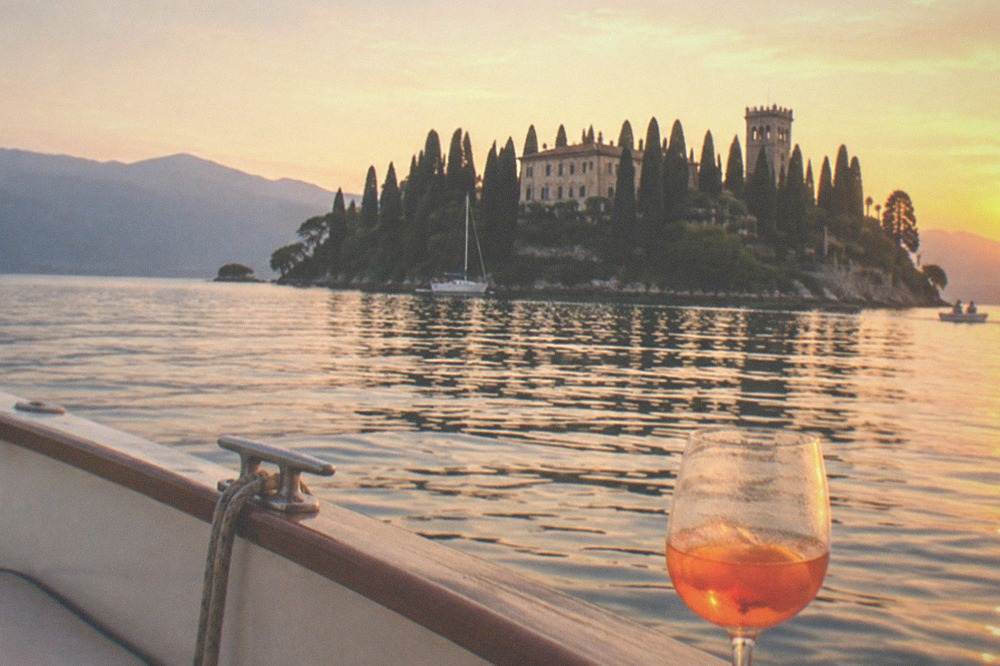
Timing matters within the day too. Sunset at Sirmione falls at 21:09 on 21 June, 20:25 on 15 August, 19:28 on 15 September and 18:32 on 15 October, which is why late-afternoon departures are the classic swim-then-aperitivo slot: you get the warmest water of the day, then the golden hour on the way back.
What Are The Rules Around Swimming And Boats?
Two bands govern the Veneto shore. The first is a 300 metre coastal protection band where motor navigation is prohibited, apart from perpendicular crossing at up to 3 knots to reach or leave a mooring, and it shrinks to 150 metres in certain gulfs including Isola del Garda and the tip of Sirmione's peninsula. The second is a 100 metre bathing band, in force during the swimming season between Malcesine and Peschiera, reserved for swimmers and paddle craft.
The 300 metre rule comes from the Veneto regional law of 1989, article 12, which allows only sailing dinghies, rowing boats, pedalos and windsurf boards inside the band, and lets motorboats cross it only straight in and out at walking pace. The 100 metre rule comes from the region's bathing-season safety ordinance, which reserves the first hundred metres of water off the Veneto shore for bathers even where no ropes or buoys mark it, and allows only rowed and paddled craft and service boats inside. Together they draw a clean line: the shore belongs to swimmers, the open water belongs to boats, and the swim stop happens where the boat is allowed to be.
| Protected band | Where it applies | What it means for a swim stop |
|---|---|---|
| 300 metre coastal band | Veneto shore, all of it | A motorboat may not cruise inside the band; it crosses at up to 3 knots, perpendicular to the shore, only to moor or depart |
| 150 metre reduced band | The gulfs named in the law, including around Isola del Garda and the Sirmione peninsula tip at Punta Grotte | The same rule over a shorter distance, so boats anchor closer to shore in these spots |
| 100 metre bathing band | Veneto shore between Malcesine and Peschiera, during the bathing season | Reserved for swimmers, paddle craft and service boats; no boat may navigate or moor inside it |
| Speed limits | Lake-wide on the Veneto side | 20 knots by day, 5 knots at night, 3 knots in ports and harbours |
Two practical consequences follow. First, a skipper cannot drop you fifty metres off a beach: the law is explicit and the fines are real. Second, the Trentino water at the extreme north of the lake, between Riva del Garda and Torbole, bans motorboats outright, which is why you will not find a motor cruise with a swim stop departing from there. The full legal texts sit on the Veneto regional law page and in the region's bathing-season ordinance, and the 2026 water quality results are published by the Veneto region's environmental agency.
What Should You Bring On A Swim Stop Trip?
Bring a towel, a dry bag, sunscreen applied before boarding, water shoes if you dislike ladders, and a layer for the return leg, because the wind that picks up after a swim makes the ride back cooler than the ride out. On shared boats keep it to one soft bag per person. If children are coming, lifejackets in the right sizes are the one thing to confirm with the operator in advance.
The layer is the item people forget. The Ora fills in from the south through the afternoon, and a boat making way into it after a swim feels ten degrees cooler than the same boat did at anchor. A light jacket or a dry shirt turns the last half hour from a shiver into a highlight. Water shoes earn their place too: ladders and swim platforms are the standard way back aboard, and wet rungs are easier with grip. The what to pack for Lake Garda article goes deeper on clothing for the lake's microclimate, and the boat trips with kids guide covers the family version of the same list, including the child fare rules on the public ferries if you are mixing a boat tour with a ferry day.
A dry bag, or at minimum a zip bag for the phone, matters more on a swim trip than on a sightseeing loop, because the whole point of the stop is that people and water meet. Ask the operator at boarding where valuables should live during the swim; on private charters the skipper will usually look after them, on shared boats a sealed bag under a seat is the norm. And eat something before a sunset departure with a swim: the aperitivo comes after the water, not before.
Is A Private Boat Better For Swimming?
A private charter is better for swimming in three specific ways: you choose when the stop happens, how long it lasts and who is in the water with you. The 4-hour private cruise from Lazise, from $401.66 per person with a cap of 11, is the format that shows this best, since four hours lets a skipper anchor twice if the group wants it. The trade-off is price and planning: private boats need booking further ahead.
On a shared cruise the swim stop is a scheduled event, usually one, with a fixed duration and up to twenty people sharing the ladder. That is a fine experience and often the right one, especially for solo travellers and families on a budget. But the private format changes the physics of the stop: the skipper can hold position while a hesitant swimmer talks themselves in, move to a calmer patch if the wind shifts, or extend the stop by fifteen minutes because nobody else is waiting for their turn. The 4-hour private cruise from Lazise, rated 4.8 from 22 reviews, departs the eastern shore and costs from $401.66 per person with a group cap of 11, which for a larger family or a group of friends often works out close to shared pricing per head.
The Isola del Garda private tour from Sirmione is the shorter private option, about 1 hour 30 minutes, rated 4.9 from 413 reviews, from $509.27 for the whole boat with up to five people. It is more of a sightseeing run with a swim possibility than a swimming day, but it is the one to pick if the group wants the island's clear water without committing four hours. The longer guide to private boat tours on Lake Garda compares every charter on the lake, including the whole-boat pricing that trips up people used to per-person fares.
Which Swim-Stop Trip Should You Book?
Book the islands tour with aperitif from Sirmione for the best single swim on a shared boat: 3 hours, from $105.37 per person, cap 20, free cancellation on the listing. Book the Peschiera half-day cruise with lunch if budget and food matter most, from $72.30 per person. Book a private charter, the Lazise 4-hour or the Isola del Garda tour, if the swim is the point of the day rather than a feature of it.
The decision comes down to who is travelling. Couples and small groups celebrating something usually land on the private options, and the whole-boat prices, from $509.27 for up to five people on the Isola del Garda tour, are the honest comparison rather than a per-head guess. Families with children tend to do best on the Peschiera half-day, where lunch is handled and four hours gives the day a shape. Solo travellers and pairs who want atmosphere without charter pricing should take the islands tour with aperitif, which pairs the lake's clearest water with a drink on the return leg and carries free cancellation if the forecast turns.
Whatever you choose, book the swim-friendly long formats rather than the short loops, and read the listing's own description of the stop: operators phrase it differently, and the honest ones say where the anchor usually goes. This site, Lake Garda Boat Tours, keeps the full roster of 41 bookable trips with prices, durations and group caps, so you can compare the swim options against every other format on the lake before committing.
Common Questions About Swim Stops On Lake Garda Boat Trips
Which Lake Garda boat trips stop for a swim?
The longer formats: the 3-hour islands tour with aperitif from Sirmione (from $105.37 per person, cap 20), the 4-hour Peschiera half-day cruise with lunch (from $72.30 per person) and private charters such as the Isola del Garda tour from $509.27 for the boat, up to five people. Short 25 and 30-minute loops are sightseeing runs with no swim window.
Where do the boats anchor to let you swim?
In open water outside the protected shore bands. On the Veneto shore motorboats may not cruise inside the first 300 metres from land, or 150 metres in the named gulfs, so the skipper anchors beyond that line where the water is deeper and clearer, choosing the sheltered side according to wind.
Why is offshore water better than the beach?
It is deeper, undisturbed and away from the run-off at stream mouths that the environmental surveys flag. The official 2026 classification rated all 65 Veneto bathing points excellent, but a boat anchored offshore also gives you quiet water without the crowds of the summer beaches.
When is the water warm enough?
From late June through September, peaking in August. The full summer boat and ferry season runs 16 May to 4 October, and the first half of September is often the best combination of warm water, thinner crowds and softer light.
What are the rules around swimming and boats?
Two bands apply on the Veneto shore: a 300 metre coastal band where motorboats may only cross perpendicular at up to 3 knots, and a 100 metre bathing band between Malcesine and Peschiera during the swimming season, reserved for swimmers and paddle craft. Motorboats are banned outright in the Trentino water between Riva del Garda and Torbole.
Is a private boat better for swimming?
For flexibility, yes: you choose the timing, the length of the stop and the company. The Lazise 4-hour private cruise (from $401.66 per person, cap 11) is the format that shows the advantage best, while shared cruises such as the islands tour offer the swim at a lower price with a fixed schedule.