What Kind Of Clothes Should I Pack For Lake Garda?
A packing list for Lake Garda built around the boat day: the Peler wind in the morning, the Ora in the afternoon, swim stops, open-water sun and shoulder-season evenings.
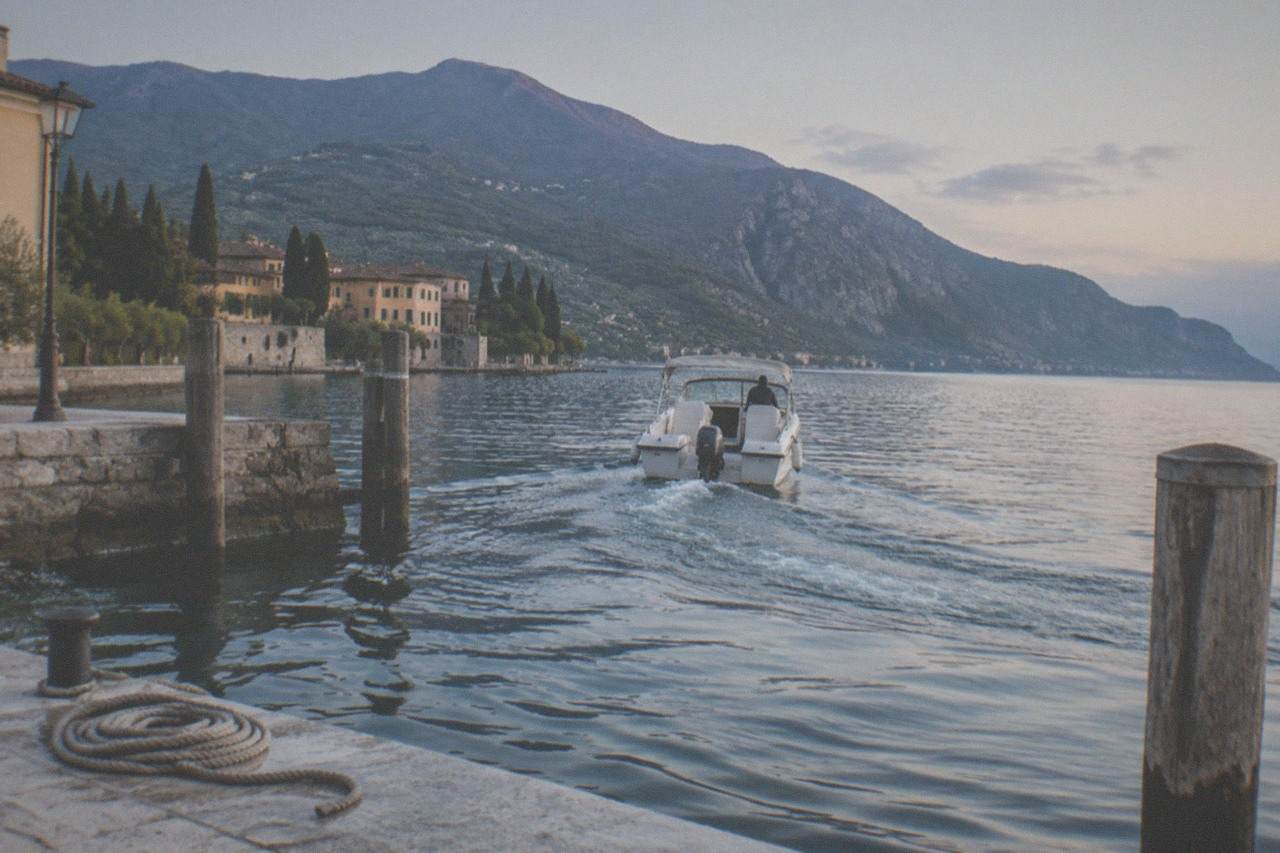
What Kind Of Clothes Should I Pack For Lake Garda?
Pack for two climates in one day, because the lake runs on a wind clock. The Peler blows from the north through the morning, the Ora answers from the south from around noon until sunset, and a flat 9 a.m. departure can share a day with a blustery afternoon return. Add open-water sun, a possible swim stop and an evening that ends at 18:32 in mid October, and layers beat a single outfit every time.
Most packing advice for Lake Garda treats the lake as scenery. It is better treated as weather. The official tourism board for the northern shore describes the two winds that set the day's rhythm: the Peler, which starts between 2 and 3 in the morning and stops around noon, and the Ora, which blows from the south from around noon until sunset and can exceed 10 metres per second where the lake narrows. On a good-weather day the wind comes from the north in the morning, then swings south after lunch. That single fact should drive most of your suitcase.
The practical consequence is simple. A morning boat trip feels calm and cool, sometimes cool enough for a fleece even in July, because you are sitting still in moving air before the sun has climbed. An afternoon trip on the same stretch of water can be warm in the sun and genuinely choppy in the wind, with spray over the bow of anything small and fast. The people who look miserable on Lake Garda boats are almost never cold-weather people, they are one-layer people.
If you want the wider picture of how a day on the water actually unfolds, the guide to what a Lake Garda boat ride is like covers the mechanics, and the deeper wind and forecast detail sits in the Lake Garda weather guide for boat trips. This page stays on the clothes.
Between those two guides and this one sits the packing decision itself: not "is it warm in Italy in summer", which it is, but "what is it like at 25 minutes out from Peschiera with the wind on your left ear", which is a different question with a different answer.
What Should You Wear On A Boat Trip?
Wear a t-shirt under a light long-sleeve layer, with a windproof jacket you can stuff in a bag, long trousers or shorts depending on the month, and a hat that will not blow off. Boat decks are hot in the sun and cool in the wind, and you will move between the two every few minutes, so the base layer stays and the outer layers change. Avoid anything that only works in one of those states.
The sun on open water is stronger than the sun on the shore, for two reasons. There is no shade, and the surface reflects light back up at you. A four-hour cruise is four hours of unbroken exposure, and the middle of the lake is not the place to discover that your shoulders burn. A light long-sleeve shirt in a light colour does more work than sunscreen alone, and sunscreen belongs in the bag anyway.
The wind is the other half. Even on a day that reads as calm on land, a moving boat makes its own breeze, and the real winds add to it. The classic mistake is a loose sunhat that goes over the side in the first ten minutes; a cap with a clip, or a hat with a drawstring, survives. Sunglasses on a retainer strap are the same story.
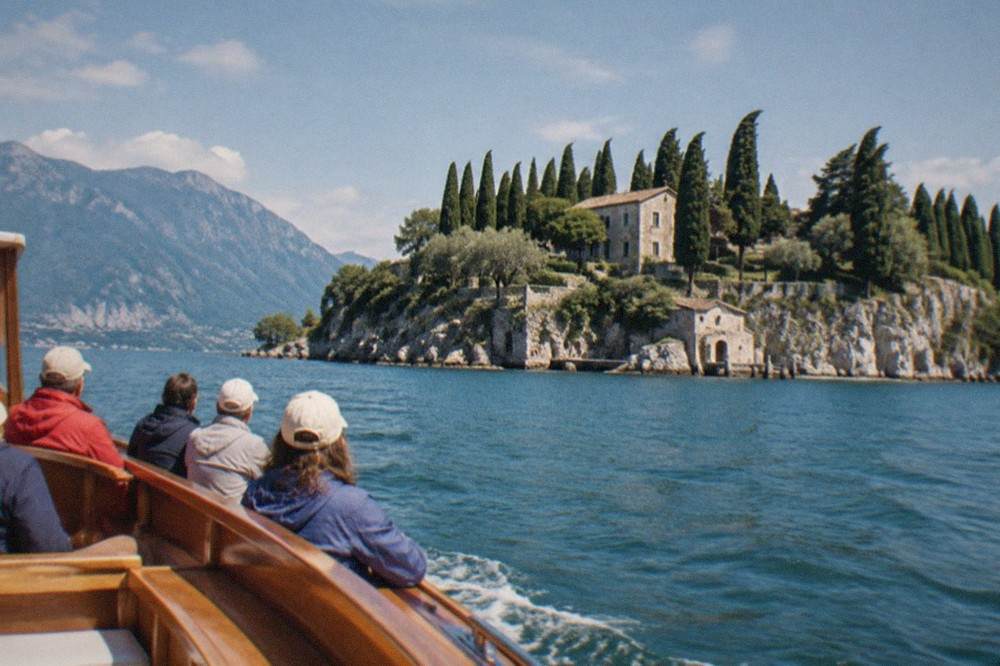
Think in three layers for any summer boat day. A dry base, t-shirt or similar, that you do not mind getting salt or spray on. A mid layer, light fleece or shirt, for the morning and the return leg. An outer windproof layer, which can be thin, for the legs of the trip where the boat is moving into the Ora. If you are on a small open boat rather than a large cruiser, weight the outer two layers more heavily, because everything is felt more.
The format of the trip matters as much as the weather. A shared cruise with lunch included, like the half-day option from Peschiera, is a large-boat experience with covered seating, so the layers can be lighter and the bag smaller. The four-hour Peschiera cruise with lunch runs from $72.30 per person and carries a 4.4 rating across 849 reviews, with free cancellation on the listing. On a trip like that, the packing question is mostly sun management.
A short open-boat loop is a different animal. The 25-minute peninsula cruise from Sirmione, from $13.77 per person, rated 4.7 across 3,495 reviews, is the lake's most-booked quick loop, and it runs in whatever the morning serves up. On a breezy day the spray reaches the second row.
The table below is the short version of the whole decision, season by season. Treat it as a starting grid rather than a rulebook, and check the forecast the evening before, because a Peler day and an Ora day can look identical at breakfast.
| Season | Base layer | Mid layer | Outer layer | Legs | Extras |
|---|---|---|---|---|---|
| May to mid June | T-shirt | Light fleece for morning | Windproof jacket | Trousers or leggings | Hat, sunscreen, sunglasses |
| Late June to August | T-shirt | Optional, for sunset legs | Thin windbreaker | Shorts, with trousers for evening | Hat that clips, high-factor sunscreen |
| September | T-shirt | Fleece or shirt | Windproof jacket | Trousers | Light gloves for early sailing trips |
| October | Long-sleeve base | Warm mid layer | Proper jacket | Trousers | Scarf, warm hat for northern trips |
How Cold Does It Get On The Water?
Colder than the shore, reliably, and the gap widens the smaller the boat and the further north you go. Expect the lake surface to sit around 13.98 degrees in February and 26.62 degrees in August on the ten-year averages compiled by seatemperatures.net, while the felt temperature on a moving boat drops several degrees below the land reading, and the Monte Baldo summit runs 10 to 15 degrees below the lakeside.
The numbers are worth knowing because they are not obvious. The blended dataset on seatemperatures.net puts the ten-year February average surface temperature at 13.98 degrees and the August average at 26.62 degrees, which tells you the water is swimmable in high summer and bracing even in late spring. Air temperature is a separate matter: the long-term averages for Verona, the nearest national weather station, put July mean maximums at 29.2 degrees but October mean minimums at 8.7 degrees, and lakeside towns run slightly milder than Verona, not hotter.
The mountain factor is real and it catches people out. The Monte Baldo cable car from Malcesine reaches the Tratto Spino station at 1,760 metres, and the operator warns that the summit can be 10 to 15 degrees cooler than the lakeside. Plenty of visitors pair a boat morning with a cable-car afternoon, and the ones in beach clothes at the top are the ones buying souvenir hoodies. If that pairing is in your plan, a real jacket belongs in the bag, not a cardigan.
The wind is the multiplier. The tourism board's own wind page notes that the Ora can exceed 10 metres per second and produce significant waves where the lake narrows in the north, and the descending Balinot wind from the north-west can surpass 20 metres per second at Riva, forming waves higher than the Peler's. Those are sailing-day numbers, but they shape what a passenger boat ride feels like: a 24-degree afternoon can feel like 17 on the bow of a moving vessel with the Ora in your face.
| Time of day | Typical wind | Felt effect on deck | What to have on |
|---|---|---|---|
| 8:00 to 11:00 | Peler from the north, fading | Cool, flat, sometimes glassy | Base plus mid layer, jacket within reach |
| 12:00 to 15:00 | Swing to the Ora from the south | Warming, building chop in the north | Sun protection, outer layer off until moving |
| 15:00 to 18:00 | Ora at full strength | Warm sun, lively water, spray on small boats | Outer layer on when underway, hat secured |
| After 18:00 | Ora fading to calm | Cooling fast, especially over water | Mid layer plus jacket, trousers after sunset |
The evening cool-down is steeper than most visitors expect. At Sirmione in 2026 the sun sets at 20:25 on 15 August but 18:32 on 15 October, and once the sun drops behind the western ridge the temperature falls quickly over water. An aperitivo cruise that leaves in shirtsleeves can come back wanting a jacket in any month. The detail on evening timing is covered properly in the companion piece on what time sunset falls on Lake Garda.
What Do You Need For A Swim Stop?
Pack a swimsuit you can put on quickly, a real towel, something dry to change into, and water shoes if the stop is a rocky shore rather than a beach. Add a dry bag for the phone and keys, because swim stops are the moment boats drift, hands are wet, and things go over the side. The lake is warm enough to swim comfortably from late June through August and cool but pleasant in September.
The swim stop is the part of a Lake Garda boat day that most packing lists forget entirely, and it is the part with the most gear. The good news on temperature: with ten-year averages around 26.62 degrees in August, the lake at its summer peak is warmer than many Mediterranean beaches, and September stays swimmable. The bracing part is the first ten seconds, every time.
Footwear is the decision that matters most. Several of the lake's famous swimming spots, including the shallow shelf near Sirmione's Jamaica Beach and the rocky coves the northern boats favour, are stone and shingle rather than sand. Wet limestone is slippery, and water shoes turn a careful wade into a walk. Flip-flops do the opposite: they float away, they slide, and they offer no grip on rock.
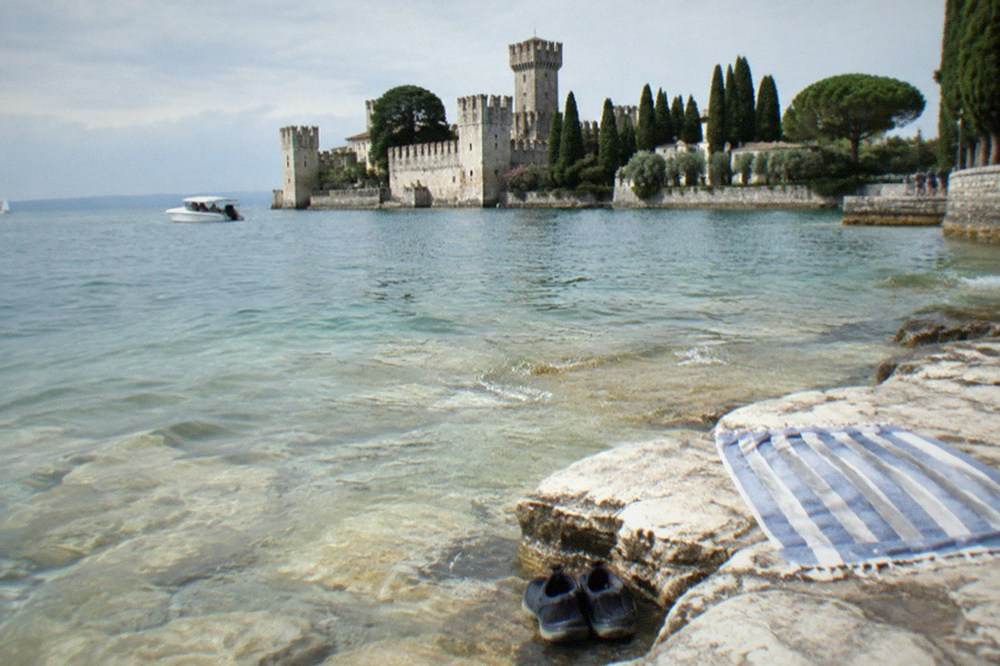
After the swim, the dry layer earns its place. The wind that felt pleasant while you were hot in the water is the same wind that makes you cold in a wet swimsuit eight minutes later, and the Peler-to-Ora rhythm means the middle of the day is usually the calmest window for swimming anyway. A towel per person is the minimum; a changing robe or an oversized shirt is the upgrade that people who swim from boats regularly all seem to carry.
The dry bag is less glamorous and more important. Phones, keys, wallets and passports do not swim, and a boat at a swim stop is a moving platform with wet hands everywhere. A cheap roll-top dry bag solves the problem for the whole trip, not just the swim. If you are planning around swimming rather than fitting it in, the guide to Lake Garda boat trips with a swim stop lists the formats that build the stop into the route, and the wider swimming in Lake Garda guide covers where the water is best.
One safety note that belongs here rather than anywhere else: Italian safety rules require lifejackets of at least category 100 for everyone a boat can carry, and on any organised tour the operator provides them. Children on a swim-stop boat should be in their jackets whenever they are on deck rather than in the water, and the jacket sizes are the operator's job, not yours. Your job is the towel, the shoes and the dry bag.
What Changes Between Seasons?
Almost everything except the method. Summer is a sun-protection problem with a cool-evening tail, spring and autumn are layering problems with a rain possibility, and winter is a coat problem where the lake still runs boat trips on the calm days. The sunset clock moves more than the temperature does: 21:09 at the June solstice against 18:32 in mid October, a swing of well over two hours in when you need your warm layer.
Spring is the season people underestimate. April and May deliver long-term average maximums of 17.2 and 22.7 degrees at Verona, but the mornings on the water start closer to the minimums of 6.8 and 11.7, and the Peler is at its most reliable before noon. A May sailing trip or an early cruise wants the full three-layer set, and the same afternoon can feel like full summer on a sheltered deck. Rain is a real possibility too, with April averaging 70.4 mm and eight to nine rain days, so a packable rain layer earns its slot.
Summer inverts the problem. From late June through August the midday question is sun, not warmth: unbroken exposure on open water, reflection off the surface, and a hat that stays on. The evening is the hidden cool spot, because the lake's own breeze keeps post-sunset air fresher than the inland towns, and a 21:09 sunset in late June still turns into a jacket evening on the water. The islands tour with aperitif from Sirmione, three hours at $105.37 per person with a group cap of 20, rated 4.5 from 25 reviews, is exactly the kind of trip where the departure feels like summer and the return feels like autumn.
Autumn is the connoisseur's season and a wardrobe challenge. The long-term October averages at Verona read 18.0 degrees maximum and 8.7 minimum, with 91 mm of rain across the month, the wettest of the year. On the water that means warm afternoons, cool starts and finishes, and a real chance of needing the rain layer rather than the wind layer. The 18:32 sunset on 15 October means the warm part of the day is short, and any cruise booked for late afternoon wants a proper jacket, not an afterthought.
Winter barely exists as a boat-trip season in the south, but the lake does not close, and the calm, cold, clear days of December and January are when the water is at its most beautiful. Sunset falls at 16:36 on 21 December at Sirmione, so any winter excursion is a midday affair by definition, and the packing list is a coat, a scarf and gloves, worn, not carried. The seasonal detail, month by month, sits in the guide to the best time of day for a Lake Garda boat trip.
What Should You Leave Behind?
Leave behind anything that cannot survive wind, spray or a wet deck: loose sunhats, umbrellas, glass bottles where they are not allowed, expensive loose jewellery, and any shoe with a heel. Leave the hairdryer-and-heels mentality on shore, because the lake rewards people dressed for movement and punishes people dressed for photographs. The boat is the one place on this trip where practical clothes are also the flattering ones.
The umbrella deserves its own sentence. Lake Garda's summer rain, when it comes, tends to come as a shower or a storm cell rather than steady drizzle, and an umbrella on a moving deck is a hazard to you and everyone near you. A packable rain jacket does the same job, packs to the size of a paperback, and works on a boat. The operator's crew will say the same thing with less politeness.
Heeled shoes are the second category. Decks are wet, sloped and moving, and the boarding steps at most Lake Garda harbours are steep aluminium gangways that punish anything with a raised heel. The broader site, Lake Garda Boat Tours, exists because the water is the point of the trip, and the water does not care what the shoes look like.
Expensive loose items are the third. Watches, rings and sunglasses without straps go over the side every week on this lake, and the water below is deep at most tour turnaround points. The rule used by anyone who boats regularly is: if it would hurt to lose it in ten metres of water, it stays in the dry bag or at the hotel.
There is a shorter way to say all of it. Pack like a sailor, not like a sunbather, and you will be comfortable in every hour of the day. The sunbather's kit works for exactly the two hours around lunch, and the sailor's kit contains the sunbather's kit anyway.
What About Shoes On A Boat?
Wear flat, non-slip, non-marking shoes you can slip off easily: deck shoes, trainers with light soles, or sandals with a heel strap. Barefoot is welcome on most small boats and forbidden on few, but the boarding gangway is always shoes-on territory, and the shore at both ends may be stone, gravel or hot asphalt. The shoe that fails on a boat is any shoe that needs your hands to stay on your feet.
The gangway is the part nobody thinks about until they are on one. Lake Garda boarding steps are narrow, steep and frequently wet, and they are the single most common place for slips on any boat day. A shoe with grip matters more there than on the deck, where surfaces are usually grippy by design. If your trip involves a swim stop, the ideal is one shoe that does both jobs: a water shoe with a real sole, worn on the gangway, on the deck and in the water.
On the bigger shared cruises the answer relaxes. The half-day cruise from Peschiera with lunch is a large-vessel trip with proper steps and shaded seating, so ordinary trainers or strapped sandals are entirely fine, and the dress code is whatever you would wear to a casual lakeside lunch. That trip, four hours from $72.30 per person with a 4.4 rating across 849 reviews and free cancellation on the listing, is also the one where the shoe question matters least, which is part of why it suits families and relaxed groups.
The rule of thumb for everything above the ankle: if you can walk a wet stone jetty in them and kick them off at the bow without using your hands, they are boat shoes. If either of those sounds like a problem, they are shore shoes, and there is nothing wrong with shore shoes as long as a second pair is in the bag.
Which Boat Trip Are You Packing For?
Match the bag to the format: a short open-boat loop needs wind layers and secured hats, a half-day cruiser with lunch needs sun management and a light jacket, a swim-stop trip needs the full water kit, and a sunset or aperitivo cruise needs the warm layer you will be glad of after the sun goes. The format decides the packing list more than the forecast does, because the format fixes your exposure.
The short loop is the wind trip. Twenty-five or thirty minutes on an open boat around the Sirmione peninsula, like the 25-minute cruise from $13.77 per person rated 4.7 across 3,495 reviews, is long enough to get cold and short enough that nobody goes back for a jacket. Everything you might need has to be on you when you board: the outer layer, the hat, the sunglasses. The same applies to the private vintage-boat and Fiat-500-boat tours from Sirmione, which are short, open and photogenic, and which reward the windproof layer precisely because nobody expects to need it.
The half-day cruiser is the sun trip. Four hours with lunch included, most of it in open sun with covered seating as backup, means sunscreen applied before boarding and again at the halfway mark, a hat, and one layer for the return leg if the Ora has built. It is the most forgiving format on the lake for clothes, which is why it suits the widest range of visitors.
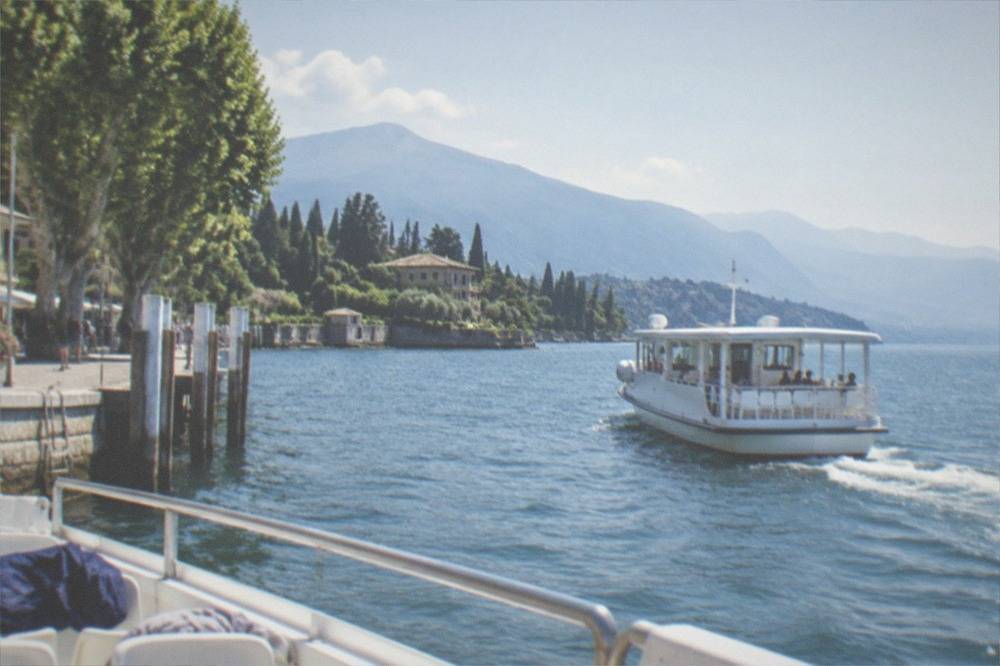
The swim-stop trip is the full-kit trip, and the islands-and-aperitif formats land in between. The three-hour islands tour from Sirmione, $105.37 per person, cap of 20 guests, rated 4.5 from 25 reviews, includes an aperitif and open-water time, so it wants the sun kit, a wind layer and something warm for the last half hour. The sunset formats want the warm layer first and the sun kit second, because the best light comes after the sun stops warming you.
| Boat format | Typical duration | Dominant clothing problem | Non-negotiable items |
|---|---|---|---|
| Short open-boat loop | 25 to 30 minutes | Wind and spray on an open deck | Windproof layer, secured hat, sunglasses with strap |
| Half-day cruiser with lunch | 4 hours | Sun over a long exposure | Sunscreen, hat, light jacket for the return |
| Swim-stop trip | 3 to 4 hours | Water, wet stone, changing on board | Swimsuit, towel, water shoes, dry bag |
| Sunset or aperitivo cruise | 45 minutes to 3 hours | Rapid cooling after sunset | Warm mid layer, jacket, long trousers |
| Sailing trip | 2 to 4 hours | Wind chill while working the boat | Fleece, windproof jacket, gloves in shoulder months |
The sailing formats deserve their last line, because they are the coldest seats on the lake. A two-hour sailboat cruise out of Malcesine puts you in open wind for the whole trip with no cabin to retreat to, and in May, September or October the people in just a t-shirt are the people sitting in the lee of the mast. The historic sailboat cruises from Malcesine, from $45.90 per person, rated 4.2 across 335 reviews, run the same wind clock as everything else, only more so.
However you put the day together, the packing principle survives every format on the lake: dress for the wind, protect for the sun, and keep one warm thing within reach even in August. The lake will supply the rest.
Common Questions About What Kind Of Clothes Should I Pack For Lake Garda?
What Kind Of Clothes Should I Pack For Lake Garda?
Pack layers for a wind clock that changes at noon: a t-shirt base, a light mid layer, a windproof outer, sun protection including a hat that stays on, and long trousers for evenings, which cool fast over water. Add a swimsuit, towel and water shoes if a swim stop is possible, and a proper jacket in spring, autumn or any northern trip.
What Should You Wear On A Boat Trip?
Three light layers you can add and remove: a base t-shirt, a fleece or shirt for the morning and return leg, and a thin windproof jacket. Add sunglasses on a strap, a hat that clips or ties, and sunscreen applied before boarding. The smaller and more open the boat, the more the outer two layers matter.
How Cold Does It Get On The Water?
Colder than the shore, by several degrees on a moving boat in wind, and far colder if you add the Monte Baldo cable car, whose summit at 1,760 metres runs 10 to 15 degrees below the lakeside. The lake surface averages about 26.62 degrees in August but only 13.98 degrees in February, and the felt temperature on deck sits below the land reading most of the time.
What Do You Need For A Swim Stop?
A quick-dry swimsuit, a towel per person, water shoes for rocky shores, a dry layer to change into, and a roll-top dry bag for phones and keys. The wind that felt good while swimming makes wet people cold within minutes, so the dry layer is not optional, and children should be back in their lifejackets on deck as soon as they are out of the water.
What About Shoes On A Boat?
Flat, non-slip shoes you do not need your hands for: deck shoes, light-soled trainers or sandals with a heel strap. The boarding gangway, usually a steep wet aluminium step, is the place grip matters most, and a water shoe with a real sole is the one item that covers gangway, deck and swim stop in one.