Morning, Afternoon Or Sunset: Which Boat Trip Slot To Book On Lake Garda
Lake Garda runs on a clock written by two winds. The Peler blows down from the north through the morning, the Ora pushes up from the south all afternoon, and everything about your boat trip, from the water state to the light, depends on which one is on duty when you cast off.
Short answer
The Peler blows from the north from about 2 or 3 a.m. until roughly noon, then the Ora answers from the south until sunset. A morning departure gives the flattest water, an afternoon departure the liveliest, and an evening departure light that shifts between a 21:09 June sunset and an 18:32 mid October one.
Lake Garda is a lake with a timetable, and the timetable is written by wind. Every fair-weather day follows the same pattern: the Peler arrives from the north in the small hours and holds the water flat until about noon, then the Ora pushes back up from the south and keeps going until sunset. The Lake Garda Boat Tours roster reflects this rhythm whether the listings say so or not, because operators schedule around water they cannot control. Pick the wrong slot and you can spend an afternoon trip in chop; pick the right one and the same route feels like a different lake.
This guide walks through what each part of the day actually does to the water, the light and the crowds, and matches it against the real departure times of bookable tours. The short version: morning is the flat-water slot, afternoon is the lively one, and evening is a moving target that swings by nearly three hours between June and October.
Is Morning Or Afternoon Better For A Boat Trip?
For calm water and clear views, morning is the better slot on almost any part of the lake. For wind, waves and a sailing boat that actually heels, afternoon wins. The two daily winds swap over around noon, so the difference between a 9 a.m. and a 3 p.m. departure is not subtle, it is the difference between glass and a working sea.
The deciding factor is where the Peler stops. The tourism board's own wind page describes it plainly: the Peler blows from the north for the first twelve hours of the day, usually starting between 2 and 3 a.m. and stopping around noon. Before it fades, the water it leaves behind is the flattest the lake gets. Sightseeing boats, photography trips and anyone with a nervous stomach all do best in that window.
Afternoon belongs to the Ora. The same official page notes that it blows from the south from around noon until sunset, and that the narrowing of the lake towards the north creates a Venturi effect, so the Ora reaches speeds of over 10 metres per second in the upper basin and can produce significant waves. A Malcesine or Limone afternoon crossing is a genuinely breezy affair. Down south, around Sirmione and Peschiera del Garda, the same wind arrives softer, which is why the southern tours run happily at any hour.
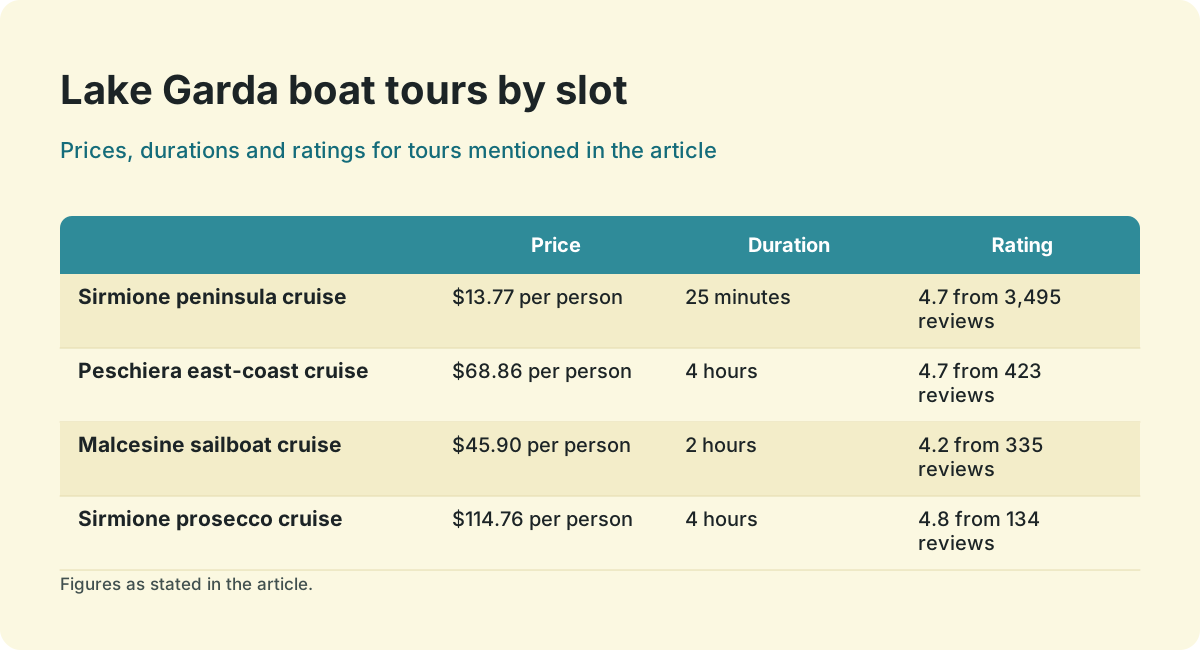
Price barely moves between the slots, so the choice is really about comfort and purpose rather than budget. The 25-minute peninsula cruise from Sirmione costs from $13.77 per person and runs all day at 4.7 from 3,495 reviews, the same figure whether you take the first loop or the last. What changes is what you see and how it feels. If you want the full picture of what a trip actually involves, from boarding to the commentary, the guide to what a Lake Garda boat ride is like covers the mechanics, and this page sticks to the clock.
What Do The Two Daily Winds Do?
The Peler and the Ora are the lake's two governing winds, and on a clear day they trade shifts at midday. The Peler comes from the north, blows from roughly 2 or 3 a.m. until noon and lays the water flat. The Ora comes from the south from noon to sunset and builds waves that grow as the lake narrows towards Riva.
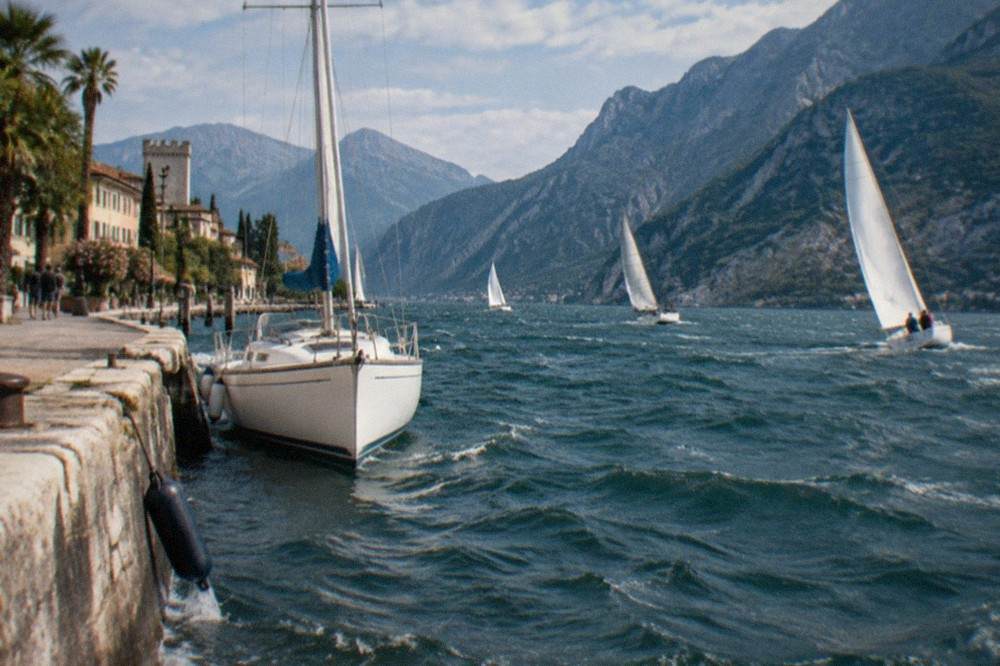
The pattern is regular enough that the official Garda Trentino wind guide describes it as a rule: on days with good weather, the wind blows from the north in the morning, changes direction at noon, then blows from the south. Sailors plan whole regatta calendars around it, and so should anyone booking a boat trip.
| Hour band | Wind | Direction | Effect on the water |
|---|---|---|---|
| 2 or 3 a.m. to about noon | Peler | From the north | Flat, glassy surface, clearest visibility over the water |
| Noon to sunset | Ora | From the south | Building waves, strongest in the narrow north near Malcesine and Riva |
| Early afternoon, lower basin | Ander | From the south-west | A few hours of steady breeze, occasionally up to 10 m/s, mainly the southern lake |
| Storm periods, 2 to 3 days | Vinessa | From the south-east | Persistent blow from the Veneto shore towards the Lombard shore, tied to Adriatic weather |
| After bad weather, north-west | Balinot | Descending from the north-west | Can exceed 20 m/s and raises higher waves than the Peler |
Two of those winds deserve a caution. The Vinessa, described in the same wind guide, is a periodic south-east wind that can blow for two or three consecutive days when an Adriatic disturbance arrives. The Balinot is a descending north-west wind that reaches the lake via the mountains above Riva and can exceed 20 metres per second, forming waves higher than the Peler's. Neither appears on a settled summer day, but if the forecast shows one, an afternoon or evening booking is the one to move.
The infographic above is the whole argument of this page in one line: the lake has a morning personality and an afternoon personality, and the changeover happens while most visitors are still at lunch. If you want to dig further into how weather beyond wind shapes a day on the water, the Lake Garda weather guide for boat trips takes the longer view across the season.
What Is The Morning Water Like?
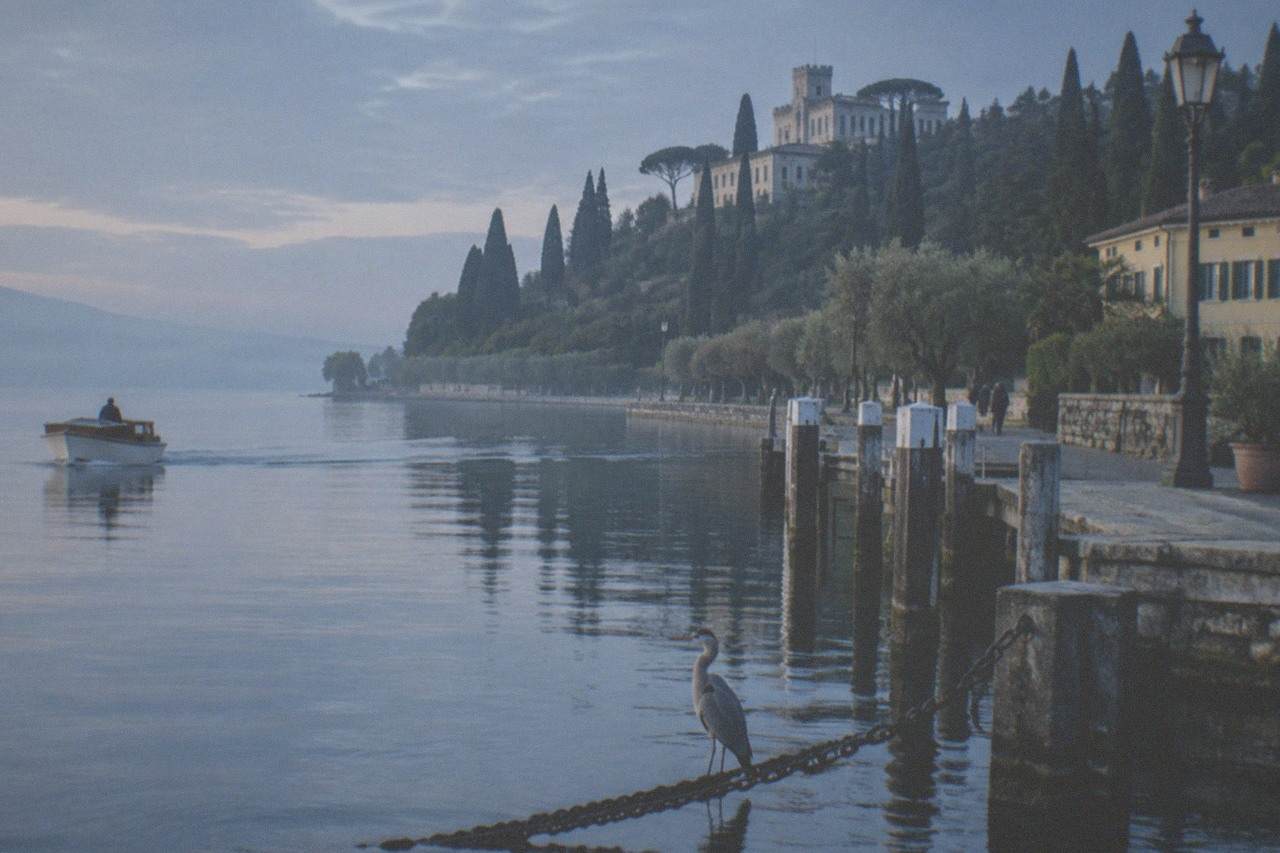
Morning water on Lake Garda is the flattest and clearest it gets all day. The Peler has been blowing from the north since the small hours, and by the time tour boats start boarding the surface is calm, the air is transparent and the shoreline photographs at its best. The trade-off is cooler air and low sun glare towards the eastern shore.
Early departures are the photographer's slot. The light comes in low from the east, the water has not yet been ruffled, and the crossing from Desenzano to Sirmione, which the ferry timetable puts at about 20 to 25 minutes, happens over water that looks solid. Sightseeing cruises that loop the Sirmione peninsula show the Grotte di Catullo and the Rocca Scaligero against a clean background rather than a shimmering one.
The morning is also when the water itself is at its most inviting for a swim stop. The blended dataset on seatemperatures.net puts the ten-year August average surface temperature at about 26.62 degrees, warm enough that an early dip is comfortable rather than bracing, though the same source shows February averaging 13.98 degrees, which is a different proposition entirely. A morning swim stop means flat water for getting back on the ladder, which matters more than most people expect.
Practically, the roster's short sightseeing tours are the natural morning bookings. The 25-minute peninsula cruise from Sirmione runs from $13.77 per person, rated 4.7 across 3,495 reviews, and a morning loop gives you the peninsula with the fewest other boats on the water. The longer shared cruises, like the 4-hour east-coast cruise from Peschiera del Garda at from $68.86 per person, 4.7 from 423 reviews, also benefit from a morning start because they cover open water where the afternoon Ora is felt most.
One honest caveat about mornings: the Peler is a real wind, not a rumour. On the northern lake it can be blowing at 8 a.m. even while the surface near shore looks calm, and the flat water you see from the pier is not always the flat water a mile out. The northern basin is where the morning wind is strongest, which is exactly why the sailing schools cluster there and why their first sessions rarely start before the wind has begun to fade.
What Changes After Noon?
At noon the wind swings round and the lake changes character. The Ora builds from the south through the afternoon, raising waves that are largest between Malcesine and Riva where the lake narrows. Light gets harder, crowds on the water thicken, and sailing boats come alive: for anyone under canvas, the afternoon is the point of the day.
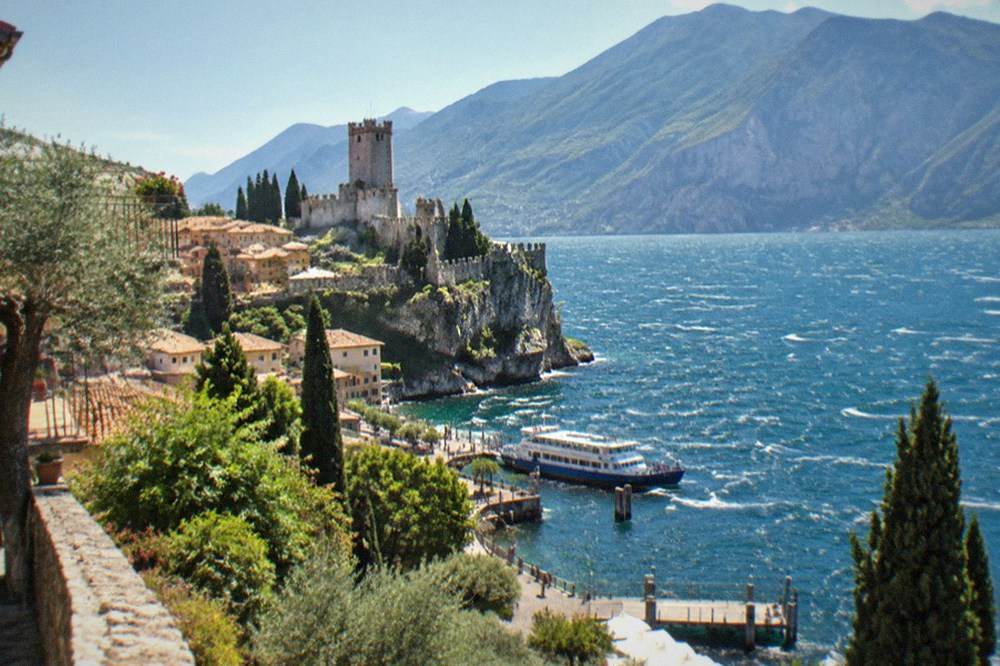
For sailboats this is the golden window. The historic sailboat cruises from Malcesine are built around the Ora: the panoramic two-hour cruise is rated 4.2 from 335 reviews and costs from $45.90 per person, and a two-hour slot in the afternoon is when a boat like that actually sails rather than motors. If the whole reason you are booking is to feel the lake pull, the Lake Garda sailing trips guide matches the boats to the breeze in detail.
For motor tours the afternoon is more mixed. In the southern basin the Ora arrives softened, and a Sirmione or Peschiera afternoon cruise is pleasant rather than bouncy. The 4-hour afternoon cruise from Sirmione with prosecco and a snack, 4.8 from 134 reviews at from $114.76 per person, is built for exactly this: a gentle drift with the wind behind it. But the same afternoon on the northern lake, say a crossing from Limone towards Riva, can mean spray over the bow and a wet rail. The 2-hour speedboat tour from Peschiera, 4.7 from 162 reviews at from $40.17 per person, carries a real sell-out badge, and its afternoon runs are the ones where the driver's skill at reading the chop earns the rating.
Crowds shift with the wind too. Public ferries and private tours both run at maximum frequency between 16 May and 4 October on the summer timetable, and the mid-afternoon departures are where day-trippers stack up. A recent traveller report from the northern lake described spending more than four hours queueing for ferries and the Monte Baldo cable car on one busy day and missing the last direct sailing. That is an anecdote, not a statistic, but the direction of it is consistent: the later in the day, the more people have the same idea.
The afternoon also has a compensating virtue for photographers of a certain mood: once the sun drops behind the western mountains, the harshness goes and the long shadows start. The gap between the afternoon's worst light and the evening's best light is short, and it is worth planning around rather than enduring.
When Does The Sun Actually Set Each Month?
At Sirmione, sunset falls at 18:31 on 21 March, 20:24 on 1 May, 21:09 on 21 June, 20:25 on 15 August, 19:28 on 15 September and 18:32 on 15 October. The evening slot therefore moves by nearly three hours across the season, and a sunset tour booked blind in April is a very different trip from one booked in July.
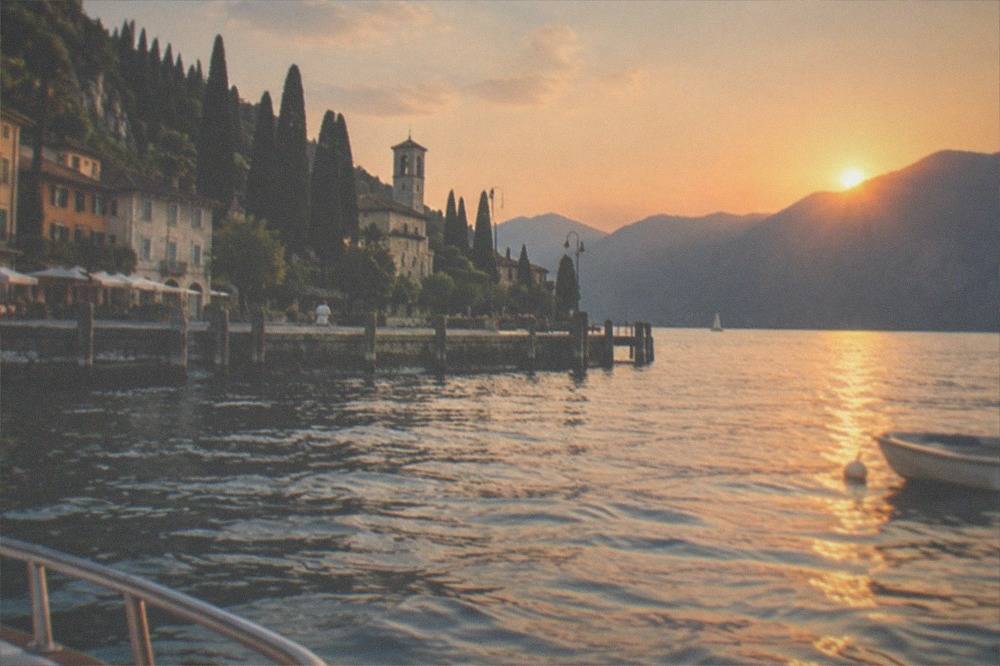
These are the auditor-verified Sirmione readings, and they matter because sunset tours are sold at fixed clock times all season. A 45-minute sunset departure that catches the last light in June would leave you standing on the pier in daylight in April. Check the operator's listed start time against the date before you book, not against your memory of a previous trip.
| Date at Sirmione | Sunset | What it means for an evening tour |
|---|---|---|
| 21 March | 18:31 | Departures around 18:00; bring a layer, the water is cold |
| 1 May | 20:24 | Departures from about 19:45; daylight boarding, dusk on the water |
| 21 June | 21:09 | The latest slot of the year; golden light until after 20:30 |
| 15 August | 20:25 | Peak season; the busiest sunset sailings of the year |
| 15 September | 19:28 | Departures near 18:45; noticeably quieter than August |
| 15 October | 18:32 | Early departures; many evening tours have stopped running |
| 21 December | 16:36 | Off-season; evening tour schedules are suspended |
The bookable evening options follow this clock closely. The shared sunset tour from Sirmione runs about 45 minutes at from $35.12 per person, capped at 20 people, rated 4.8 from 324 reviews, with an aperitivo poured on board. For a couple wanting the whole boat, the private sunset cruise with local wine is from $252.47 for the boat, up to two people, and it carries a genuine sell-out badge, one of only five listings on the roster that does. Up the lake, the golden sunset cruise from Malcesine runs two hours with food, drinks and music at from $86.07 per person, 4.4 from 241 reviews. If the month-by-month detail is what you are planning around, the sunset times on Lake Garda post carries the fuller table.
One planning note that is easy to miss: the Ora blows until sunset, so a sunset sailing from a southern port departs with a live breeze behind it, while a northern sunset trip often leaves on water that is calming as the wind dies. Neither is better, but they are different experiences wearing the same "sunset cruise" label.
Which Slot Suits Photographs?
Morning gives the cleanest, flattest water and the softest directional light, which suits landscape and reflection shots. Evening gives the colour: the last 40 minutes before sunset is when the lake turns gold, and it is the only slot that delivers the west-facing mountain silhouettes. Mid-afternoon is the worst slot for a camera, with hard top-down light and a wind-ruffled surface.
The physics is simple. In the morning the sun rises behind the Veneto shore and rakes across the water from the east, lighting the Lombard mountains while the lake surface still holds the Peler's calm. Reflections of Sirmione's castle or the Isola del Garda profile work best before about 10 a.m., because after that the breeze starts pulling the surface apart. By mid-afternoon the light is directly overhead, the water is at its choppiest, and most cameras will record glare and whitecaps.
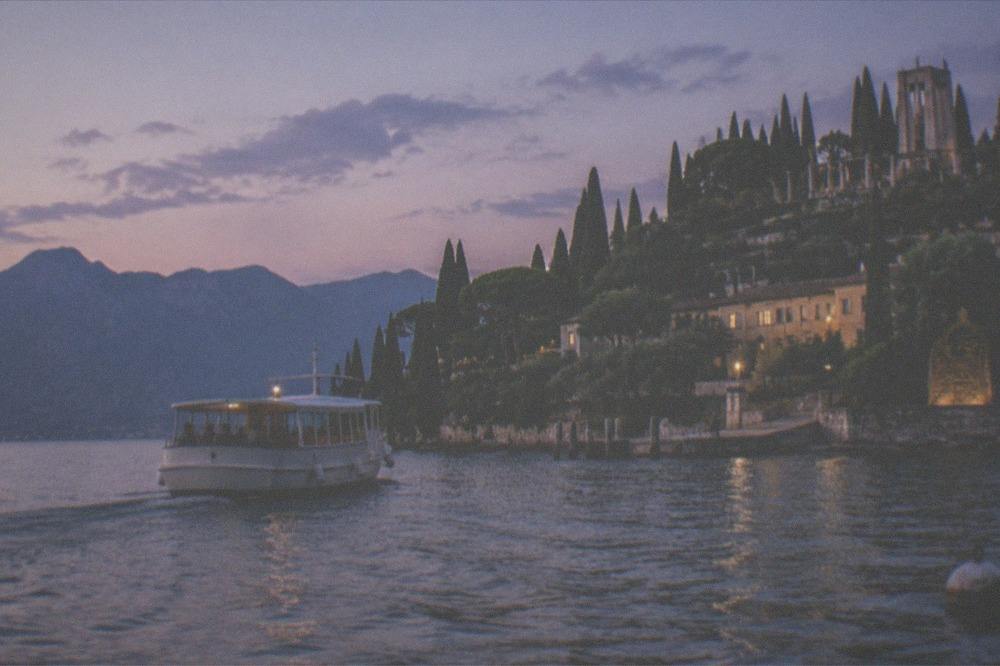
The evening reverses the geometry. The sun drops behind the Brescia shore, the mountains go to silhouette, and the water between them catches warm colour, especially in the hour when the Ora is dying. This is the slot the sunset tours are really selling, and the aperitivo cruises time themselves to it deliberately. The two-hour golden sunset cruise from Malcesine is built around exactly this window, with music and food stretched across the last light.
There is a practical middle path for photographers who want both conditions: book a late-afternoon departure that runs into the evening, such as the 3-hour islands tour with aperitif from Sirmione, from $105.37 per person, capped at 20, rated 4.5 from 25 reviews. You board in the tail of the Ora and finish in the gold. For the fuller decision between a dedicated sunset booking and a general cruise, the Lake Garda sunset cruise guide compares the formats side by side.
Which Slot Suits Children Or A Weak Stomach?
For children and anyone prone to motion sickness, morning is the safest slot: flat water, short crossings and the lowest chance of chop. The shared sunset tour from Sirmione, about 45 minutes and capped at 20 people, is the gentlest evening option because it stays in the sheltered southern basin. Avoid open-water afternoon crossings in the northern lake if anyone aboard dreads waves.
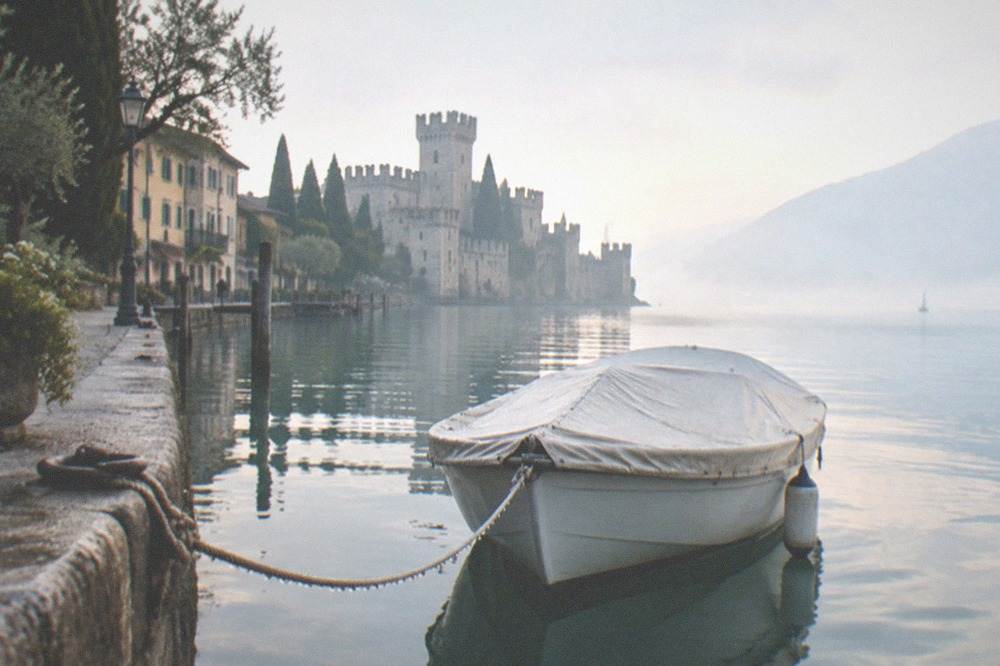
The reasoning is the wind calendar again. The Peler's morning calm is not just aesthetic, it is the difference between a boat that barely moves and one that rolls. Children who are happy on a flat 25-minute peninsula loop at $13.77 per person can be miserable on a two-hour afternoon crossing of the northern basin, and the same holds for adults who have never trusted their stomach to a lake. Short and calm beats long and lively for the first trip of a family holiday.
The evening needs more care than the morning but less than the afternoon. By the last hour before sunset the Ora is usually fading, and the southern basin around Sirmione is the most sheltered water on the lake. The shared sunset tour is a good fit here: 45 minutes is short enough that even a queasy passenger stays comfortable, the aperitivo gives children a drink and adults a glass, and the 20-person cap keeps the boat from feeling like a ferry.
A few practical notes for the family slot. The public ferry tariff lets children under four travel free on ordinary services if they do not occupy a seat, and pushchairs travel free, which makes a calm morning ferry hop a genuinely cheap trial run before you commit to a tour. Also worth knowing: the safety equipment annex to Italian rules requires lifejackets of at least category 100 for everyone a boat can carry, so a properly run tour boat will have child-sized jackets as a matter of course, not as a favour. Ask when booking if the listing does not say.
Which Departure Should You Book?
Book morning for calm water, photography and families. Book afternoon for sailing, speedboats and the liveliest ride. Book evening for colour and an aperitivo, but check the sunset time for your date first: the window moves from 21:09 in June to 18:32 by mid October. If you can only take one trip, take the slot that matches what you are booking the boat for, not the clock you happen to be free at.
| Slot | Water state | Light | Crowds | Best booked as |
|---|---|---|---|---|
| Morning, before noon | Flattest of the day, Peler calm | Soft, low from the east | Lowest on the water | Peninsula cruise, swim-stop trip, photography loop |
| Afternoon, noon to about 18:00 | Chop building with the Ora, worst in the north | Hard and overhead until late | Highest, peak ferry and tour frequency | Sailboat cruise, speedboat tour, windsurf-side sailing |
| Evening, last hour of light | Calming as the Ora dies | Gold, then silhouette | Thinning after dinner hour | Sunset aperitivo cruise, private evening charter |
The one-sentence version of the whole page: the lake is flat in the morning, alive in the afternoon and beautiful in the evening, and the only wrong answer is booking a slot for the wrong reason. A family with a nervous passenger on a 2 p.m. northern crossing has chosen badly however good the tour is; a sailing enthusiast on a 9 a.m. departure has slept through the entire point of the day.
Whichever slot you land on, the three formats below cover the full spread of the day on this lake: the shared sunset tour for the evening gold, the 25-minute peninsula cruise for the flat-water morning loop, and the golden sunset cruise from Malcesine for the northern evening with food and music.
Two final cautions that do not fit neatly into a slot. First, the descending Balinot wind can exceed 20 m/s after unsettled weather and raises waves higher than the Peler, so a morning after a stormy night is not automatically a calm morning. Second, the ferry and tour timetables run at full summer frequency only between 16 May and 4 October; outside that window, both the choice of departures and the sunset times shrink together, and an October evening booking needs to happen two hours earlier than the same one in August. Check the listing's own start time against the date, and the forecast against the slot, and the rest of this page takes care of itself.
Common Questions About Boat Trip Timing On Lake Garda
Is morning or afternoon better for a boat trip?
Morning is better for calm water, clear photographs and anyone unsteady on a boat, because the Peler wind has flattened the surface since dawn. Afternoon is better for sailing and speed, because the Ora wind builds waves from noon until sunset. Choose by purpose: sightseeing in the morning, sailing in the afternoon, colour in the evening.
What time is sunset on Lake Garda?
At Sirmione, sunset falls at 18:31 on 21 March, 20:24 on 1 May, 21:09 on 21 June, 20:25 on 15 August, 19:28 on 15 September and 18:32 on 15 October. Sunset tours set their departure times around these hours, so always check the listed start time for your exact date.
When does the wind pick up on Lake Garda?
The Ora wind starts from the south at around noon and builds through the afternoon, reaching its strongest in the narrow northern basin near Malcesine and Riva, where it can exceed 10 metres per second. The morning Peler fades at about the same time the Ora begins.
Is the water rough in the afternoon on Lake Garda?
It can be, especially on the northern lake between Malcesine and Riva, where the Venturi effect concentrates the afternoon Ora into the largest waves of the day. The southern basin around Sirmione and Peschiera del Garda stays noticeably gentler, and most southern tours run comfortably at any afternoon hour.
Which boat trip slot is best for children?
Morning, because the water is flattest and the trips feel shortest. The 25-minute peninsula cruise from Sirmione and the shared 45-minute sunset tour are both calm, short and capped in numbers, while open-water afternoon crossings in the north are the ones to avoid with a nervous child or a weak stomach.
Do sunset cruises run all year on Lake Garda?
No. Most evening tours run on the summer season, roughly May to early October, because sunset moves from 21:09 in June to 18:32 by mid October and the weather outside that window stops being reliable. Check the operator's live listing for the dates a specific sunset cruise operates.