Sailing On Lake Garda: Trips From Riva, Torbole And Malcesine
Lake Garda owes its sailing scene to two winds that trade shifts every day: the Peler from the north in the morning, the Ora from the south in the afternoon. Here is how that rhythm shapes a sailing trip, where the bookable sails leave from, and what they cost.
Short answer
Bookable sailing trips on Lake Garda leave Malcesine and Desenzano del Garda, from $45.90 per person for a two-hour sail on a historic sailboat. Riva del Garda and Torbole are the school and regatta end of the lake, where the wind is strongest, but the sails you can book through this site do not depart from there.
Lake Garda is the most reliably windy of Italy's large lakes, and that reliability is the whole reason a sailing trip here works as a tourist activity rather than a gamble. Two thermal winds, the Pelèr and the Ora, arrive on a schedule you can almost set a watch by, trading places at midday and giving the water a working breeze for most of the daylight hours. The tourism board for the northern shore describes both winds in detail, and their pattern explains why the sailing schools, the regatta calendar and the bookable sightseeing sails cluster where they do.
This page covers the practical side: what a sailing trip on the lake actually involves, why the north end gathers the sailors, how the two daily winds divide the day, where the bookable trips really leave from, how long a sail lasts, what it costs, whether the afternoon is too much for a beginner, and which trip fits which kind of visitor. The short version: the sails you can book here leave Malcesine and Desenzano del Garda, and the strongest wind sits further north at Riva and Torbole, which belong to the sailing schools and the race crews.
What Is A Sailing Trip On Lake Garda?
A sailing trip on Lake Garda is a booked outing on a sailboat with a crew, typically two hours on a historic wooden vessel from Malcesine, from $45.90 per person. It is not a sailing lesson and not a bareboat charter: you sit aboard, the crew handles the sails, and the boat uses the lake's daily wind cycle rather than an engine. Riva and Torbole host the schools, but no bookable sail departs from them on this site.
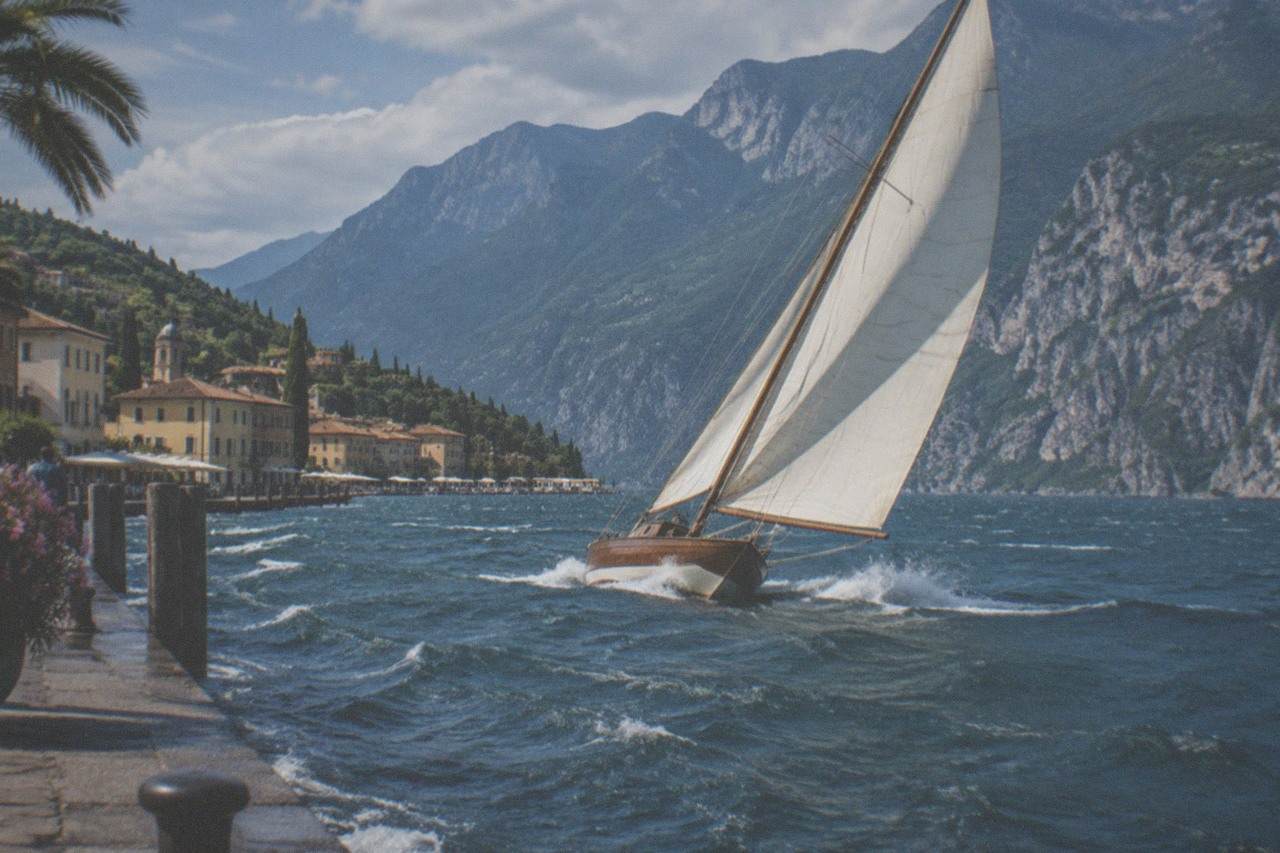
The format matters more than the word "sailing" suggests. What is on sale to visitors is a sightseeing cruise under sail, closer to a heritage experience than a sport. The two Malcesine listings use historic sailboats, wooden-hulled vessels with traditional rigs, and the crew sails them the way they were designed to be sailed. You watch, or you hold a line if the crew offers, and the boat moves at whatever speed the wind gives it. There is no itinerary in the motor-cruise sense: the boat goes out into the breeze, works a reach or two across the bay, and comes back.
That is a different product from the sailing courses at the top of the lake, which are multi-day instructional programmes run by clubs such as Fraglia Vela Riva, whose 2026 calendar includes the RS Feva Europeans from 30 September to 3 October and the Garda Youth Cup from 9 to 11 October. It is also different from the ferry, which crosses the lake on fixed routes whatever the wind does. A sailing trip sits between the two: the freedom of a small boat, the comfort of not being responsible for it.
For anyone weighing the format against other ways out on the water, the boat trips around Lake Garda guide compares every style of trip, and the Lake Garda boat ride basics page covers what a day on the water generally feels like. A sail is the quietest and the most weather-dependent of the lot, which is exactly its appeal.
Why Do The Sailors Gather At The North End?
Sailors gather at the north end of Lake Garda because the lake narrows into a mountain-lined arm there, and the daily south wind compresses through that narrowing, reaching speeds of over 10 metres per second. The same geography that funnels the breeze also keeps motor traffic out: Trentino's provincial law bans motorboats from the Riva and Torbole water, leaving it almost entirely to sail.
The shape of the lake does the work. The northern basin is a trench between steep mountains, and when the Ora pushes north in the afternoon, the orography squeezes it: the local tourism text calls the effect a Venturi, the same physics that speeds air through a narrow pipe. More wind, more consistently, is what a sailing school needs, and it is why the world's youth and dinghy regattas book Riva and Torbole rather than the wide southern bays.
The second reason is legal. The Veneto regional navigation law, in its article on speed limits, states plainly that in the waters of the Autonomous Province of Trento "la navigazione delle unità a motore" is prohibited. No motorboats means no wakes, no water-ski corridors and no rental RIBs in the sailing lanes: the water off Riva and Torbole belongs to boards, dinghies and race marks. That ban covers only the Trentino sector, the water around Riva del Garda and Torbole itself. Malcesine is in Veneto and Limone sul Garda is in Lombardy, and neither sits in the banned zone, a distinction worth holding onto because plenty of online text gets it wrong.
The consequence for a visitor is a division of labour along the shore. Riva and Torbole are where you learn, race and watch. Malcesine, the first town south of the narrow arm on the Veneto shore, is where the breeze is still strong but the water is open to everyone, and it is where the bookable sightseeing sails leave from. The boat trips from Malcesine guide covers the full range of departures from that harbour, and the Riva del Garda departures page explains what actually leaves Riva: ferries, and the sailing club's own world.
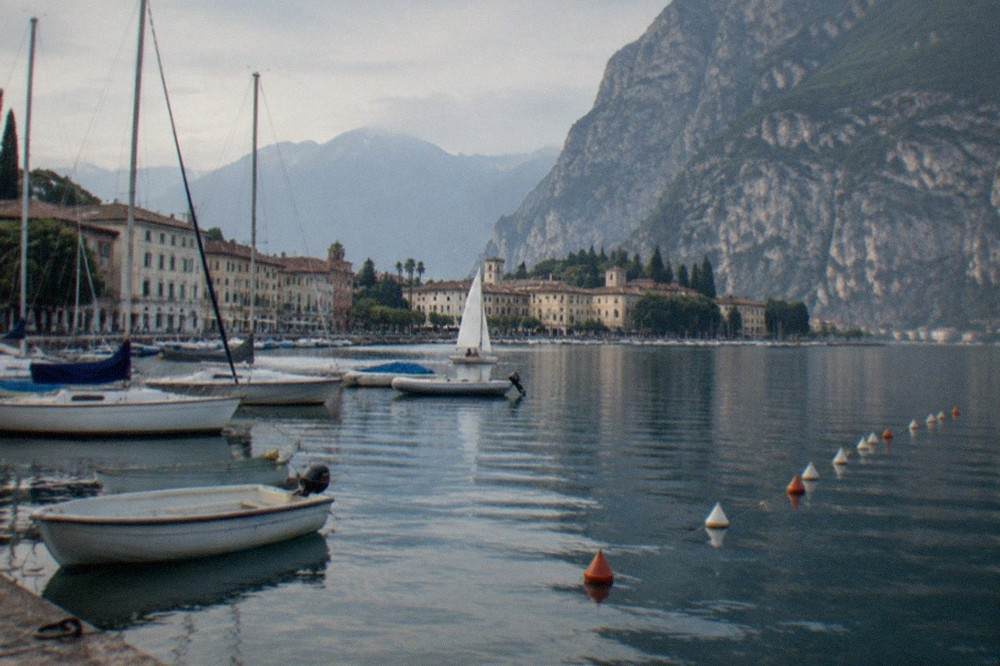
There is a third, quieter reason: the view. From the water at the top of the lake, Monte Baldo rises on one side and the Brenta group on the other, and a sailboat is the only platform that moves through that scenery without an engine note. Travellers debating whether the north end justifies the trip can read the Malcesine versus Riva comparison, which weighs the two towns for a stay.
What Are The Pelèr And The Ora, Hour By Hour?
The Pelèr blows from the north, starting between 2 and 3 a.m. and dying around noon. The Ora answers from the south, from around noon until sunset, peaking in the northern arm where it can pass 10 metres per second. On a fair-weather day the lake therefore hands you a morning breeze and an afternoon breeze from opposite directions, with a calm changeover in the middle.
The Pelèr is the night shift. It is a drainage wind: air cooled over the mountains sinks and runs down the lake, and it covers a large part of the surface before most visitors are awake. By late morning it fades, and there is a lull around midday when the water can look glassy even at Malcesine. Then the land heats, the air over the southern plain rises, and the Ora fills in from the south, building through the afternoon to its evening maximum in the north. The tourism board's wind page, which this site treats as the reference text, notes that the Ora "reaches speeds of over 10 m/s and can produce significant waves" in the upper lake.
| Wind | Direction | Typical hours | What it does to the water |
|---|---|---|---|
| Pelèr | From the north | About 2 or 3 a.m. until around noon | Flat water early, building chop toward late morning on the open lake |
| Ora | From the south | Around noon until sunset | Freshening breeze all afternoon, strongest and choppiest in the northern arm |
Two other named winds matter to anyone planning more than one day on the water. The Vinessa blows from the south-east, from the Veneto shore toward the Lombard shore, and can persist for two or three consecutive days when an Adriatic disturbance drives it. The Balinot descends from the north-west over Monte Ballino toward Riva and can exceed 20 metres per second, producing higher waves than the Pelèr. Neither is a daily rhythm; both are the kind of wind that a skipper reads a forecast for. The regional weather service ARPAV publishes a dedicated "Meteo Garda" bulletin covering winds and precipitation probability for the lake area, updated through the day, and it is the document a competent operator will be watching.
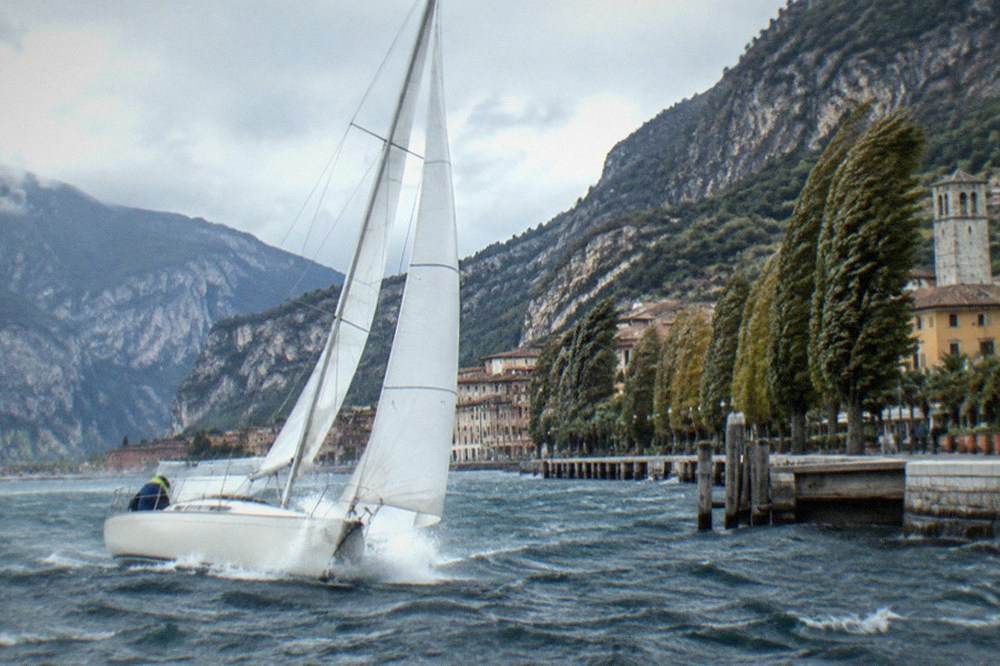
For trip timing, the practical reading is this: a morning sail rides the tail of the Pelèr and tends to be calmer; an afternoon sail rides the Ora and tends to be livelier. The site's best time of day for a boat trip guide works through the same wind logic for every format of trip, and the weather for boat trips page covers the seasonal picture, including the long-term temperature averages for Verona, the nearest national climate station.
Where Do Bookable Sailing Trips Actually Leave From?
The bookable sailing trips on this site leave from two towns only: Malcesine, on the Veneto shore, and Desenzano del Garda, in the south. No sailing trip listed here departs from Riva del Garda or Torbole, whatever their reputation as sailing towns. If you want to sail out of the far north, the options there are clubs and courses rather than bookable sightseeing sails.
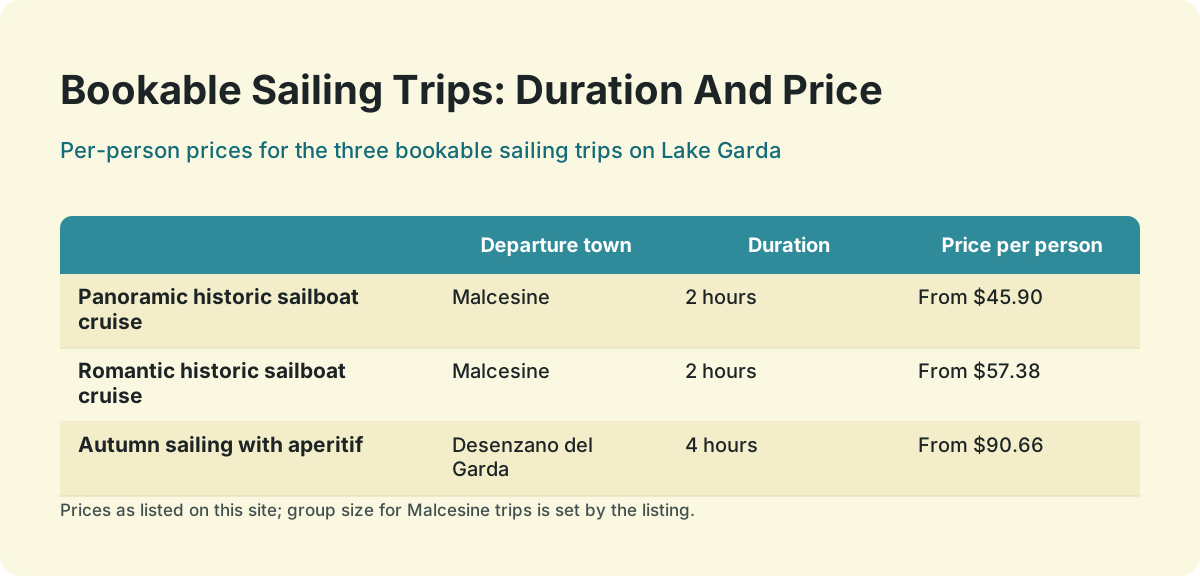
This is the honesty gap worth stating plainly, because the lake's fame as a sailing destination is really a northern fame, and a visitor could easily assume a Riva departure exists. The two Malcesine listings are the historic sailboat cruises: a panoramic cruise rated 4.2 across 335 reviews, from $45.90 per person for two hours, and a romantic cruise on the same class of boat, rated 4.7 from 59 reviews, from $57.38 per person for two hours. The third sailing listing is a different animal entirely: a four-hour autumn sailing trip with aperitif from Desenzano del Garda, from $90.66 per person, capped at six guests, which carries a 5.0 rating from a single review, so it has no review history worth leaning on.
| Trip | Departure town | Duration | Price per person | Group size |
|---|---|---|---|---|
| Panoramic historic sailboat cruise | Malcesine | 2 hours | From $45.90 | Set by the listing |
| Romantic historic sailboat cruise | Malcesine | 2 hours | From $57.38 | Set by the listing |
| Autumn sailing with aperitif | Desenzano del Garda | 4 hours | From $90.66 | Up to 6 |
Malcesine works as a sailing base for a reason a map makes obvious: it sits at the throat of the northern arm, close enough to the Venturi zone to catch a real breeze, far enough south to be outside the Trentino motor ban and inside the ordinary mixed traffic of the lake. A sail from Malcesine can work up toward the narrows, look into the wind arena, and retreat to calmer water, all inside two hours. Desenzano, by contrast, is a southern-basin sail: gentler wind, wider water, an afternoon format built around the aperitif rather than the breeze, which is why that listing runs in autumn when the southern lake is at its most settled and the heat haze has gone.
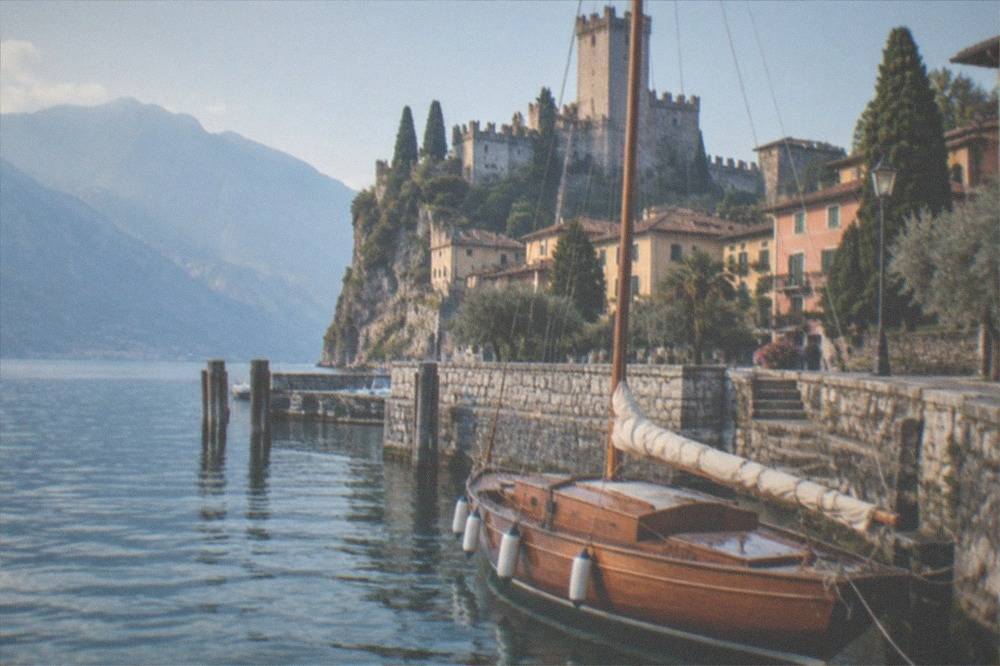
The panoramic cruise is the one this site points most visitors toward, because it is the cheapest way onto a proper sailboat here and the review pool, 335 reviews at 4.2, is large enough to mean something. You can Check availability on the live listing alongside the full Malcesine departures guide, which also covers the motor and sunset options from the same harbour.
How Long Is A Sail, And Do You Help Crew?
A bookable sailing trip on Lake Garda runs two hours from Malcesine or four hours from Desenzano, against roughly 25 minutes for the short peninsula motor loops. You are a passenger, not crew: the skipper and mate work the sails, and any participation is by invitation. Two hours is enough to feel both a reach and a tack in the afternoon breeze without exhausting anyone.
The two-hour length is not arbitrary. It is roughly one full wind cycle slice: out on one tack as the Ora builds, a turn, and back with the shore in sight. On a historic boat with a small crew, two hours also keeps the trip inside most people's comfort window on moving water, which matters for companions who came for the scenery rather than the heel angle. The four-hour Desenzano format spends the extra time differently, on the shore break and the aperitif service rather than on more distance.
Participation depends on the crew and the conditions. On a quiet reach with a willing skipper, guests sometimes get a winch handle or a chance on the tiller; on a fresh afternoon, the crew does everything and you keep your weight where you are told. Neither is a promise on the listing, so treat any hands-on moment as a bonus. What the listings do promise is the boat, the crew and the time on the water, and the free-cancellation terms that both Malcesine sails carry.
The romantic cruise deserves its own sentence here because its format answers a different question. It runs the same two hours and the same class of historic sailboat as the panoramic trip, at a higher per-person price, from $57.38, and its review pool is smaller, 4.7 from 59 reviews. What you are buying is the framing: an evening-leaning departure, a quieter boat, a trip built for two people rather than a mixed group. It suits an anniversary; the panoramic trip suits everyone else.
What Does A Sailing Trip Cost?
A sailing trip on Lake Garda costs from $45.90 per person for the two-hour Malcesine panoramic cruise, $57.38 for the romantic version, and $90.66 for the four-hour Desenzano sail with aperitif, capped at six guests. All three are per-person prices. That places sailing in the middle of the lake's price range: above the short motor loops, well below a private charter.
For context, the cheapest motor experiences on the lake are the 25-minute Sirmione peninsula loops from $13.77 per person, and the shared sunset tours start at $35.12 per person. A private boat of your own starts at $152.20 for the boat for a 25-minute private peninsula tour, up to five people, and climbs quickly from there. Sailing, at $45.90 to $90.66 per person, buys more time on the water than almost anything at those prices, because the wind is free and the boats carry groups rather than one party.
| Format | Pace | Noise | Weather dependence | Price |
|---|---|---|---|---|
| Historic sailboat cruise, Malcesine | Wind speed, often 5 to 15 knots felt | Silent except rigging and water | Total: no usable wind, no trip | From $45.90 per person |
| Golden sunset cruise with food and music, Malcesine | Motor cruise speed | Music and engine | Runs in most conditions | From $86.07 per person |
| Luxury speedboat with skipper, Riva del Garda | Planing speed | Engine throughout | Runs in most conditions | From $229.52 for the boat, up to 4 people |
The comparison table is the honest way to see what the sailing price buys and what it trades away. A sail is the only row that depends completely on the breeze, and that cuts both ways: a good afternoon delivers something no motorboat can, and a dead-calm afternoon delivers a slow drift. The golden sunset cruise, rated 4.4 from 241 reviews, runs to a timetable regardless of wind, and the Riva speedboat, 5.0 from 8 reviews, a pool too small to call proven, trades the silence for speed. The boat trip prices guide sets out the full price ladder across every format if you want the complete picture.
One cost note on the Desenzano sail: its $90.66 per person includes the aperitif service, so it is not directly comparable per hour with the Malcesine trips. Four hours, a drink and food service, and a six-guest cap make it a half-day product, closer in spirit to the half-day lunch cruises from Peschiera than to a two-hour sail. Its single review means the price is the only firm thing about it; judge it on the format, not on a rating that does not yet exist in any meaningful sense.
Is The Afternoon Too Windy For A First Sail?
For a first sail, the morning is the safer booking: the Pelèr's last hours are gentler, and the midday changeover gives calm water. The afternoon Ora is the stronger wind, and in the northern arm it can produce significant waves, but a skippered historic boat from Malcesine handles it routinely. If you are anxious about motion, book morning; if you want the sailing to feel like sailing, book afternoon.
The honest framing is that "too windy" is a comfort question, not a safety one. The Malcesine crews sail the same water every day of the season and read the forecast before leaving the wall; the ARPAV Meteo Garda bulletin exists precisely so operators are not guessing. A first-timer who boards in the afternoon will experience heel, spray and a boat that leans, which is the sensation sailing is sold on, and which a minority of passengers discover they dislike. Nothing on the listing promises a flat ride.
There are two practical mitigations. The first is timing within the afternoon: the Ora builds through the day, so an early-afternoon departure rides a younger, softer version of it than a 5 p.m. one. The second is the free-cancellation terms both Malcesine sails carry: you can hold a booking and still change your mind within the listing's cancellation window, so a nervous party can commit early and adjust once they see the day. Check the specific terms on the live listing before relying on them.
For the wind itself, the site's weather guide for boat trips explains how the thermal cycle interacts with the seasons, and the time-of-day guide applies the same logic to swimming stops and sunset cruises. The short seasonal version: spring and autumn give the most balanced days, high summer gives the strongest afternoon Ora, and the occasional Vinessa or Balinot day is the one to watch a forecast for, since either can hold the water for days.
Which Sailing Trip Should You Book?
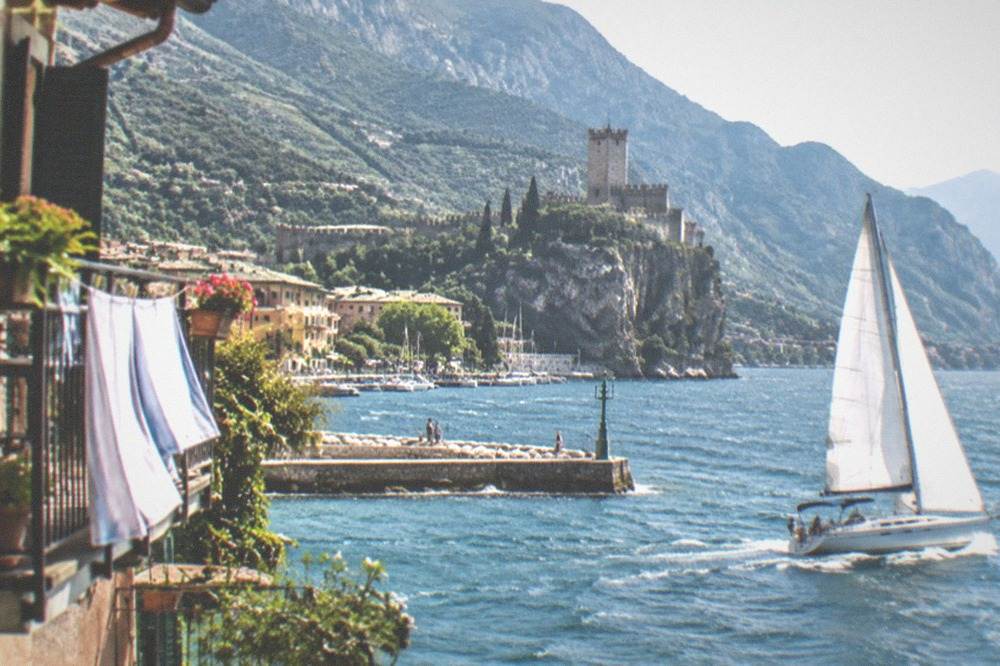
Book the Malcesine panoramic historic sailboat cruise for a first sail or a family outing: two hours, from $45.90 per person, 4.2 across 335 reviews. Book the romantic version for a couple's evening, from $57.38. Book the Desenzano autumn sail with aperitif for a slow half-day with food, from $90.66, capped at six. Choose by who is coming, not by the rating alone.
The decision tree is short because the roster is short. The panoramic cruise is the default: the largest review pool of the three, the lowest price, and the format that suits the widest range of passengers, from teenagers to grandparents. Its 4.2 rating across 335 reviews is a genuinely informative number, and it is the trip this site's overview of the best boat trips treats as the sailing entry point.
The romantic cruise is a narrower product with a better score, 4.7 from 59 reviews, and a higher price. Fifty-nine reviews is enough to trust the direction of the rating but not enough to call the trip a traveller favourite, and the price difference buys atmosphere rather than a better boat. If the occasion is a proposal, an anniversary or a last-night dinner substitute, it is the right row of the table. If the occasion is simply "we want to try sailing", it is not.
The Desenzano autumn sail is the outlier, and it should be booked as what it is: a seasonal, food-led half-day on the southern lake with a six-guest cap and a single review behind it. Its 5.0 rating is one person's verdict, printed here with its count because a bare 5.0 would invite you to imagine a crowd that does not exist. What is firm is the format: four hours, an aperitif, autumn light on the widest part of the lake. Anyone whose interest is the wind rather than the wine should sail from Malcesine instead.
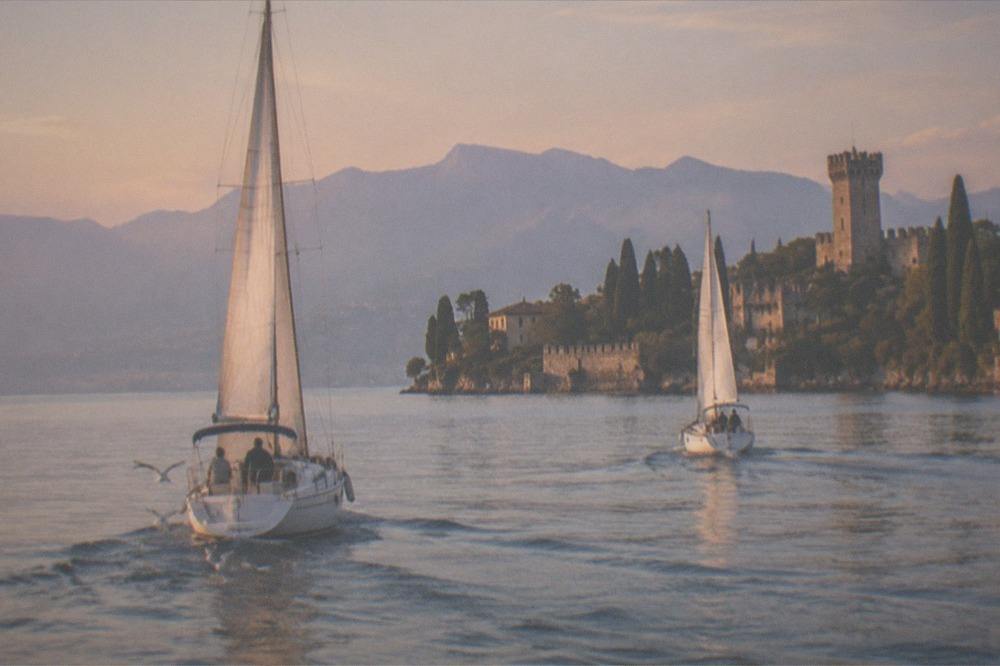
One last placement note, repeated from earlier because it is the mistake visitors actually make: do not plan a sailing day around Riva del Garda or Torbole expecting to book a sightseeing sail there. Those towns are the Riva departures you can read about elsewhere on this site, and their water is the regatta and school water. The bookable sails leave Malcesine, an hour's ferry ride or a short drive down the east shore, and the famous lake itself, which this site's Lake Garda Boat Tours homepage maps in full, is best met from a boat in any case. If your heart is set on the far north, the honest answer is a ferry ticket and a day watching the fleets from the Torbole shore, with the sail booked out of Malcesine on another afternoon.
Common Questions About Sailing On Lake Garda
Can you book a sailing trip from Riva del Garda?
Not through this site. The bookable sailing trips listed here leave Malcesine and Desenzano del Garda. Riva del Garda and Torbole are the club, school and regatta end of the lake, and the water there is reserved from motor traffic, but no sightseeing sail departs from them on this roster.
What is the best time of day for a sailing trip on Lake Garda?
Morning rides the tail of the Pelèr and is usually gentler; afternoon rides the Ora, which builds through the day and is strongest in the northern arm. For a first sail, book the morning. For the full sailing sensation, book early afternoon, before the Ora reaches its evening peak.
How much does a sailing trip on Lake Garda cost?
From $45.90 per person for the two-hour panoramic historic sailboat cruise from Malcesine, $57.38 for the romantic version, and $90.66 for the four-hour Desenzano sail with aperitif, which is capped at six guests. All three are per-person prices.
Do you need sailing experience to go on a sailing trip?
No. All three listings are skippered: the crew handles the sails and the boat. You are a passenger, and any chance to help is at the crew's invitation rather than a promise on the listing.
What are the Pelèr and the Ora?
They are the lake's two daily thermal winds. The Pelèr blows from the north from about 2 or 3 a.m. until around noon; the Ora blows from the south from around noon until sunset and can pass 10 metres per second in the narrow northern arm. On a fair-weather day they hand over at midday.
Is sailing on Lake Garda rough for beginners?
An afternoon sail from Malcesine involves heel and chop, which is the experience rather than a fault of the trip. The crews sail daily and watch the forecast, and both Malcesine listings carry free cancellation, so a nervous party can book and still change plans within the listing's terms.