What Month Is Best To Go To Lake Garda?
A month by month answer for the water: ferry seasons, water temperature, crowds, prices and what closes between November and March on Lake Garda.
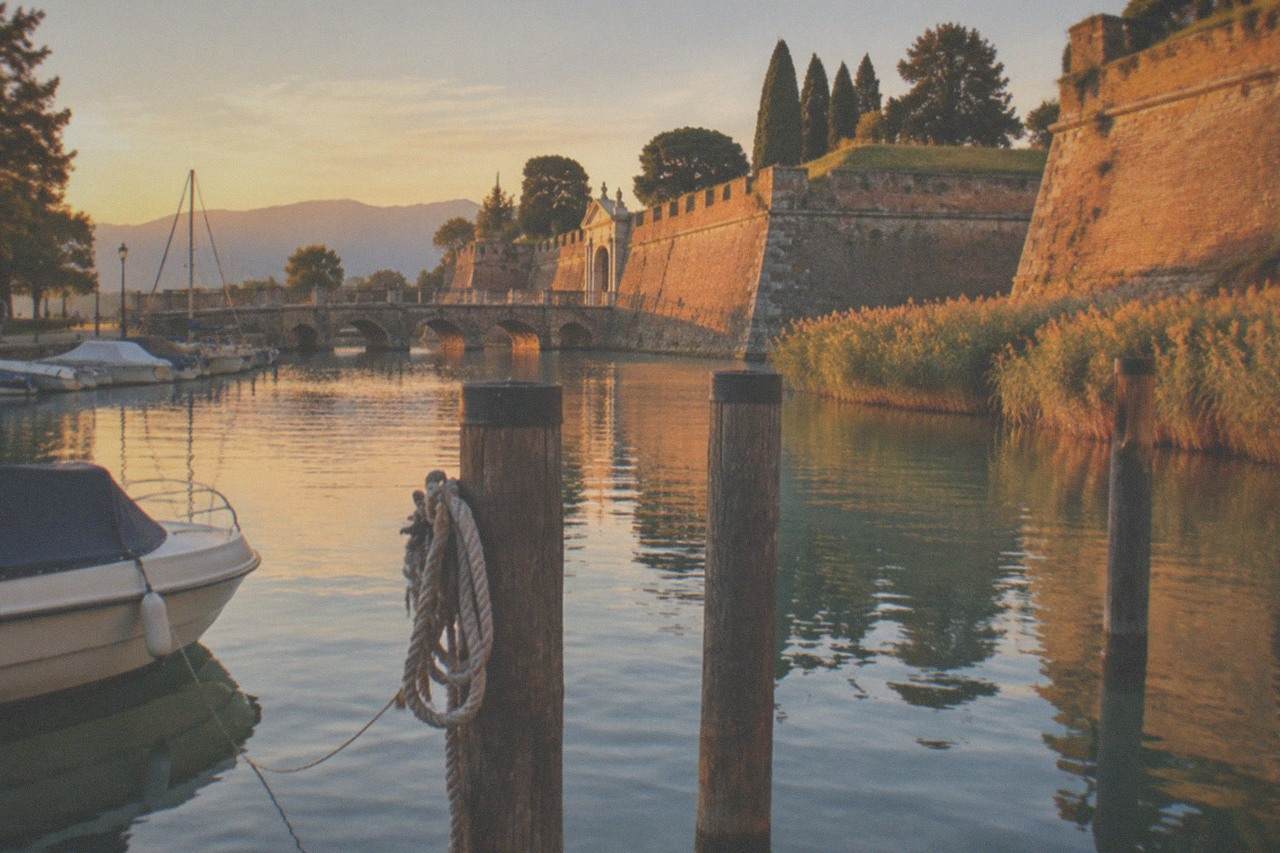
What Month Is Best To Go To Lake Garda?
No single month wins, because the lake changes its offer rather than its quality. May and September give you warm water, full ferry timetables and thinner crowds. July and August give you the warmest swimming and every boat running, at peak prices. March and October give you low prices and open water, but short days: sunset at Sirmione falls from 21:09 in late June to 18:32 by mid October.
The honest answer starts with the water, because that is what this lake is for. The ferry operator runs two seasons: a spring timetable from 1 April to 15 May, and the full summer timetable from 16 May to 4 October. The island of Isola del Garda opens on 29 March and closes at the end of October. Almost everything bookable on the water lives inside that April-to-October window, and the further into the shoulder edges you travel, the more of it is still running but the fewer people are competing for it.
Weather is the second axis. Long-term averages for Verona, the nearest national station about 25 km from the lake, put the July mean maximum at 29.2 degrees and the January mean maximum at 6.1 degrees, with lakeside towns running slightly milder than the station figures. Rainfall is fairly evenly spread, with October the wettest month at 91 mm on average and February the driest. Water temperature lags the air: the blended dataset on seatemperatures.net puts the ten-year August average surface temperature at 26.62 degrees and the February average at 13.98 degrees, so the lake is at its warmest a full month after the peak air temperatures.
Crowds follow a third pattern entirely, one set mostly by school holidays rather than weather. German visitors dominate the lake's tourism, and the Bavarian summer holidays run from 3 August to 14 September 2026, which is why early September can feel busier than June even though the weather is softer. Regional statistics show the Lago di Garda area of Verona province recorded 2.894 million arrivals in 2025, with 76.2 percent of arrivals international, and the summer months of June, July and August are when tourists exceed residents.
If you are planning around the water rather than around a beach holiday, the month that fits most trips is late May or mid September: both sit inside the full ferry season, both carry water warm enough for a swim stop, and both avoid the August peak. Our Lake Garda weather for boat trips guide covers the wind patterns that matter more month to month than the temperature does.
What Is Each Season Like On The Water?
Spring is fresh, green and quiet, with water still cold from the winter. Summer is hot, full and expensive, with every service running and the warmest water of the year. Autumn is the connoisseur season: soft light, warm water, thinning crowds and the first timetable cuts. Winter is for the lake's towns and views, because most boat services stop and the water sits near 14 degrees.
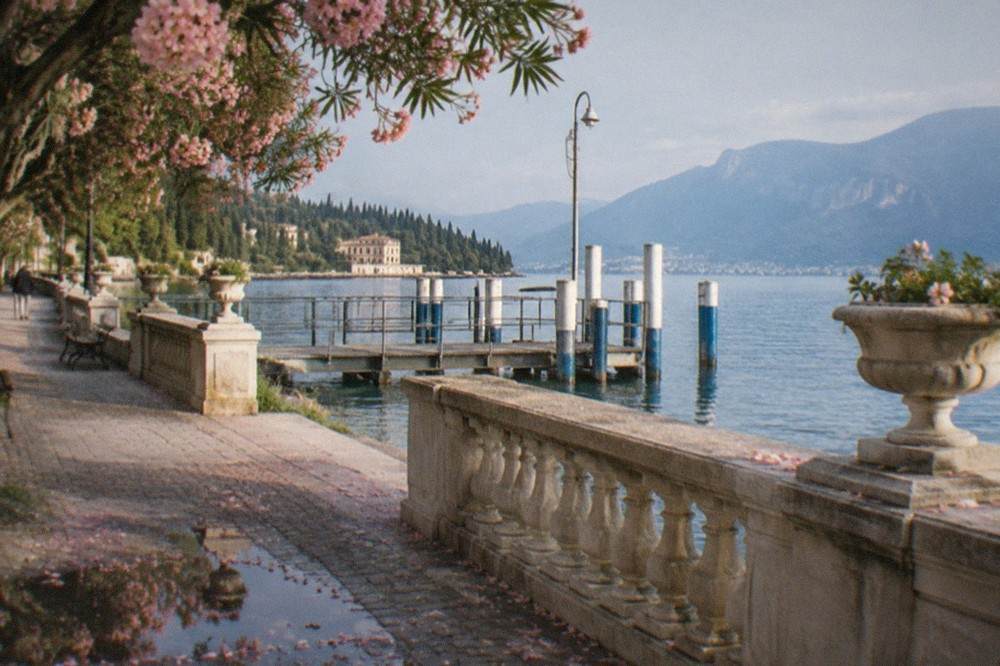
Spring, from late March to May, is the season the lake wakes up in. The Isola del Garda season starts on 29 March, the spring ferry timetable begins on 1 April, and the Monte Baldo cable car from Malcesine opens on 4 April and runs to 1 November. Air temperatures climb from a March mean maximum of 13.4 degrees to a May mean maximum of 22.7 degrees at the Verona station, but the water is still recovering from winter: the February surface average of 13.98 degrees on the blended dataset has barely moved by April. What spring gives you instead is green hillsides, empty piers and the lowest prices of the sailing season. The trade-off is that a swim stop is bracing rather than pleasant, and the full summer ferry timetable does not start until 16 May.
Summer, June to August, is the season everything is built for. Every ferry, every tour boat and every rental fleet is running, sunset at Sirmione sits at 21:09 on 21 June, and the water warms steadily toward its August peak of about 26.62 degrees on the ten-year average. The winds are at their most reliable too: the morning Pelèr blows from the north for the first twelve hours of the day, then the southerly Ora takes over from around noon until sunset, a pattern the official Garda Trentino wind page describes for the upper lake. The cost of all this is crowds and money. Bavaria's summer holidays from 3 August to 14 September pour the lake's largest single market onto the shore, and August combines the Ferragosto holiday, falling on a Saturday in 2026, with peak heat, a mean maximum of 28.8 degrees.
Autumn, September and October, is when the lake exhales. The water is at or near its warmest in early September, the crowds thin after the German school term starts on 15 September, and the light turns the colour photographers come for. The trade-offs are creeping: the full ferry timetable ends on 4 October, the cable car's last ascent moves to 16:00 from 5 October, sunset falls to 19:28 by 15 September and 18:32 by 15 October, and October is statistically the wettest month at 91 mm average rainfall. Our Lake Garda in October guide goes deeper on the month that splits opinion more than any other.
Winter, November to March, is a different lake. Most boat services stop after the autumn timetable begins, the cable car closes for maintenance from 2 November to 25 December before a winter season from 26 December to 21 February, and the water sits close to its February floor. What remains is real: clear-air views across to the mountains, thermal spas, Christmas markets and towns that belong to residents again. The Lake Garda in winter guide covers what actually stays open.
Here is the month by month picture at the nearest national station, with the lake's own numbers where they exist:
| Month | Mean max / min (Verona station) | Avg rain | Sirmione sunset | Water and boats |
|---|---|---|---|---|
| January | 6.1 / -1.2 | 50.9 mm | 16:36 (21 Dec ref) | Winter timetable only, water near its floor |
| February | 8.9 / 0.1 | driest month | mid to late 17:00s | Water at its coldest, 13.98 avg |
| March | 13.4 / 3.4 | 48.7 mm | 18:31 (21 Mar) | Island opens 29 Mar, spring boats from 1 Apr |
| April | 17.2 / 6.8 | 70.4 mm | about 19:45 | Spring ferry timetable, cable car from 4 Apr |
| May | 22.7 / 11.7 | 74.2 mm | 20:24 (1 May) | Full timetable from 16 May, swim stops return |
| June | 26.3 / 15.4 | 87.2 mm | 21:09 (21 Jun) | Peak daylight, water warming fast |
| July | 29.2 / 18.0 | 62.6 mm | about 20:50 | Warm air, busy piers, steady winds |
| August | 28.8 / 17.8 | 81.7 mm | 20:25 (15 Aug) | Warmest water, about 26.62 avg, peak crowds |
| September | 24.4 / 13.7 | 76.2 mm | 19:28 (15 Sep) | Warm water, crowds thin after mid month |
| October | 18.0 / 8.7 | 91.0 mm | 18:32 (15 Oct) | Full timetable ends 4 Oct, wettest month |
| November | 11.0 / 3.2 | 64.8 mm | about 17:00 | Autumn timetable, most tours finished |
| December | 6.7 / -0.4 | 52.5 mm | 16:36 (21 Dec) | Winter services, Christmas markets |
Which Months Have The Warmest Water?
The water peaks in August, when the ten-year average surface temperature reaches about 26.62 degrees, and it stays swimmable through September, which holds the summer's stored heat. February is the floor at about 13.98 degrees. Because the lake is deep, water temperature lags the air by roughly a month: the warmest swimming is late July to mid September, not the warmest air of July.
The lag is the detail most visitors miss. Air temperature peaks in July at a mean maximum of 29.2 degrees, but the water is still absorbing heat then and only reaches its own peak weeks later. The blended dataset on seatemperatures.net puts the ten-year August average at 26.62 degrees and the February average at 13.98 degrees, a spread of nearly 13 degrees across the year. In practice this means early June can deliver a 28-degree day with water that still feels cold, while mid September can deliver 24-degree air with water at its summer best.
For a trip built around swimming, the window is late July through mid September. For a trip where a swim stop is a bonus rather than the point, mid June onward is comfortable enough for most people. The swimming in Lake Garda guide covers where the water is cleanest and where the access is best, and the official monitoring is reassuring: ARPAV rated all 65 bathing water sampling points on the Veneto shore excellent in its 2026 analysis, though the Legambiente Goletta dei Laghi survey of the same summer flagged polluted points at some torrent mouths, a reminder to swim at designated beaches rather than river mouths.
One more water fact worth knowing: the lake level moves through the year in ways that affect beaches more than boats. The Comunità del Garda gauge at Peschiera recorded 106 cm above the hydrometric zero in early June 2026, falling to 66 cm by 6 August and 53.6 cm by 9 September, a normal summer drawdown, but one that leaves some shallow beaches narrower in September than in June.
When Are The Boats All Running?
Everything runs between 16 May and 4 October, the window of the full summer ferry timetable. The spring timetable covers 1 April to 15 May with fewer sailings, the Isola del Garda season runs 29 March to October, and after 4 October the public network drops to its reduced autumn and winter structure, with the northern fast services cut first.
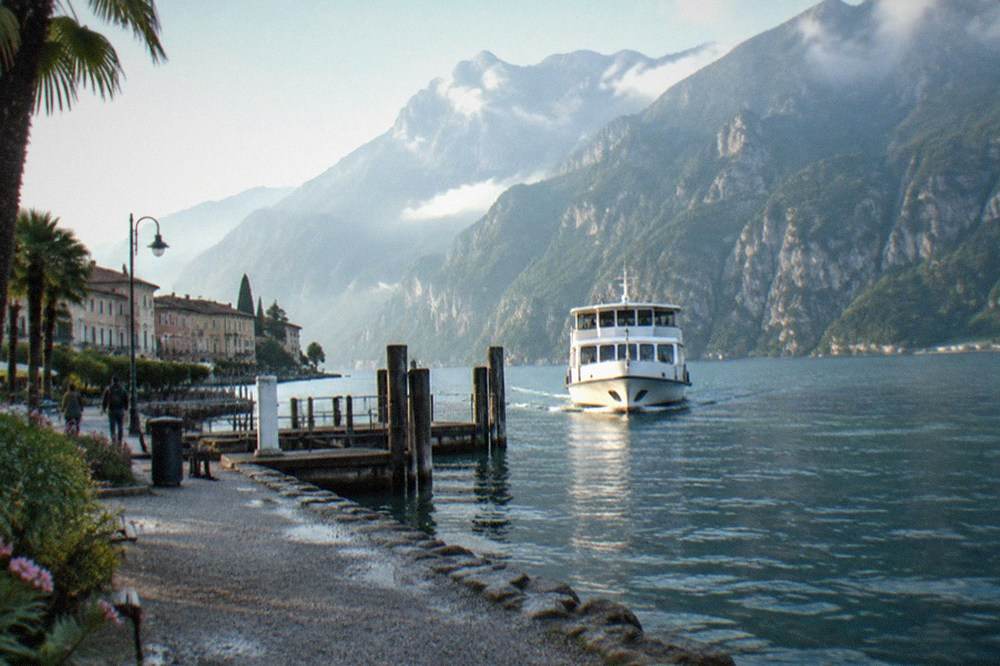
The two-season structure is the single most important date system on the lake. The public ferry operator publishes a spring timetable from 1 April to 15 May and the full summer timetable from 16 May to 4 October; within the summer window the southern basin runs frequent crossings and the northern shuttle routes, including Malcesine to Limone, run at their maximum frequency. After 4 October the network contracts: the autumn timetable keeps the main lines, and through winter only the principal southern routes continue. The structure means a 20 October trip can still use public boats between the southern towns, but a 20 October plan that assumes the northern shuttle network is a plan that fails.
The private and tour side of the lake follows a similar rhythm with softer edges. The Isola del Garda guided season runs from 29 March to October, with no visits on Saturdays and Mondays and reduced departures in the March-to-April and October shoulder periods; booking is compulsory. Tour boats, sunset cruises and rental fleets mostly operate April or May through September or October, with the exact months set by each operator's listing. The Monte Baldo cable car at Malcesine, the standard pairing with a northern boat day, runs 4 April to 1 November, with the last ascent moving from 18:00 to 16:00 from 5 October, then closes for maintenance from 2 November to 25 December before a short winter season from 26 December to 21 February, dates published on the Funivie del Baldo site.
Two event-driven exceptions are worth planning around. The 76th Centomiglia regatta takes over the western shore on 5 and 6 September 2026, with the Gargnano Trophy starting at 8:30 from Bogliaco on 5 September, and spectator boats and shore crowds fill Bogliaco and Gargnano that weekend, the Centomiglia official site carries the programme. And the Bardolino wine festival runs 1 to 5 October 2026 on the lakefront, with stands open through the evening, which makes Bardolino's pier area lively in the best sense for five days.
Here is what is open on the water, month by month:
| Month | Public ferries | Isola del Garda | Cable car | Tour and rental boats |
|---|---|---|---|---|
| January | Winter routes only | Closed | Closed to 25 Dec, winter season from 26 Dec | Minimal |
| February | Winter routes only | Closed | Winter season to 21 Feb | Minimal |
| March | Winter routes, spring sheet from 1 Apr | From 29 Mar | From 4 Apr | A few early operators |
| April | Spring timetable | Open, reduced departures | Daily | Most open by Easter |
| May | Full service from 16 May | Open | Daily | Nearly all running |
| June | Full summer timetable | Open | Daily | All running |
| July | Full summer timetable | Open | Daily | All running |
| August | Full summer timetable | Open | Daily | All running, busiest |
| September | Full to 4 Oct | Open | Daily, last ascent 16:00 from 5 Oct | All running, Centomiglia 5-6 Sep |
| October | Autumn timetable from 5 Oct | Open to end of month | To 1 Nov | Most to mid month |
| November | Autumn / winter routes | Closed | Maintenance from 2 Nov | Very few |
| December | Winter routes | Closed | Reopens 26 Dec | Christmas cruises only |
When Is It Busiest?
The peak runs from late July to late August, driven less by weather than by the German school holidays: Bavaria's summer break spans 3 August to 14 September 2026, and Germany supplies the lake's largest visitor share. June and early July are busy but absorbable, September thins sharply after mid month, and the 31 pedestrianisation days in Sirmione's 2026 plan mark the worst driving days.
The crowd calendar on Lake Garda is really a school calendar. German visitors accounted for 28 percent of overnight stays in 2025 data, and the Bavarian Sommerferien from 3 August to 14 September 2026 concentrate that market into six weeks. Add Ferragosto on Saturday 15 August, when the Italian holiday meets the weekend, and the first three weeks of August are the lake's ceiling. A 2026 first-hand report from a ferry user in the north described spending more than four hours in a day queueing for ferries and the cable car and missing the last direct sailing, anecdotal but consistent with what the August timetable strain produces. The wider set of guides lives on Lake Garda Boat Tours.
June and the first half of July are the smarter busy season: everything is running, the water is warming, and the queues are shorter because the school-driven wave has not arrived. The Bavarian Pfingstferien from 26 May to 5 June 2026 add a late-spring spike, so early June weekends can be busier than their weather suggests. September splits cleanly: the first ten days still carry holiday crowds through the 14th, then the lake empties fast while the water stays warm.
Sirmione deserves its own note. The town's 2026 flow-management plan sets 31 pedestrianisation days of the historic centre between April and September, on weekends and holidays from 14:00 to 19:00, with the ZTL closed to private vehicles in both directions in those hours. The dates cluster on Sundays in June, July, August and September and on the Easter and early-May holidays. If your month puts you in Sirmione on one of those afternoons, arrive by boat or park outside and walk in.
When Is It Cheapest?
The cheapest months are November to March, when accommodation prices drop hardest, but the boats are mostly stopped, so the value season for a water trip is late April to mid May and late September to mid October, when the full or near-full timetable still runs, the water is swimmable at one end, and prices sit well below the August peak.
The price curve on Garda tracks the crowd curve with about a two-week lag after the German holidays end. Accommodation in the last week of August is priced for the school-holiday market even as it empties, then falls through September to a shoulder floor in late September and early October, rises slightly over the October festival weekends, and drops again into winter. The average stay on the lake is short, 2.7 nights in 2025 according to booking-platform data reported by GardaToday, and nearly one visitor in three books about two months ahead, which is why the cheapest rooms in the shoulder season are the ones booked latest and earliest, not the ones in the middle.
On the water itself, prices are flat through the season: the ferry tariff sheet in force from 1 April 2026 charges the same one-way fare in June as in September, with an adult section 1 crossing at 3.50 EUR and the whole-lake day pass at 39.50 EUR, and tour listings hold their prices from the first sailing to the last. What changes month to month is availability, not price, and that cuts both ways: an August sunset cruise is the same price as a June one but needs booking further ahead, while an October one may be the last departure of the year.
The genuine savings in the shoulder months come from the combination. A late-September trip gets warm water, the full ferry timetable until the 4th, cheaper beds and restaurant tables without queues. An early-May trip gets the same prices with colder water but greener hills. Between the two, late September is the better water trade, early May the better walking trade.
What Closes Outside The Season?
Between November and March the lake closes in layers: the full ferry timetable ended on 4 October, the Isola del Garda season ends in October, the Monte Baldo cable car closes for maintenance from 2 November to 25 December, and most tour and rental fleets stop by the end of October. What survives is the reduced public ferry network on the main lines, the thermal spas and the towns themselves.
The closing sequence each autumn is orderly and worth knowing if you are planning a late trip. The Isola del Garda guided visits end with October, and the island's own booking page is the place to check the final sailing dates, since the season closes at the end of the month rather than on a fixed day. The full ferry timetable ends on 4 October; from the 5th the autumn timetable keeps the main lines but cuts frequency and removes the northern fast services. The cable car's last day is 1 November. By mid November the tour-boat fleet is essentially ashore.
The 25-minute peninsula cruise from Sirmione is one of the last things on the water each autumn and one of the first back in spring, which is part of why it suits an off-peak trip: it is a short loop past the Grotte di Catullo, the Rocca Scaligera and the Boiola spring, priced from $13.77 per person with a 4.7 rating from 3,495 reviews, and it does not depend on warm water or long daylight to be worth the ticket.
Winter is not empty, but it is a different product. The reduced ferry network still connects the southern towns, spas in Sirmione and the western shore run at full tilt, the Christmas markets open from late November, and the cable car reopens for its short winter season from 26 December to 21 February, aimed at skiers and snow-walkers rather than summer visitors. What you cannot do in winter is the classic lake day: no island visit, no sunset aperitivo cruise, no rental boat, and swimming only for the very brave, with the February surface average near 13.98 degrees.
The half-day cruise with lunch from Peschiera is a good example of how the season shapes supply: a 4-hour southern-basin sailing with lunch included, from $72.30 per person and rated 4.4 from 849 reviews, it runs in the months when demand supports a lunch service and pauses when it does not.
Which Boat Trip Suits Your Month?
Match the trip to the month's water, not its air. In spring take short peninsula loops and castle cruises while the water warms. In high summer take swim-stop trips, half-day cruises and sunset sailings, when the water is at its peak and every departure runs. In September take the island and the long crossings before the timetable cuts. In October take whatever is still sailing, because the season's last departures are the year's best light.
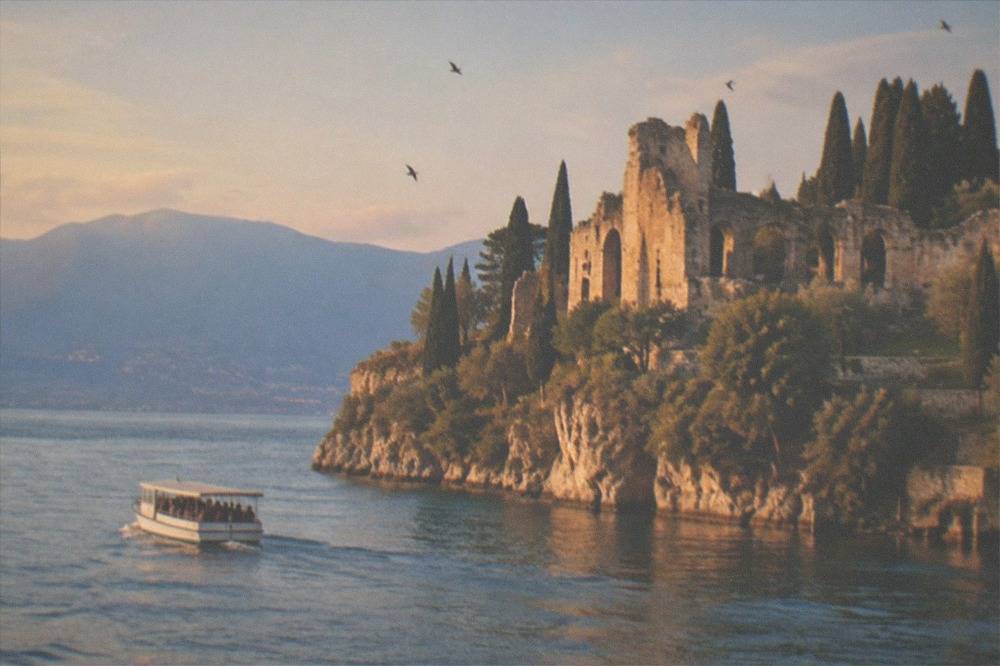
In April and early May, the short shared tours are the right product. The Sirmione 25-minute peninsula cruise, from $13.77 per person with a 4.7 rating from 3,495 reviews, works in any weather you would willingly stand a deck in, and the 30-minute guided version adds commentary for a little more. The walking-and-boat combos suit spring too, since the walking half is pleasant before the summer heat, and the Lake Garda day trip guide shows how to build one around a single base town.
From mid June to mid September the water is warm enough that swim-stop trips and full-day formats come into their own. Half-day and full-day cruises with lunch, the boat-plus-Grotte walking tours, and the sailing trips out of Malcesine all depend on water you want to be in and daylight long enough to use, and the sunset cruises depend on the late sunsets of June and July, 21:09 at the solstice, that give an evening sailing its full value. The shared sunset tour from Sirmione, from $35.12 per person with a 4.8 rating from 324 reviews and a cap of 20 guests, is the format that most rewards a June or July date, when the golden hour is genuinely late.
In late September and early October, prioritise the crossings that stop for the year. The Isola del Garda visits from Sirmione depart at 11:00 on Tuesdays and Thursdays and end with October, and the northern shuttle routes run only to 4 October. A September crossing to the island, 46 EUR from Sirmione for the boat, guided tour and welcome drink, in warm light and thin crowds, is the single best-value day on the water the lake offers.
Whichever month you choose, the pattern to remember is that the lake's supply is fixed by two dates, 16 May and 4 October, and its demand is fixed by one, the German school calendar. Book inside that frame with the crowd curve in mind and almost any month delivers; book outside it and you are visiting the towns, not the water.
Common Questions About Lake Garda
What Month Is Best To Go To Lake Garda?
Late May and mid September suit most trips: both sit inside the full ferry season, the water is warm enough for swimming, and crowds are well below the August peak. Choose late May for green hills and lower prices, mid September for the warmest water of the year with the summer crowds gone.
When Is The Water Warmest On Lake Garda?
The water peaks in August at a ten-year average of about 26.62 degrees and stays close to that through early September. Because the lake is deep, water temperature lags the air by roughly a month, so the best swimming window is late July to mid September rather than the hottest air of July.
Do The Ferries Run All Year On Lake Garda?
Yes, but on a reduced winter network. The full summer timetable runs from 16 May to 4 October, a spring timetable covers 1 April to 15 May, and outside those windows the main southern lines continue with fewer sailings while the northern fast services are cut.
Is August Too Busy For A Boat Trip On Lake Garda?
August is the busiest month, driven by the Bavarian school holidays that run to 14 September and by Ferragosto on 15 August. Boats still run at full frequency, but book ahead, expect queues at the northern piers and cable car, and consider travelling in the morning rather than mid afternoon.
What Closes On Lake Garda In Winter?
Isola del Garda visits end in October, the full ferry timetable ends on 4 October, the Monte Baldo cable car closes for maintenance from 2 November to 25 December, and most tour and rental boats stop by the end of October. Spas, Christmas markets and the reduced ferry network keep the lake visitable through winter.
Is October A Good Month For Lake Garda?
October is a trade-off month: warm early-autumn light, thinning crowds and the last week of the full ferry timetable, against the wettest average rainfall of the year, sunset falling to 18:32 by mid month and service cuts from the 5th. Early October, around the Bardolino wine festival from 1 to 5 October, is the better half of the month.