Is Lake Garda Worth Visiting?
An honest verdict on Lake Garda: what a visit actually delivers, what it costs, who should skip it, and the boat trips that make the case.
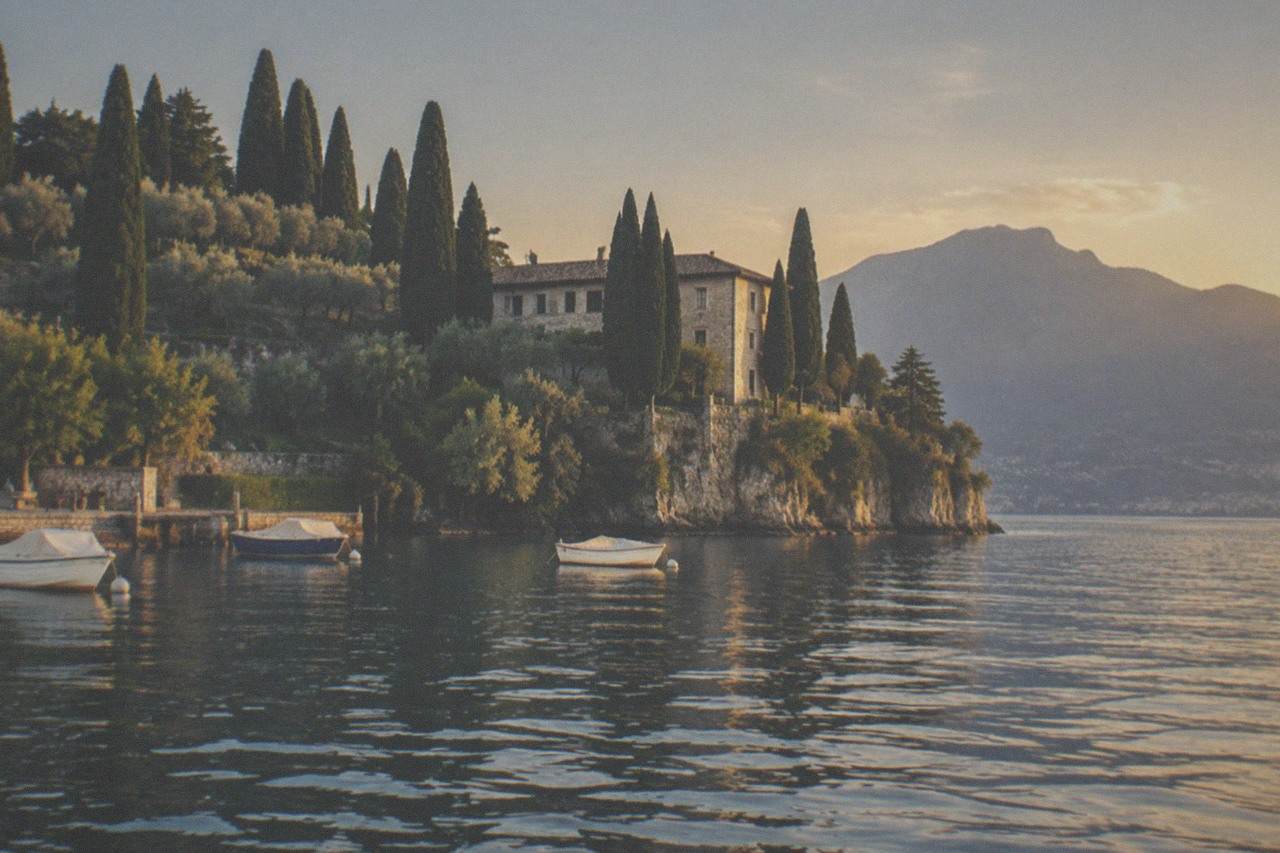
Is Lake Garda Worth Visiting?
Yes, for most travellers, and the case rests on three verifiable facts. The lake has 28 public ferry landing stages, which makes it the most navigable large lake in Italy without a car. Its headline sights, an island villa garden and a cliff-ringed peninsula, can only be reached across the water. And a first taste of the lake from a boat starts at $13.77 per person, which is less than most museum tickets in Milan or Rome.
Italy's largest lake stretches 54 kilometres from the alpine foothills at Riva del Garda down to the flat southern shore at Peschiera del Garda, covering some 370 square kilometres with a maximum depth of 346 metres, according to the Encyclopaedia Britannica's entry on the lake. That scale matters for the worth-it question, because Garda is not one resort town with water in front of it. It is a chain of a dozen distinct towns, three regional administrations, olive groves on the western shore, lemon-house terraces above Limone sul Garda, and a sailing basin in the north that hosts international regattas.
The volume of visitors is one measure of the answer. Preliminary regional data reported in the local press put the lake at almost 28 million tourist presences in 2025, up from 25.6 million in 2023. The Vittoriale degli Italiani, the eccentric hillside estate of the poet Gabriele d'Annunzio at Gardone Riviera, recorded 303,403 visitors in 2025, its highest total ever, as reported by Gardapost. People keep coming, and they keep coming back.
Whether that adds up to a yes for you depends on what you want from a holiday, and this article works through the question properly: what a visit actually delivers, how Garda compares with Como, how long you need, what it costs, who should skip it, and which single boat trip makes the case. If you want the background first, the separate piece on why the lake became famous covers the history and the geography behind the crowds.
What Do You Actually Get Out Of A Visit?
You get water, medieval towns and a landscape that changes every ten kilometres, all connected by boats. The south gives flat beaches and Roman ruins at Sirmione, the west gives gardens and grand villas, and the north gives mountains that drop straight into the lake. The ferry network stitches it together, and the water itself is the attraction: swimming, sailing and slow cruising are the point, not the backdrop.
Start with the water, because it is the organising fact of the whole lake. The Veneto regional law protects a 300-metre coastal band where motor navigation is banned, so the shore stays quiet and swimmable in a way few Mediterranean destinations manage. Four Garda towns, Gardone Riviera, Limone sul Garda, Sirmione and Toscolano Maderno, hold the Bandiera Blu environmental award for 2026, with Limone a new entry, as the award listing shows. That is a genuine, audited quality signal, not marketing copy.
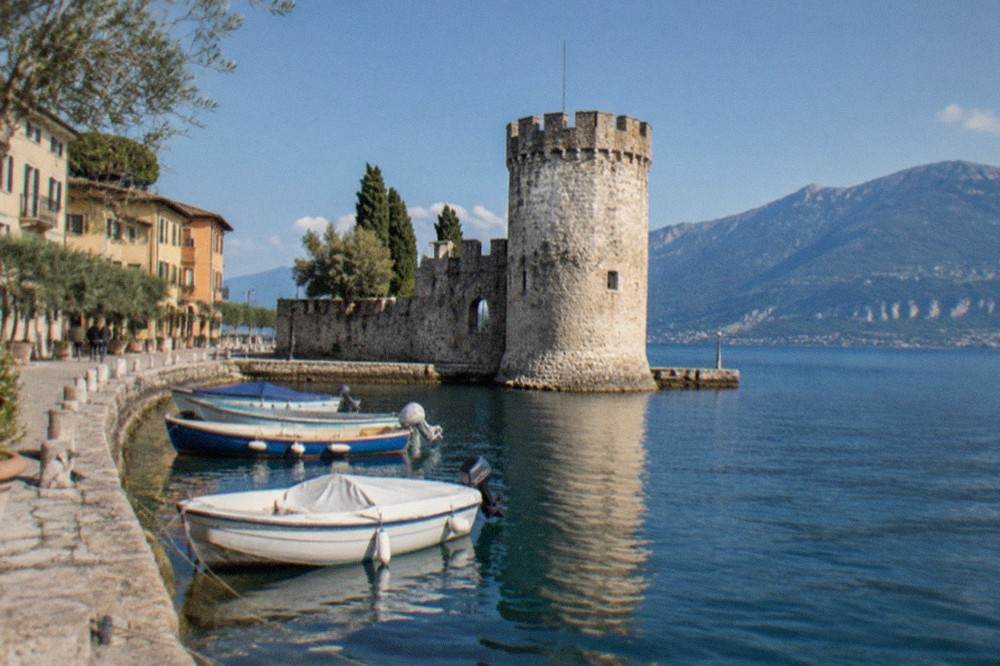
Then the towns. Sirmione's peninsula ends at the Grotte di Catullo, the largest Roman villa ruin in northern Italy, open daily (Monday 9.00 to 13.00, Tuesday to Saturday 8.30 to 19.30, Sunday 10.00 to 19.30) and priced at €10 for a full ticket, with the Scaligero castle at the neck of the peninsula at the same price. The castle's inner dock, the darsena, is viewable only on guided tours, a detail most visitors miss. Isola del Garda, the private island off San Felice del Benaco, is visitable only by guided boat tour, with departures from 15 ports between late March and October and adult prices from €39 to €49 depending on the departure town. There is no way to see the island except from the water, which is exactly why the lake's boat culture exists.
The cheapest way to sample that culture is the 25-minute loop around the Sirmione peninsula, which passes the castle, the Roman ruins and the sulphurous spring at the tip, from $13.77 per person with a 4.7 rating across 3,495 reviews. It is a short ride, but it delivers the three things the lake is famous for in half an hour, and it tells you quickly whether a longer cruise is worth your money.
For a fuller day, the half-day cruise from Peschiera del Garda includes lunch and covers the southern basin, from $72.30 per person with a 4.4 rating from 849 reviews. If you are weighing what else fills a week beyond the water, the guide to things to do around the lake covers gardens, theme parks, cable cars and wine country, most of them reachable from the same piers the boats leave from.
How Does It Compare With Other Italian Lakes?
Garda trades intimacy for scale and variety. Como has the celebrity villas and the steep drama, Maggiore has the Borromean islands, but Garda has the widest range of experiences, the warmest water, the best winds for sailing and the only ferry network that lets you tour a lake all day on one ticket. Como is more photogenic from a boat; Garda gives you more to actually do.
The honest comparison is with Como, and the full head-to-head sits in the Como versus Garda verdict. The short version: Como is deeper and narrower, its towns stack vertically beneath mountains, and its ferry rides feel more cinematic. Garda is bigger, warmer and busier. The same state operator, Gestione Governativa Navigazione Laghi, runs the scheduled boats on both lakes, but Garda's network is denser: 28 landing stages against Como's fewer stops, and a whole-lake day pass at €39.50 that includes the fast services.
Access is a real differentiator. The fastest direct train from Desenzano del Garda to Milano Centrale takes about 83 minutes, and Peschiera del Garda sits on the same Milan to Venice line, so the southern shore works as a base without a car. Verona's airport is about 40 minutes' drive from the southern piers. Como's access from Milan is quicker to the eastern branch, but the lake's shape funnels everyone onto the same few roads.
What Garda has that Como does not: reliable thermal winds. The Pelèr blows from the north through the morning and the Ora fills in from the south after noon, a daily pattern the tourism board and every sailing school in Riva and Malcesine plan around. That is why the northern basin hosts the Centomiglia, Italy's most famous inland sailing race, and why surf schools cluster at Torbole. If your holiday includes wind rather than just water, Garda wins outright.
How Long Does It Take To Enjoy It?
Three nights is the realistic minimum and five is comfortable. The average stay recorded in 2025 booking data was 2.7 nights, which is enough for one town, one boat day and one day trip, but leaves the north and the south unvisited. To see Sirmione, a western-shore garden and the northern basin without rushing, plan four to five nights, ideally split between two bases.
The lake is 54 kilometres long and the drive from Peschiera to Riva takes well over an hour on the shore road, so geography sets the pace. A single base in the south, say Desenzano or Sirmione, puts the Grotte di Catullo, Isola del Garda and the Bardolino wine shore within an easy half-day radius by boat. The northern basin, Malcesine, Limone and Riva, is a longer commitment: the ferry from Sirmione to Riva is a €16 one-way ride in fare section 6, and the crossing alone eats a morning.
Booking data reported by the local press puts the average Garda stay at 2.7 nights, with nearly one visitor in three booking about two months ahead. That matches what the timetable structure rewards: the full summer ferry network runs from 16 May to 4 October, and anyone staying three nights inside that window can comfortably do one cruise, one island trip and one hop to a neighbouring town. The deeper question of how many days the lake deserves, including slow-travel and one-week itineraries, is covered in how many days in Lake Garda is enough.
For visitors short on time, the lake also works as a single intense day out of Verona or Milan, and the Lake Garda day trip guide prices and sequences that option. A day trip is a yes-with-an-asterisk: you will see Sirmione and the southern shore, and you will leave the northern half, which is arguably the more beautiful half, unseen.
What Does A Visit Cost?
A mid-range visit prices out at roughly $60 to $120 per person per day once accommodation is set aside. Boat trips run from $13.77 to $114.76, the public ferry day pass is €39.50 for the whole lake, and the major sights charge €7 to €10. The lake is cheaper than the Amalfi coast or Venice for like-for-like experiences, but costs climb in July and August.
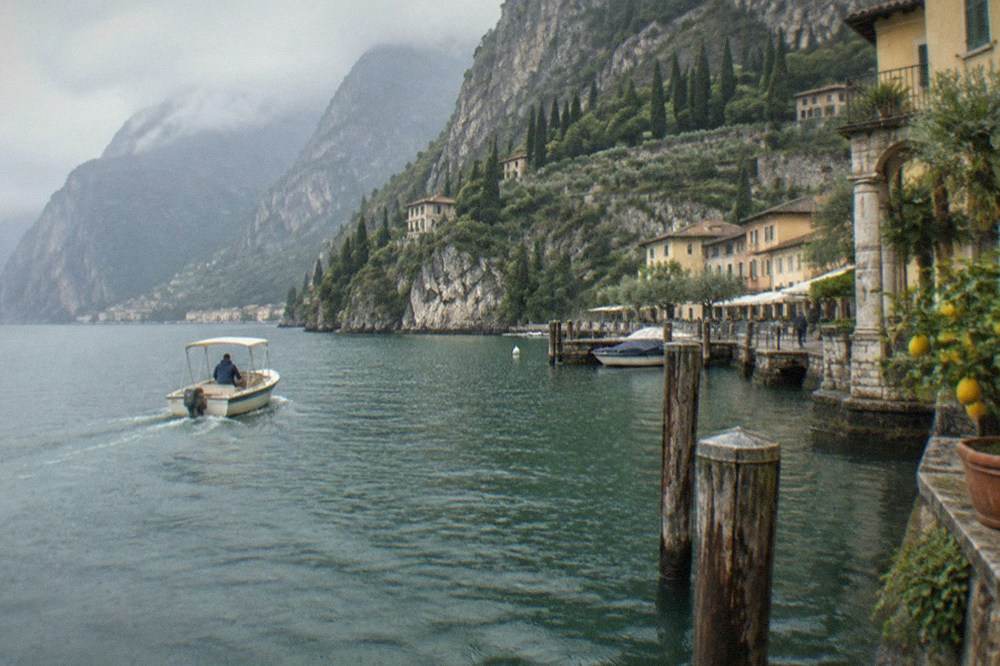
The boat layer is the variable one, and it is worth deciding before you arrive. The public ferry tariff, in force from 1 April 2026 and published on the Navigazione Laghi rates page, sets one-way adult fares from €1.50 for an urban hop to €17.50 for the longest sections, with a whole-lake day pass at €39.50 and single-zone passes at €23.50. Private tours are a different market: the roster of bookable trips on this site runs from $13.77 for the shared 25-minute peninsula loop to $509.27 for a private island cruise for up to five people.
| Item | Cost per person | Notes |
|---|---|---|
| 25-minute Sirmione peninsula cruise | from $13.77 | Shared loop, 4.7 from 3,495 reviews |
| Half-day cruise with lunch from Peschiera | from $72.30 | 4 hours, 4.4 from 849 reviews |
| Shared sunset tour with aperitivo | from $35.12 | 45 minutes, 4.8 from 324 reviews |
| Whole-lake ferry day pass | €39.50 | Fast services included |
| Grotte di Catullo or Castello Scaligero | €10.00 | Or €20 for the 7-day combined ticket covering both plus the Desenzano villa |
| Isola del Garda guided tour from Sirmione | €46.00 | Includes boat, guide and welcome drink |
| Cascate del Varone waterfall | €7.00 | Individual ticket, family rates available |
The half-day cruise with lunch deserves its own word, because it is the value benchmark of the shared tours: four hours on the water, a sit-down lunch and the southern basin's shoreline for less than the price of a Verona opera ticket, at from $72.30 per person. Everything else covered here is indexed on Lake Garda Boat Tours.
Around the boats, the rest of a Garda budget behaves like the rest of northern Italy. Sights are modestly priced: the Vittoriale estate lists a full park and museum ticket at €10 on the culture ministry's directory page, though the estate's own site should be checked for the current price list. The Sigurtà Garden Park near Valeggio opens 7 March to 15 November. There is no lake entrance fee and no charge for the promenades, the swim spots or the ferry-town wandering, which is why the free-activities question has a genuinely long answer here.
Who Might Not Enjoy It?
Travellers who dislike crowds, queues and heat should think twice about July and August, and anyone wanting a quiet, untouristed Italy will not find it here in high season. The lake is also a poor fit for visitors who refuse to get on a boat: the island, the best viewpoints of the peninsula and the cliff coast are all water-access. Finally, it is not a nightlife destination; evenings are passeggiata and aperitivo, not clubs.
| Reasons to go | Reasons to skip |
|---|---|
| 28 ferry stops make the whole lake explorable without a car | July and August bring queues at piers, car parks and the Sirmione old town |
| Boat trips start at $13.77, cheaper than most Italian city attractions | The busiest sights are exactly the ones everyone photographs |
| Four Blue Flag towns and a protected 300-metre shore band | Weather can turn: the Ora wind builds real waves by late afternoon |
| Roman ruins, a Scaligero castle and a private island, all in one small area | Accommodation in Sirmione and Malcesine books out and prices peak in summer |
| Reliable winds and warm water for sailing and swimming from June | If you will not board a boat, a third of the lake's appeal is closed to you |
The crowd problem is specific and honest. Sirmione's response in 2026 was 31 pedestrianisation days of the historic centre between April and September, after the town explicitly rejected a visitor cap on legal grounds. A first-hand report from a summer 2026 visitor described spending more than four hours queueing for ferries and the Monte Baldo cable car in the north and missing the last direct boat. Those are the bad days, and they are concentrated in the six weeks of the German school holidays, when Bavaria's summer break runs from 3 August to 14 September.
The boat-averse should also be warned honestly. You can enjoy Desenzano, Bardolino and Garda town without ever boarding anything, and the ferries are comfortable ships rather than white-knuckle rides. But Isola del Garda is guided-boat-only, the Sirmione peninsula is best understood from the water, and the western cliff coast between Gargnano and Limone reveals itself properly only from a deck. A visitor who will not get on a boat sees perhaps two-thirds of what the lake offers.
When Is The Wrong Time To Come?
Mid-July to late August is the wrong time for most people: peak heat, peak crowds and peak prices all coincide, and Bavaria's school holidays flood the lake from 3 August to 14 September. November to mid-March is the wrong time for a boat-centred visit, since the full ferry network and most tours pause, and several lakeside facilities shut. The sweet spots are May to mid-June and September to early October.
| Period | What is open | What to watch |
|---|---|---|
| 1 April to 15 May | Spring ferry timetable; Grotte di Catullo and Castello Scaligero daily; Sigurtà garden from 7 March | Some island tours and private charters start late April |
| 16 May to 4 October | Full summer ferry network, all 28 landing stages; Isola del Garda tours daily except Saturdays and Mondays | August queues at Malcesine and Sirmione; German holidays from 3 August |
| 5 October to 31 October | Autumn conditions; Grotte di Catullo keeps full hours; island tours run to end October with reduced departures | Published ferry timetables end at 4 October; check the operator's later sheets before relying on crossings |
| November to mid-March | Towns, castles and museums open year-round; winter atmosphere and low prices | Full ferry network paused; most boat tours and the island closed |
The season structure comes from the operator's own published timetables, which cover 1 April to 15 May and 16 May to 4 October, with the fare sheet in force from 1 April. What runs after 4 October is a reduced service whose details are not published in advance, so any autumn visit that depends on a specific crossing should be checked against the live timetable first. The island's own season runs from 29 March to October with no visits on Saturdays and Mondays.
If you are locked into August by school holidays, the workaround is timing rather than destination: early-morning ferries, weekday boat departures and the western shore, which is calmer than Sirmione. And if the cheapest possible taste of the lake is the goal, the short peninsula cruise runs all season and costs less than lunch, with free cancellation on the listing if the weather turns.
Which Boat Trip Makes The Case?
The 25-minute Sirmione peninsula cruise is the single trip that answers the worth-it question, because it packs the castle, the Roman ruins and the thermal spring into one $13.77 loop with a 4.7 rating from 3,495 reviews. If that half hour leaves you wanting more, the lake has earned your longer stay; if it does not, you have learned the answer for the price of a pizza.
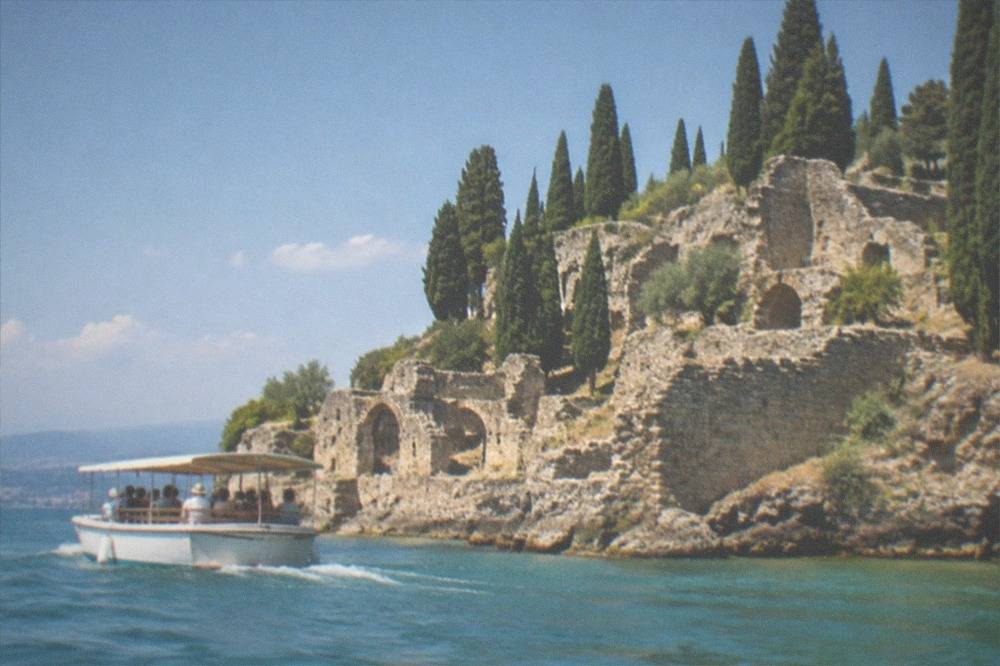
The loop works because Sirmione's peninsula is the lake in miniature. The boat leaves from the pier beneath the Castello Scaligero, runs the length of the promontory past olive groves and grand hotels, turns at the tip where the Boiola spring bubbles up, and gives you the Grotte di Catullo from the angle its Roman owners would have known: arriving by water. The crossing from Desenzano to Sirmione takes about 20 to 25 minutes by ferry, so the cruise combines naturally with a morning train arrival.
For visitors who already know the answer is yes, the escalation path is clear. The shared sunset tour with aperitivo, from $35.12 per person with a 4.8 rating from 324 reviews, is the evening version of the same peninsula. The private sunset cruise with local wine, from $252.47 for the whole boat for up to two people, rated 4.9 from 1,013 reviews, is the splurge. And the private island tours to Isola del Garda, from $509.27 for the boat for up to five people, are the full-day statement. The wider field, including speedboats, sailing trips and licence-free hire, is laid out in the guide to the best boat trips on Lake Garda.
The verdict, then, is a qualified and confident yes. Lake Garda is worth visiting if you want water, boats, medieval towns and a landscape that genuinely varies from shore to shore, and it delivers all of that at costs that start lower than most visitors expect. It is not worth visiting in the first half of August if you hate crowds, or in deep winter if your heart is set on boats, or at all if you refuse to set foot on one. For everyone else, the 28 landing stages are waiting, and the cheapest ticket costs $13.77.
Common Questions About Is Lake Garda Worth Visiting?
Is Lake Garda Worth Visiting?
Yes, for most travellers. The lake offers 28 ferry-connected towns, sights that can only be reached by water, and boat trips from $13.77. It is a poor choice in peak August for crowd-averse visitors and for anyone unwilling to board a boat, but for a water-centred Italian holiday it is one of the best-value options in the country.
How many days do you need at Lake Garda?
Three nights is the practical minimum and four to five is comfortable. The average stay in 2025 booking data was 2.7 nights, enough for one town, one boat day and one day trip. Seeing both the southern shore and the northern basin without rushing really needs four or five nights.
Is Lake Garda too crowded to enjoy?
Not outside the peak weeks. July and August bring queues at the busiest piers and the Sirmione old town, and Sirmione has responded with 31 pedestrianisation days in 2026. May, June, September and early October offer the same boats and sights with a fraction of the crowds.
Is Lake Garda expensive?
It is mid-priced for Italy. Boat trips run from $13.77 to $114.76 per person, the whole-lake ferry day pass costs €39.50, and major sights charge €7 to €10. Costs peak in summer, when accommodation in Sirmione and Malcesine books out early.
Can you enjoy Lake Garda without a car?
Yes, easily. The public ferry network serves 28 landing stages, the southern towns of Desenzano and Peschiera sit on the Milan to Venice railway line, and most boat tours depart from pier-side locations. A car is useful for hillside villages but is not needed for the core visit.
Which is better, Lake Garda or Lake Como?
Como is more dramatic and more photogenic from the water; Garda is bigger, warmer, cheaper to tour and better for sailing and swimming. Garda also has the denser ferry network and more variety of things to do. If boats and swimming lead your holiday, choose Garda; if villas and vertical scenery lead it, choose Como.