Is Castello Scaligero Worth Visiting?
An honest look at Sirmione's Castello Scaligero: ticket prices, opening hours, the keep climb, the dock, and whether the castle is better seen from a boat on the lake.
Is Castello Scaligero Worth Visiting?
Yes, but with a caveat that shapes the whole visit: the castle's fame comes from its exterior and its mirrored position at the harbour mouth, not from its rooms. A full ticket costs 10 euro, the keep is included, and the interior is a short, spare walk of towers, walkways and lake views. Most travellers are glad they went up, and nearly all agree the water-level view is the one they remember.
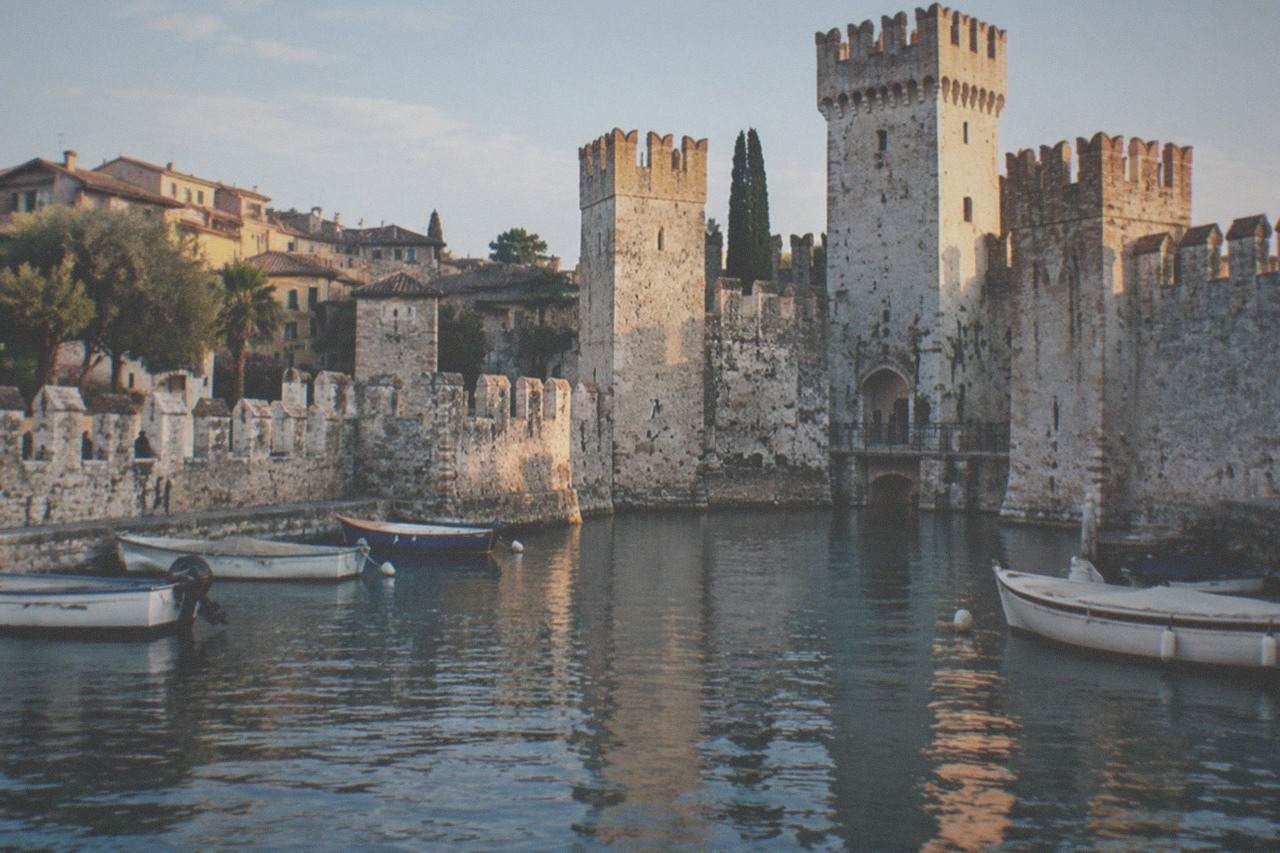
The Castello Scaligero di Sirmione is the image people picture when they picture Lake Garda at all. The fortress sits at the neck of the peninsula, its walls dropping straight into the water of the small harbour, and its crenellated profile doubled in reflection on calm mornings. Photographs of the castle are, in a literal sense, the lake's postcard. That fame raises a fair expectation problem: visitors arrive imagining a furnished chateau and find a military structure, a fortified gateway built to control access to the peninsula rather than to live in.
The honest framing is this. The castle rewards two kinds of visitor. The first wants to climb the keep, walk the walls and look down over the tiled roofs of the old town and the blue of both basins of the lake; for that person the ticket is money well spent. The second wants the photograph, the atmosphere and a swim or a spritz afterwards; for that person the exterior, the harbour and a boat loop deliver almost everything, and the interior is optional. Nothing about the building is disappointing. It is simply that its best face is on the outside.
The setting does half the work. Sirmione itself is a peninsula town of thermal springs, Roman ruins and a historic centre that closes to traffic on peak days; the Sirmione town and peninsula guide covers how the two fit together, and the broader question of whether the town justifies the crowds is tackled in is Sirmione worth visiting?. The castle is the town's front door, and you pass it whether or not you buy a ticket. That fact alone shapes the value calculation, and it is why the boat companies do such steady business here: their loops pass the moat walls at water level, which is the angle every famous photograph was taken from.
If the plan is a half-day in Sirmione built around the water, these are the three listings that fit the castle best.
The three cover the range: a short shared loop, a guided version of the same circuit with commentary, and a walking-plus-boat combination that adds the town itself. All three are compared properly in the section on which boat trip shows the castle best, once the interior questions have been answered.
What Is Inside The Castle?
Inside are three towers, wall-walks connecting them, the keep with its 146-step climb, a small museum room of medieval finds, and the internal dock cut into the rock. There is no furniture, no decorative hanging and no recreated period room; the state museum that runs the site presents the architecture itself as the exhibit. The whole interior circuit takes most visitors under an hour, and the views are the payoff.
The Scaliger castle was built by the Della Scala family of Verona in the second half of the 13th century, and it is a rare surviving example of a fortified harbour, a castle whose dock was integral to its design. The structure encloses the port with crenellated walls, and the towers were placed to watch both the water and the isthmus. What the visitor walks through today is the bones of that machine: the gatehouse, the courtyard, the wall-walks, and the towers at the corners.
The museum room is modest. Finds from the site and the peninsula are displayed in a ground-floor space, and the collection is atmospheric rather than deep; anyone expecting the density of a city museum will find it thin, and anyone happy with a sense of the building's use will find it sufficient. The real exhibits are overhead and underfoot. The wall-walks give the first proper views, out over the harbour where the small boats queue, and along the peninsula toward the Roman villa at its tip.
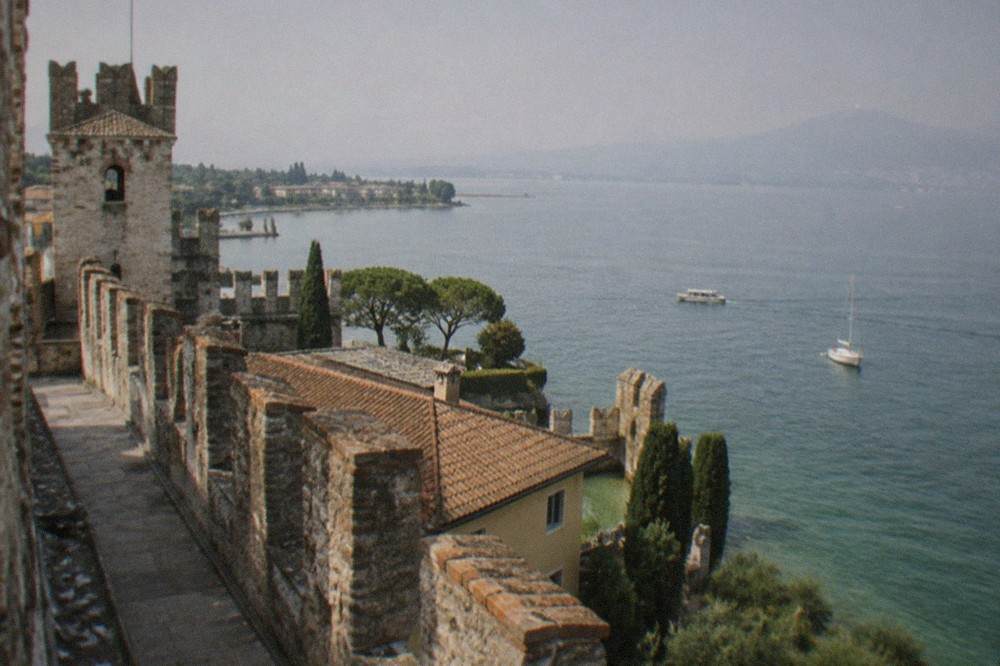
The internal dock is the detail most visitors do not know about in advance. The castle was built with a fortified harbour inside its own walls, a berth for the Scaliger fleet protected by the towers above it. Today that dock is visible from the walls, and access to it is only possible on guided visits, a restriction the museum states plainly. It is a striking space, water slapping against rock under arrow slits, and it explains why the building looks the way it does from a boat: the exterior walls you pass on the water are the dock's fortifications.
A practical note on the surroundings. The castle stands at the entrance to the historic centre, and Sirmione's 2026 visitor plan closes that centre to private vehicles on 31 days between April and September, in the 14:00 to 19:00 window, with access controlled by the town's limited-traffic camera system. The details and the parking options are in the Sirmione boat tour planning guide, and the restriction is worth checking before any visit built around a late-afternoon arrival.
What Does A Ticket Cost And When Is It Open?
A full ticket costs 10 euro, with a 2 euro reduced rate for European Union visitors aged 18 to 25, and free entry for the standard state-museum categories. The castle is open Tuesday to Sunday, 8.30 to 19.15, with the ticket office closing at 18.30, and it is closed on Mondays. The keep is included in the ticket; the dock is only on guided visits.
The castle is run by the Direzione regionale Musei nazionali Lombardia, part of the national museum service, and its published hours and prices are those of a state museum rather than a private attraction. That means two things for a visitor. First, the pricing is simple and there are no dynamic rates, no online surcharge and no timed slot sold at a premium. Second, the closure day is fixed: Monday, all day, year round, with the museum also closed on 1 January and 25 December.
There is also a combined ticket worth knowing about. The state museum service sells a seven-day combined ticket at 20 euro covering the castle, the Grotte di Catullo Roman villa and the Villa Romana in Desenzano. Anyone planning both the castle and the Roman ruins saves money with it, and the seven-day validity removes any pressure to rush both into one hot afternoon. An annual pass for the castle also exists at 20 euro, aimed at residents and repeat visitors.
| Item | Detail |
|---|---|
| Full ticket | 10 euro |
| Reduced ticket | 2 euro, EU citizens aged 18 to 25 |
| Combined ticket | 20 euro, castle plus Grotte di Catullo plus Villa Romana di Desenzano, valid 7 days |
| Annual pass | 20 euro |
| Opening days | Tuesday to Sunday, closed Mondays |
| Hours | 8.30 to 19.15 |
| Ticket office | Closes 18.30 |
| Keep | Included in the standard ticket |
| Dock | Guided visits only |
| Closed | 1 January and 25 December |
The museum's own pages carry the current hours and ticket details, and the castle's listing on the national museum service site is the primary source for them. One caution for summer visitors: the ticket office closing at 18.30 catches out a surprising number of people who arrive for the golden-hour photographs and then find the interior shut. The exterior photographs fine at any hour, but the keep does not.
For context on the boat side of the visit, the short shared loop that passes the castle walls, the 25-Minute Peninsula Cruise, is listed from $13.77 per person, rated 4.7 across 3,495 reviews, with free cancellation on the listing. Against a 10 euro castle ticket, the two together make a complete Sirmione afternoon for less than the cost of a hotel dinner, and the boat runs more frequently than the museum's opening hours allow interior visits.
How Long Does A Visit Take?
Most visitors spend 45 minutes to an hour inside, with 90 minutes a sensible ceiling for anyone who photographs slowly. The keep climb, the wall-walks and the museum room make a compact circuit, and there is no route through the building long enough to fill half a day. Adding the queue at the gate in peak summer, budget an hour and a quarter from arrival to exit.
The building is not large. The circuit runs gatehouse, courtyard, museum room, wall-walks and towers, and the keep sits at one end of it. Walkers who keep moving can be back at the ticket gate in twenty minutes, but that pace wastes the point: the wall-walks are where the castle earns its ticket, and they reward standing still. The view north along the peninsula toward the Grotte di Catullo, and south across the moat to the harbour boats, are the two frames people come out talking about.
The comparison that matters here is with the Roman villa at the peninsula's tip. The two sites are the peninsula's main pair, the combined ticket joins them, and they suit different paces. The villa is an open-air ruin among olive groves with the lake on three sides; the castle is vertical, enclosed and quick. The question of which rewards the time is covered honestly in are the Grotte di Catullo worth visiting?, and the boat angle on pairing them is in the Grotte di Catullo by boat guide.
| Castello Scaligero | Grotte di Catullo | |
|---|---|---|
| Full ticket | 10 euro | 10 euro |
| Typical visit time | 45 to 60 minutes | 90 minutes to 2 hours |
| Setting | Enclosed fortress, vertical views | Open Roman ruins among olive groves |
| Shade | Good, walls and towers | Limited, exposed headland |
| Best for | Photographers, climbers, medieval history | Romantics, swimmers, classical history |
| Hours | Tue to Sun, 8.30 to 19.15 | Mon 9.00 to 13.00, Tue to Sat 8.30 to 19.30, Sun 10.00 to 19.30 |
| Combined | Both on the 20 euro seven-day ticket | Both on the 20 euro seven-day ticket |
The villa's hours, published by the same museum service on its Grotte di Catullo page, make a useful wrinkle: the villa opens on Mondays when the castle is shut. A traveller with only a Monday in Sirmione should flip the usual order and put the boat loop, not the castle interior, at the centre of the day.
Is The Keep Climb Worth It?
The keep is the best part of the interior, and yes, the climb is worth it for anyone comfortable with 146 steps of stone spiral. The reward is the highest public viewpoint on the peninsula: the old town's rooftops, the moat, the harbour and both arms of the lake in one slow rotation. Visitors with mobility limits or small children should weigh it carefully, since the stair is narrow and there is no lift.
The keep, the tall tower at the castle's heart, is the one space that delivers something the wall-walks cannot: height. From the top, the geometry of Sirmione finally makes sense. The peninsula is a narrow spine, the town a dense cluster at its neck, and the lake wraps everything. On a clear day the view runs down the eastern shore toward Bardolino and Lazise, and up the western shore toward Salò and the mountains beyond. It is the picture that people who only ever see the castle from the water never take.
The stair is the honest cost. It is a stone spiral, worn in places, with passing places but no handrail along its full run, and in July it carries a two-way traffic of climbers and descenders. Take it slowly. The reward at each landing is a slit window and a breeze, and the rotation at the top is worth the last flight. Anyone who manages it should plan the castle visit for the morning or late afternoon rather than midday, both for the stair's heat and for the light on the photographs.
For travellers who cannot or would rather not climb, the wall-walks alone justify a good part of the ticket. They sit high enough to clear the rooftops, they pass along the harbour face where the boats come and go, and they are reached by short staircases rather than a single long climb. The keep is the summit, but it is not the only view.
Can You See The Dock?
The dock can be seen from the walls, but walked only on guided visits, a restriction the museum states plainly. It is a rock-cut basin inside the fortifications, the castle's original protected harbour, and glimpsing it from above is included with a standard ticket. Anyone who specifically wants to stand at the dock's edge should check the museum's guided-visit schedule before travelling.
The internal dock is the castle's most unusual feature and its least advertised. The Scaliger lords built their fortress around a harbour: boats entered through a channel under the walls, and the fleet berthed inside, protected by towers on three sides. Very few medieval fortresses in Italy survive with their dock integral to the plan, and it is the reason the castle's exterior reads so dramatically from the water. What a boat passenger sees is not a decorative wall but a fortified port.
From the standard visitor route, the dock is visible from the wall-walks at several points. The water is close, the rock is cut square, and the boats of the modern harbour sit just beyond. What the standard ticket does not include is access down to the dock itself. The museum runs guided visits that include the dock, and the dock is described in its own listing as visitable only in that context. The schedule is not daily, so the dock is the one part of the castle that needs advance planning rather than a walk-up ticket.
For most visitors this is a small loss. The dock is atmospheric from above, and the harbour outside the walls, full of the small boats waiting to depart on the peninsula loops, gives the same water-and-stone contrast at ground level and without any booking at all. The genuine dock enthusiast, the medievalist who wants to stand in the basin, is the one who should write to the museum's calendar first.
Is It Better From The Water?
For the classic image, yes: the castle is better from the water, and it is not close. The famous photographs are taken from a boat at harbour level, where the walls rise straight out of the water and the keep stands over the moat. The interior gives you the view from the top; the boat gives you the view everyone else photographs. Doing both is the complete visit.
The distinction is worth spelling out because it decides budgets. The castle seen from the water is free to walk past and cheap to circle: the short shared loops start at prices that make the decision easy, and every one of them passes the moat walls at the angle the postcards use. The 25-minute peninsula cruise from Sirmione, listed from $13.77 per person and rated 4.7 across 3,495 reviews, spends its first minutes in the harbour channel directly under the fortress before rounding the peninsula. The 30-minute guided version, from $16.07 per person with a 4.4 rating from 78 reviews, adds commentary on what the walls and the Roman ruins are.
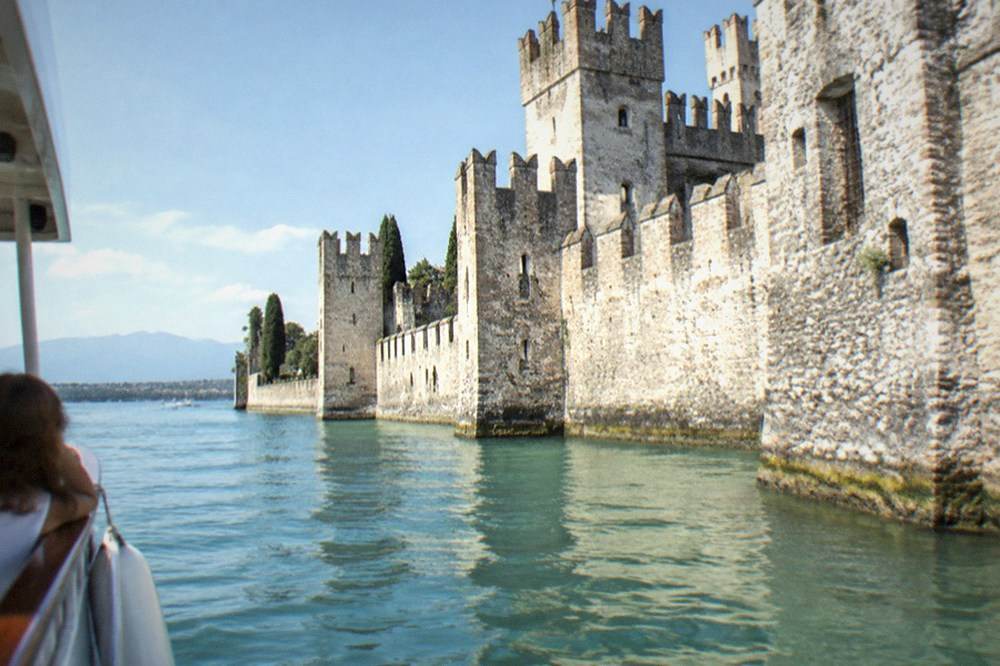
The water view also solves the castle's one interior weakness. Inside, the building cannot show you itself; from a boat it can. The loop out of the harbour puts the whole fortress in one frame, keep, towers, walls and reflection, and the morning light on the eastern face is the light the photographers chase. A traveller with time for only one paid experience in Sirmione faces a genuine choice between the keep and the loop, and the honest recommendation for the photograph-first visitor is the loop.
The two experiences also differ in when they can be had. The castle shuts its ticket office at 18:30 and its gates at 19:15, while the boats run into the evening in high season, and the sunset departures turn the fortress walls gold. Anyone planning a single afternoon should book the interior visit first, in the morning or right after lunch, and leave the water for later, when the castle is closed and the light is better anyway.
Which Boat Trip Shows The Castle Best?
The short shared loop, the 25-Minute Peninsula Cruise, shows the castle best per euro and per minute, because it spends its whole route in the castle's immediate waters. Travellers who want commentary should take the 30-minute guided tour, and those who want the town as well as the water should take the walking-and-boat combination. Private options exist for groups who want the harbour to themselves.
The three shared options each frame the castle differently. The 25-Minute Peninsula Cruise, from $13.77 per person, 4.7 from 3,495 reviews, is the pure image run: harbour channel, castle walls, moat, then the peninsula's caves and villas. The guided peninsula tour, 30 minutes, from $16.07, 4.4 from 78 reviews, covers the same water with a guide's voice over it. The walking-and-boat combination, an hour and a half, from $67.71 per person, 4.6 from 70 reviews, splits the time between the old town on foot and the water, which suits visitors who want the castle's context rather than just its picture.
| Tour | Duration | From (per person) | Rating | What it gives you |
|---|---|---|---|---|
| 25-Minute Peninsula Cruise | 25 minutes | $13.77 | 4.7 from 3,495 reviews | The classic castle and peninsula loop |
| 30-Minute Guided Peninsula Tour | 30 minutes | $16.07 | 4.4 from 78 reviews | Same loop with live commentary |
| Walking and Boat Combo | 1 hour 30 minutes | $67.71 | 4.6 from 70 reviews | Old town on foot plus the boat loop |
| Boat, Grotte di Catullo and Walking Tour | 3.5 hours | $109.02 | 4.8 from 47 reviews | Castle walls, Roman villa and town in one |
| Private Peninsula Tour | 25 minutes | $152.20 for the boat, up to 5 people | 4.7 from 81 reviews | The loop alone, on your own schedule |
Two of these deserve a second look for castle purposes. The longer 3.5-hour combination, rated 4.8 from 47 reviews, is the one that answers the whole peninsula in a single booking: the castle walls from the water, the Grotte di Catullo on foot and the town in between, which pairs naturally with the questions in is it worth visiting Isola del Garda? if the island is also on the list. And the private peninsula tour, from $152.20 for the whole boat with up to five people, is the photographer's option, since a private skipper will hold the castle angle while the light behaves.
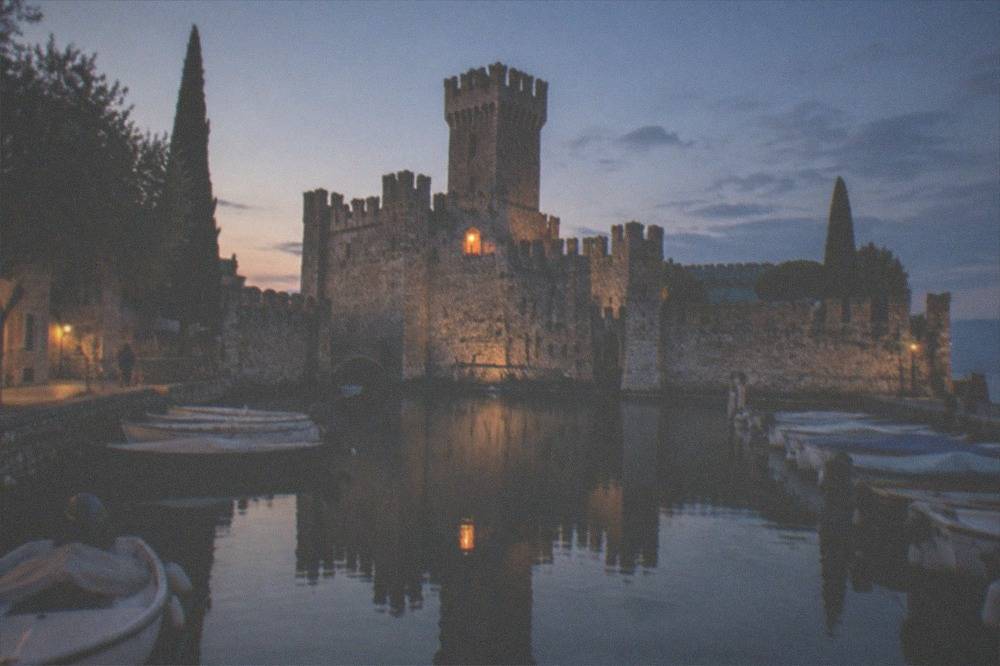
For most visitors, though, the walking-and-boat combination is the sweet spot if the day is a full one, and the short loop is the sweet spot if the day is short. The walking segment covers the town the castle guards, and the boat segment covers the castle the town is famous for, which is a fair summary of what Sirmione is.
The final verdict, then, is a both-and rather than an either-or. The castle interior is a genuine state museum at a fair price, with a keep climb that earns its steps and a dock that rewards planners. The water is where its image lives, and the loops that supply that image are among the cheapest experiences on the lake, as the Lake Garda Boat Tours listings show. Travellers who do the keep in the late afternoon light and the harbour loop at golden hour will have seen the Castello Scaligero from every angle that matters, and will understand exactly why the photograph and the building are two different attractions wearing one name.
Common Questions About Castello Scaligero
Is Castello Scaligero Worth Visiting?
Yes, with a clear caveat: the castle's fame rests on its exterior and its harbour setting, and the interior is a compact military structure rather than a furnished palace. A 10 euro ticket buys the wall-walks and the keep climb, whose views over the peninsula are the best in the old town. Visitors short on time or money often find the boat loop past the moat walls delivers the essence of the castle on its own.
How much does the castle cost and when is it open?
A full ticket is 10 euro, with a 2 euro reduced rate for EU visitors aged 18 to 25. The castle opens Tuesday to Sunday, 8.30 to 19.15, with the ticket office closing at 18.30, and it is closed on Mondays as well as 1 January and 25 December. A 20 euro combined ticket also covers the Grotte di Catullo and the Villa Romana in Desenzano over seven days.
Can you visit the dock inside the castle?
The internal dock, the castle's original fortified harbour, is visible from the wall-walks with a standard ticket, but access down to the dock itself is only possible on the museum's guided visits. Check the museum's guided-visit schedule before travelling if standing in the dock matters to you.
How long should you allow for the castle?
Allow 45 minutes to an hour inside, and up to 90 minutes if you photograph slowly or climb the keep at a gentle pace. Add queue time at the gate in peak summer. The whole circuit is compact, so the castle pairs easily with a boat loop or a swim in the same afternoon.
Which boat trip shows the castle best?
The 25-Minute Peninsula Cruise from Sirmione, from $13.77 per person, passes the moat walls at the angle the famous photographs use. A 30-minute guided version adds commentary from $16.07, and a 1.5-hour walking-and-boat combination from $67.71 adds the old town. All three run from Sirmione harbour, minutes from the castle gate.
Is the castle better inside or from the water?
They show different things. Inside gives the keep's 146-step climb and the highest viewpoint on the peninsula; the water gives the castle's iconic profile rising straight from the harbour. The complete visit does both: the interior in the morning or after lunch, and a boat loop in the evening light after the ticket office has closed.