Is There A Hop-On Hop-Off Boat On Lake Garda?
No hop-on hop-off tourist boat exists on Lake Garda, but the state ferry network and its 39.50 euro whole-lake day pass work the same way across 28 landing stages. Here is how to use it, and when a booked cruise is the better buy.
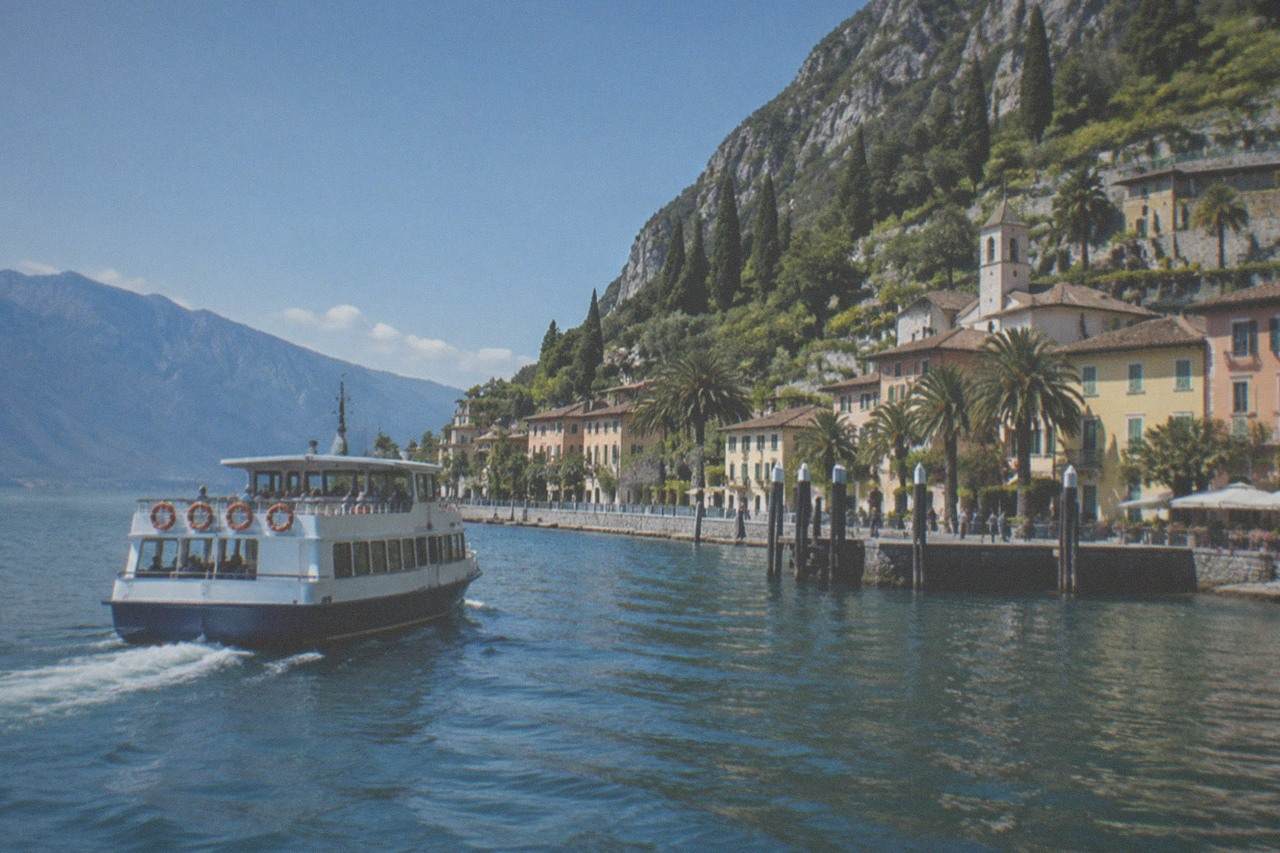
Is There A Hop-On Hop-Off Boat On Lake Garda?
No tourist operator runs a hop-on hop-off boat on Lake Garda in the city-sightseeing sense, with open decks, running commentary and unlimited reboarding at set stops. The working equivalent is the state ferry network: 28 landing stages around the lake, and a whole-lake day pass at 39.50 euro that lets you board, alight and reboard all day, fast services included.
That distinction matters more here than on most lakes, because Garda is enormous. It runs 54 km from its southern basin at Peschiera del Garda to Riva del Garda at the alpine head of the lake, with a shoreline of about 125 km split across three regional administrations. A single sightseeing operator with a fixed loop cannot cover that, and none has ever tried. What exists instead is something the hop-on hop-off model was invented to imitate: a scheduled public boat service, run by the state navigation company, calling at 28 landing stages from Sirmione and Desenzano del Garda in the south to Limone sul Garda, Malcesine and Riva del Garda in the north.
So if the question behind your search is whether you can spend a day getting on and off boats at whatever town takes your fancy, the answer is yes, and the tool for it is a one-day free-circulation ticket rather than a tourist product. The tariff sheet calls it a "biglietto giornaliero libera circolazione", a day ticket of free circulation, and it is valid for unlimited travel with no stop limitation. It is the closest thing this lake has to a hop-on hop-off pass, and in some ways it is better, because the boats you ride are real working vessels, from small shuttle battelli to historic steam-era ships, rather than a purpose-built sightseeing fleet.
The one thing you give up is commentary. Nobody on a public ferry will tell you what you are looking at, and there is no roofless deck with a guide pointing at castles. If narration, a guaranteed seat and a set sightseeing route are what you want, a booked cruise is the better product, and the choice between the two is the whole subject of this article. The short version: the pass wins on flexibility and price, the cruise wins on comfort and story, and most visitors to this lake end up using both at different moments of a week.
For travellers who want the structure of a guided day on the water without doing the planning themselves, these three shared cruises cover the most common versions of that idea:
What Does The Ferry Network Actually Offer?
The state ferry network, run by Gestione Governativa Navigazione Laghi, offers scheduled passenger boats between 28 landing stages on Lake Garda, with a summer timetable running from 16 May to 4 October 2026 and a shorter spring schedule before it. Fares are zonal: one-way adult prices run from 1.50 euro for an urban hop to 17.50 euro for the full lake, and day passes sit on top of that.
The fleet is more varied than most visitors expect. Alongside modern catamarans and fast hydrofoil-style services, the network still sails the motonave Zanardelli, a steamship built in 1903 at the Escher shipyard in Zurich that carries up to 500 passengers and retains its original art-nouveau fittings. The fleet has also been modernising: the historic ferry Adamello returned to service at the start of the 2026 season converted to hybrid-electric propulsion, following the San Cristoforo, which was converted in 2021, and the hybrid motonave Ander joined the lake after its 2025 inauguration. Riding the network is therefore not a compromise against a tourist boat; on a good day it is a heritage experience in its own right.
Two timetables govern the year. The spring schedule runs from 1 April to 15 May, and the full summer timetable runs from 16 May to 4 October, when frequency is at its maximum across the whole lake. After 4 October the service drops to an autumn and winter structure with fewer routes. If your trip falls in the shoulder weeks either side of the summer window, check the sailing times for your specific pair of towns before committing to a hop-heavy plan, because gaps between boats widen outside the peak. The operator's own tickets and timetables page for Lake Garda is where the current PDFs live.
A few practical rules shape any day on the network. Places are limited to the maximum capacity of each vessel, so on the busiest August crossings a full boat simply sails without you and you wait for the next one. Tickets bought on board carry a surcharge of 1.00 euro per passenger, waived when the ticket office is closed. Fast services, marked Sr on the timetable, require a supplement on top of the ordinary fare unless your ticket already includes them. And in summer 2026 the operator restricts the transport of bicycles and scooters at the Sirmione landing, a notice worth knowing about if your plan pairs two wheels with a boat.
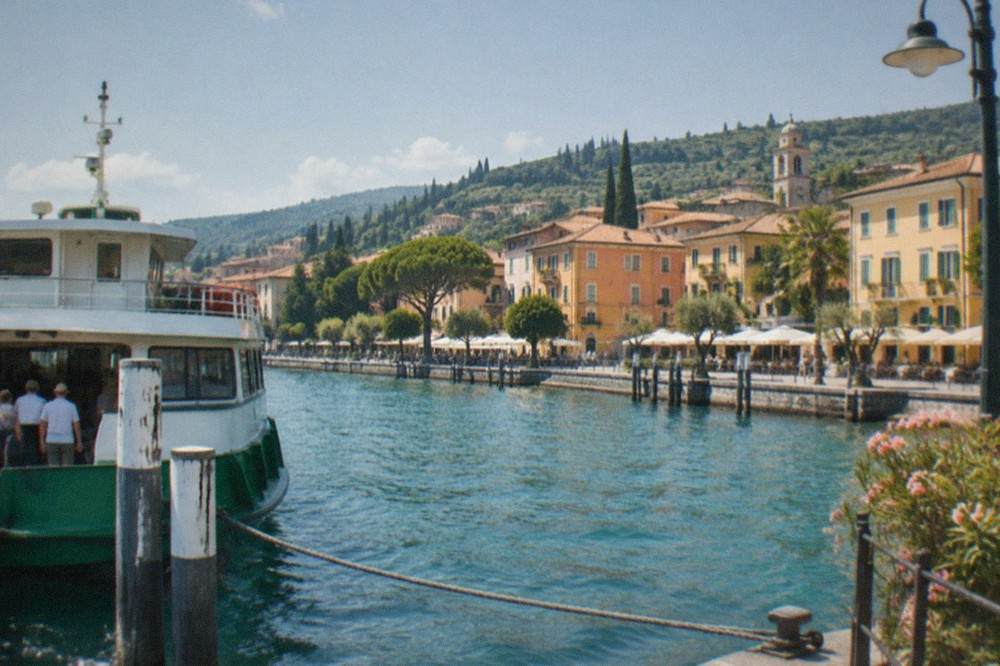
For a fuller picture of routes, fleet and ticket mechanics, the guide to the Lake Garda ferry network covers the whole system, and the ferry versus boat tour comparison works through the same choice this article makes in closing.
How Does A Day Pass Work?
A day pass works like a transport ticket, not a tour ticket: you buy it at a landing-stage office or on board, it is stamped or validated for one calendar day, and it then covers unlimited boarding on the routes its zone allows. The whole-lake version includes the fast services; the smaller zones require a supplement to board them.
The tariff sheet describes the mechanics plainly: free-circulation tickets allow a whole day travelling on the lake without any stop limitation. In practice that means you can ride from Peschiera to Sirmione in the morning, get off for two hours at the peninsula, catch a boat on to Desenzano del Garda for lunch, and continue north in the afternoon, all on one ticket. There is no commentary, no reserved seat and no set itinerary. The pass is a licence to improvise, and the quality of your day depends on how well you read the timetable before you commit to a stop, because some landings have long gaps between sailings.
Buying is straightforward. Ticket offices sit at the main landing stages, and the NaviTap contactless system now lets you purchase a day ticket directly on board by tapping a Visa, Mastercard or digital wallet, with no fees, and a single card can carry up to five tickets for a group travelling together. That removes the old anxiety about arriving at a small pier with no office and no cash. Remember the on-board surcharge of 1.00 euro applies to ordinary tickets bought on board when the office is open, so for single fares it is still worth using the office.
One warning about the pass that first-time visitors often miss: the whole-lake day ticket is the only one that includes the fast services. If you buy a lower-lake or single-zone pass and then board a boat marked Sr on the timetable, you need to pay the rapid-service supplement on top, per section travelled. The supplement scale runs from 2.50 to 6.00 euro. On a tight day plan, one fast crossing can be worth the money, since the fast boats shave real time off the long north-south runs; on a leisurely plan, ordinary boats are the whole point. If your day is ambitious, buy the whole-lake pass and stop doing arithmetic.
For visitors combining the boat network with the wider region, the NaviTap contactless ticketing page explains the on-board purchase rules, and Trenitalia's combined train and lake pass covers the rail-plus-boat product for arrivals through Peschiera or Desenzano.
What Does A Day Pass Cost By Zone?
Day passes come in three tiers: the whole lake at 39.50 euro for adults, the upper or lower lake at 27.00 euro, and a single zone at 23.50 euro, all in the 2026 tariff. Children aged 4 to 11 pay a reduced rate on every tier, and three-day versions exist for the whole lake and the half-lake zones.
Here are the core numbers from the tariff sheet in force from 1 April 2026. Every price below is the official adult full fare, with the children's rate shown where the sheet sets it against the whole-lake and single-zone tiers.
| Pass | Adult 1 day | Children 4-11, 1 day | Adult 3 days |
|---|---|---|---|
| Whole lake, fast services included | EUR 39.50 | EUR 20.00 | EUR 79.00 |
| Upper lake or lower lake, ordinary routes | EUR 27.00 | reduced rate on the tariff sheet | EUR 54.00 |
| Single zone (north, centre, west or east) | EUR 23.50 | EUR 12.00 | not sold |
The zones are drawn by geography. The upper lake runs from Maderno and Torri del Benaco northward; the lower lake runs from Gargnano and Torri southward. The four single zones are north (from Campione and Assenza up), centre (Limone and Malcesine down to Maderno and Torri), west (Maderno around to Sirmione) and east (Torri around to Sirmione). A day spent in the southern basin, say Peschiera to Lazise to Sirmione to Desenzano, sits inside the lower-lake or single-zone tiers, and the 23.50 euro east or west zone pass is the cheapest legitimate hop-on hop-off day the lake offers.
For comparison, single one-way fares run 3.50 euro for the shortest section, 6.00 euro for a hop like Peschiera to Sirmione, and 17.50 euro for the full south-to-north run from Desenzano to Riva. So the whole-lake day pass pays for itself at roughly three medium crossings, and the zone passes break even faster if your day stays local. The arithmetic behind every one of these fares, including the rapid-service supplements, is worked through in how much the ferries on Lake Garda cost.
Which Towns Can You Hop Between In A Day?
In one day on a whole-lake pass you can realistically link four to six towns, for example Peschiera, Lazise, Bardolino, Garda, Sirmione and Desenzano del Garda in the south, or Maderno, Salò, Gardone Riviera and Sirmione on the western shore. The constraint is not the ticket, it is the timetable: gaps between sailings, not distance, decide how many stops fit.
The southern basin is the natural hop-on hop-off playground, because the landing stages sit close together and the boats run often in the summer window. A realistic day looks like this, with each leg's one-way fare section shown so you can see the pass earning its price. The crossing from Desenzano to Sirmione takes about 20 to 25 minutes on the summer timetable.
| Leg | One-way fare section | Adult single fare | Notes |
|---|---|---|---|
| Peschiera del Garda to Lazise | section 2 | EUR 6.00 | morning start, walled town and harbour |
| Lazise to Bardolino | section 1 | EUR 3.50 | short hop, wine town waterfront |
| Bardolino to Garda | urban hop | EUR 1.50 | ten minutes across the bay |
| Garda to Sirmione | section 2 | EUR 6.00 | peninsula views on approach |
| Sirmione to Desenzano del Garda | section 1 | EUR 3.50 | about 20 to 25 minutes |
| Desenzano back to Peschiera | section 2 | EUR 6.00 | evening return leg |
Count the singles on that itinerary and you are already most of the way to the lower-lake day pass at 27.00 euro, so on this route the pass wins on the freedom to change your mind as much as on the saving. Stretch the same day one town further, or add a fast service, and the pass pulls clearly ahead. The lesson is to count your likely legs before buying: a two-stop day is cheaper on singles, a four-stop day almost never is.
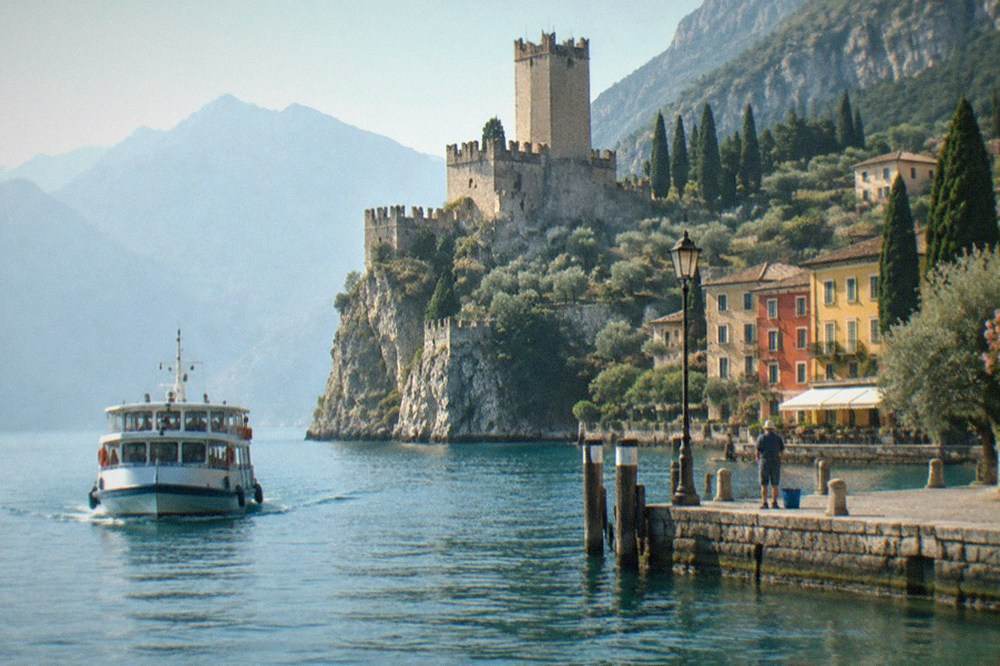
The northern basin hops differently. Malcesine to Limone sul Garda is a shuttle route with frequent crossings in the summer timetable, and Limone to Riva del Garda takes about 30 minutes on the 2026 schedule, so a north-lake day can chain Malcesine, Limone and Riva comfortably. What you cannot do is a whole-lake hop day: Desenzano to Riva alone is 17.50 euro each way and a long crossing, so a genuine south-to-north-and-back sightseeing circuit eats most of a day in sailing time. Pick one basin. Travellers doing the lake without a car will find the car-free Lake Garda planning guide built around exactly this constraint.
Where Does A Booked Cruise Beat The Pass?
A booked cruise beats the day pass on four things the ferry network never provides: a guaranteed seat, live commentary, a fixed route designed around the sights rather than the timetable, and extras such as lunch, wine or a swim stop. On price per hour the pass usually wins, but a cruise is buying a different product, not the same product with a guide attached.
The clearest case is the southern half-day cruise with lunch, which runs four hours from Peschiera del Garda, holds a 4.4 rating from 849 reviews, and costs from $72.30 per person with free cancellation on the listing. What that buys over a 27.00 euro pass is the meal, the narration and the certainty: you sit down, the boat leaves, someone explains the shoreline, and lunch arrives. No ferry ticket feeds you, and no ferry crew narrates. For a visitor with one afternoon and no appetite for timetable research, that certainty is worth real money, and it is why these products coexist rather than compete head-on.
The same logic applies to the guided cruise to Sirmione from Garda and Bardolino, a four-hour trip rated 4.3 from 185 reviews at from $63.12 per person, which builds the peninsula into a round trip with a guide on board. And the shortest version of the idea is the 25-minute peninsula cruise out of Sirmione itself, 4.7 from 3,495 reviews at from $13.77 per person: a quick narrated loop past the Grotte di Catullo, the Castello Scaligero and the thermal spring, cheap enough to stack onto a ferry day rather than replace one. Many visitors do exactly that, using the pass to reach Sirmione and the little cruise to understand it once there.
Here is the honest side-by-side for a day of comparable water:
| Factor | Whole-lake day pass | Booked shared cruise |
|---|---|---|
| Price for the day | EUR 39.50 adult | from $63.12 to $72.30 per person |
| Where you can go | any of the 28 landing stages | the operator's fixed route |
| Seat | not guaranteed, capacity limits apply | included, boarding prioritised |
| Commentary | none | live guide on board |
| Food and drink | not included | lunch or tasting on some cruises |
| Flexibility to change plan | total, board any scheduled boat | none, fixed departure |
| Cancellation | unused ticket, no tour promise | free cancellation on the listing |
The pattern across that table is simple. The pass is a tool for people who want to build their own day; the cruise is a product for people who want the day built for them. If you are the sort of traveller who reads a timetable the night before with a map open, buy the pass. If the words "timetable research" made your shoulders drop, buy the cruise. The wider menu of both kinds of day is laid out in boat trips around Lake Garda.
Do You Need To Book Either One?
You do not need to book the ferry network at all: tickets and day passes are sold at landing-stage offices and on board, and seats are first come, first served up to each vessel's capacity. Booked cruises are different: shared boats have fixed passenger counts and set departures, so booking ahead is the only way to guarantee a place, especially in July and August.
For the ferry side, the practical advice is to buy the day pass at the office of the first landing you start from, which avoids the on-board surcharge and locks in the free-circulation terms from your first sailing. There is no reservation system for ordinary passenger boats, so your only risk is a full boat at peak times, and the remedy is simply to be near the front of the queue for a popular crossing. The detailed mechanics, including what happens when a boat is full and how the contactless on-board purchase works, are covered in whether you need to book a Lake Garda ferry.
For the cruise side, the calculus changes. A shared cruise is a ticketed product with a real capacity, a set departure time and often food ordered in advance. The Peschiera half-day cruise with lunch carries free cancellation on the listing, which removes the risk of committing early: you lock the date, and if your plans shift you cancel without penalty. That combination, book early and cancel free, is the standard advice for the July and August weeks, when the southern boats fill with day-trippers from Verona and Milan.
There is also a middle product worth knowing about: the full-day bus and boat tour with a guide, which runs ten hours from the town of Garda, is rated 4.5 from 193 reviews and costs from $86.07 per person. It stitches public boat segments and coach transfers into one guided loop of the lake, which is the closest thing to a hop-on hop-off experience that someone else has already done the planning for.
Which Should You Buy For Your Day?
Buy the whole-lake day pass if you want to visit three or more towns in a day, are happy reading a timetable, and value flexibility over comfort: it costs 39.50 euro and covers every landing stage. Buy a booked cruise if narration, a guaranteed seat, food or a swim stop matter more than improvisation, or if your time on the lake is a single half-day.
The deciding questions are three. How many towns do you actually want to set foot in? A two-town day is cheaper on single fares, a four-town day belongs to the pass. How do you feel about timetables? The pass rewards an evening spent with the sailing times and punishes a guess. And what is the day for? If the boat is transport, buy the pass; if the boat is the activity, buy the cruise. Families with small children, or anyone visiting in the peak August weeks when queues at the busiest piers lengthen, often find the cruise's certainty worth its premium.
Plenty of visitors, and this site's own reporting supports it, split the difference: a day pass for the rambling middle of a week, and one booked sunset or lunch cruise as the centrepiece of a holiday. That is not indecision, it is the correct read of what each product does. The pass is infrastructure; the cruise is theatre. A lake this size has room for both, and the traveller who understands that there was never a hop-on hop-off tourist boat, only a state ferry network doing that job better than a tourist imitation would, is the one who gets the most out of the water.
Whatever you choose, the practical starting point on this site is Lake Garda Boat Tours, where the shared cruises, private charters and ferry guidance are laid out side by side.
Common Questions About Hop-on Hop-off Boats On Lake Garda
Is There A Hop-On Hop-Off Boat On Lake Garda?
No. There is no hop-on hop-off tourist boat in the city-sightseeing sense. The working equivalent is the state ferry network, which calls at 28 landing stages, and its whole-lake day pass at 39.50 euro, which allows unlimited boarding and alighting for a calendar day with fast services included.
Can you get on and off the public ferries with one ticket?
Yes. The free-circulation day tickets are designed exactly for that: one ticket, unlimited travel, no stop limitation within the zone you bought. The whole-lake version covers every route including the fast services; the smaller zones cover ordinary routes only, with a supplement for fast boats.
How much is a hop-on hop-off day on the ferries?
The whole-lake day pass costs 39.50 euro for an adult and 20.00 euro for children aged 4 to 11. A single-zone day pass costs 23.50 euro adult, and the upper or lower lake costs 27.00 euro adult, with the child rates printed on the tariff sheet.
Do the ferries run all year?
The full summer timetable runs from 16 May to 4 October, with a reduced spring schedule from 1 April to 15 May and a thinner autumn and winter structure after early October. Frequency is at its maximum inside the summer window and drops outside it, so check sailing times for your towns in shoulder season.
Is a booked cruise better than a day pass?
They are different products. The pass wins on price and flexibility; a booked cruise wins on commentary, a guaranteed seat, a set route and extras like lunch or a swim stop. Many visitors use a pass for rambling days and one booked cruise as a holiday centrepiece.
Do I need to book the ferries in advance?
No. Ordinary passenger boats take no reservations; tickets and day passes are sold at landing-stage offices and on board, with a 1.00 euro surcharge for on-board purchase when the office is open. Shared cruises, by contrast, have fixed capacities and are worth booking ahead in July and August.