Are The Grotte Di Catullo Worth Visiting?
An honest look at the Grotte di Catullo in Sirmione: prices, opening hours, walking time from the pier, and which boat trip shows the Roman villa best.
Are The Grotte Di Catullo Worth Visiting?
Yes, if you enjoy Roman ruins with a lake view and you are already in Sirmione, because the site is the largest private Roman villa known in northern Italy and the adult ticket is 10 euro, open Tuesday to Saturday 8.30 to 19.30, Sunday from 10.00, Monday only 9.00 to 13.00. The walk from the ferry landing is about 1.4 km, roughly 19 minutes, and from a boat the whole headland costs nothing extra.
That is the short version. The longer version depends on what kind of traveller you are, how much time you have on the peninsula, and whether you would rather see the villa from inside its walls or from the water that once lapped up to its terraces. Both are legitimate, and this page works through the numbers that decide it: the ticket, the clock, the walk, the combined ticket, and the boat trips that pass the site.
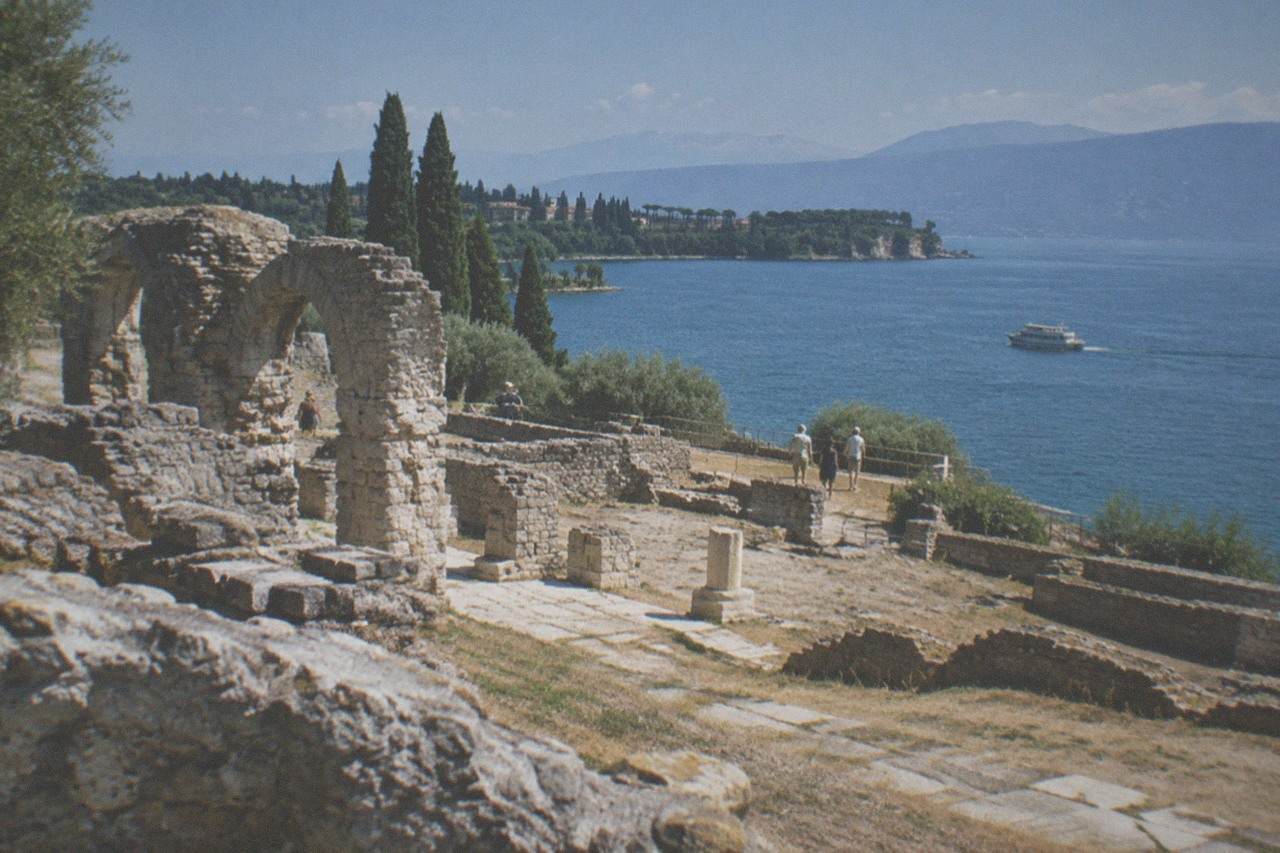
The Grotte di Catullo is not a cave, despite the name. "Grotte" was the word later locals gave to the collapsed, vegetation-covered ruins they saw on the headland, and it stuck long before anyone knew a Roman villa lay underneath. What stands today is a partially reconstructed complex of walls, terraces and foundations at Punta Grotte, the western tip of the Sirmione peninsula, with olive trees growing between the rooms and open sky where the ceilings used to be. The museum entrance sits at the top of the site, and the views south and west across the lake are part of what you are paying for.
For many visitors the question is really about sequencing. Sirmione packs a castle, a spa town, a medieval old town and a Roman villa onto one small peninsula, and a day trip rarely fits all four comfortably. If you are asking whether the villa justifies its slot against the alternatives, the honest answer is that it earns its place for anyone with an interest in Roman history, photography or a good walk, and it is skippable for anyone whose priority is the water. If your Lake Garda plan is built around boats, you can read the wider case in our guide to boat trips around Lake Garda, where the villa appears as a sight on several southern routes.
What Is Actually There?
The site holds the remains of a vast Roman villa built in the 1st century BC, covering roughly 2 hectares across stepped terraces, with long porticoes, underfloor heating channels, mosaic fragments and a small archaeological museum. The walls rise in places to several metres, olive groves fill the open areas, and the headland drops away to water on three sides.
The villa belonged to the Valerii family, and its scale is the first thing that registers. This was not a farmhouse; it was a statement property, built for a family that wanted to be seen enjoying the lake. The plan follows the natural slope of the headland in terraces, so you descend through the complex rather than walking a single floor level. Porticoes ran along the long sides, framing views that the owners would recognise instantly if they returned today. Some of the plaster survives, patches of fresco cling to interior walls, and the hypocaust, the underfloor heating system, is visible in the bath area as raised brick channels.
The museum at the entrance holds the portable finds: amphorae, glassware, statuary fragments and the everyday objects recovered from the site and the surrounding headland. It is compact, and it does the job of explaining who lived here and how the villa was used, but the ruins themselves are the attraction. Give the museum fifteen minutes if the visit is short, longer if the Roman context matters to you.
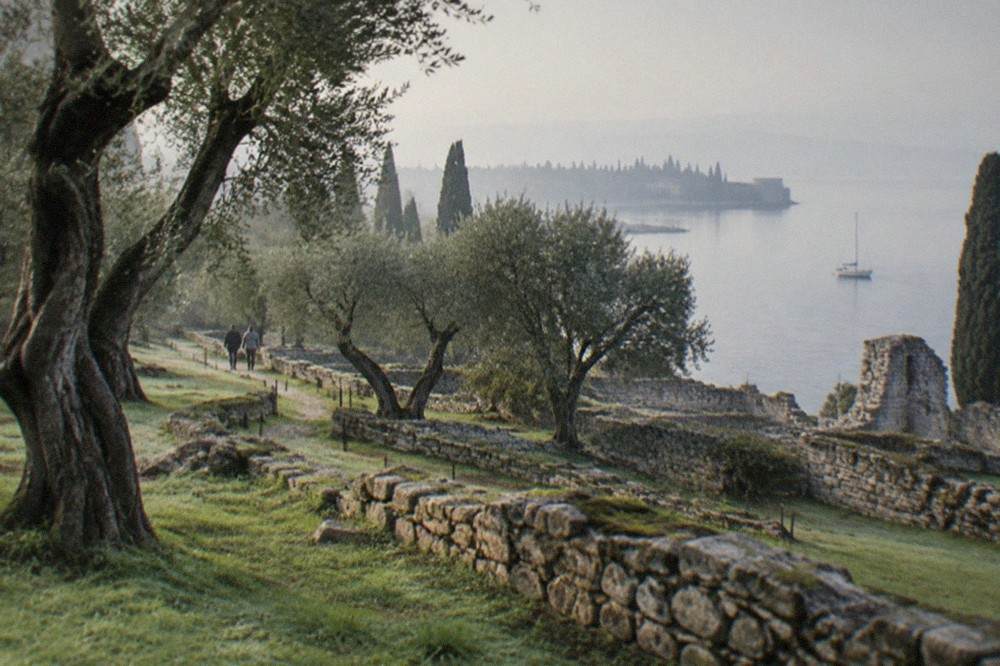
What surprises many first-time visitors is how much of the experience is outdoors. There is almost no roofed space beyond the museum, so the visit is a walk through a landscape as much as a building. In summer that means sun exposure, and in the shoulder months it means wind off the water. The setting is the point: the villa was placed here precisely because of the light, the views and the microclimate, and those are still exactly what you get. If standing inside a ruin with a lake view sounds like a good hour, the site is worth it. If that sounds like a lot of walking for old walls, the water option covered later in this page may suit you better, and our fuller treatment of the sight from a boat is in the Grotte di Catullo by boat guide.
What Does It Cost And When Is It Open?
The adult ticket is 10 euro, the reduced ticket is 2 euro for EU citizens aged 18 to 25, and opening runs Tuesday to Saturday 8.30 to 19.30, Sunday 10.00 to 19.30, with Monday limited to 9.00 to 13.00. Last entry is 40 minutes before closing, and the site is closed on 1 January and 25 December.
Those figures come from the Lombardy museums service, which runs the site, and they are the numbers to plan around. The 2 euro reduced rate is one of the better deals in Italian state museums if you qualify, so EU visitors between 18 and 25 should carry ID. Under-18s enter free under the national state-museum rules, as do the other standard free categories listed by the culture ministry. The official museum page carries the current hours and prices, and it is the page to check before a Monday or Sunday visit: the Grotte di Catullo museum listing.
The Monday limitation is the trap. Many visitors arrive in Sirmione on a Monday because the town feels quieter then, and they find the villa open only until 13.00. Plan a Monday visit for the morning, not the afternoon. The long summer evenings, by contrast, are a gift: an entry at 18.00 in July still leaves well over an hour inside, and the low light across the terraces is at its best late in the day.
| Ticket | Price | Who it covers |
|---|---|---|
| Grotte di Catullo, full | 10 euro | Adults |
| Grotte di Catullo, reduced | 2 euro | EU citizens aged 18 to 25 |
| Castello Scaligero, full | 10 euro | Adults, includes the keep |
| Castello Scaligero, reduced | 2 euro | EU citizens aged 18 to 25 |
| Combined ticket, full | 20 euro | Villa, castle and Desenzano villa, 7 days |
| Combined ticket, reduced | 4 euro | EU citizens aged 18 to 25, same three sites |
The castle runs a different weekly rhythm: closed Mondays, open Tuesday to Sunday 8.30 to 19.15 with the ticket office shutting at 18.30. So on a Monday the villa is the morning option and the castle is off the table, while on any other day both are available in one long visit. The castle's own case is argued in is the Castello Scaligero worth visiting?, which covers the darsena, the internal dock you can only see on a guided tour.
How Long Does A Visit Take?
A comfortable visit runs about 90 minutes: 45 to 60 minutes for the terraces and walls at a walking pace, 15 to 20 minutes for the museum, and the rest for the viewpoints and the walk back out. Visitors with a serious Roman-history interest can spend two hours, and anyone rushing can compress the ruins themselves into 30 minutes and still see the core.
The site is bigger on foot than it looks from the water. The terraced plan means stairs and slopes, and the path from the museum entrance down through the complex to the far viewpoints and back covers a real distance. There is shade under the olive trees but little shelter, so in the middle of a July afternoon the visit feels longer than the clock says. Morning and the last two opening hours are the comfortable windows.
Budget the walk in, too. The 1.4 km from the landing to the entrance is about 19 minutes at a steady pace, and it is the same distance back, so a "90 minute visit" is really two and a half hours out of your Sirmione day once the walking is counted. Anyone pairing the villa with a boat trip should read the timing notes in the Sirmione boat tour guide, because the walk is the number that most often breaks a tight itinerary.
Families with small children manage the site fine, but the terrain is not pushchair-friendly throughout, and the drop-offs at the headland edges need supervision. If your day is built around younger children, the practical alternatives and the water-quality context are laid out in our piece on Lake Garda boat trips with kids.
How Do You Get There From The Pier?
From the Sirmione ferry and boat-tour landing it is a 1.4 km walk, about 19 minutes, first through the old town and the castle gate, then along the peninsula road to the museum entrance at the top of the site. In summer a small land train also runs the length of the peninsula, and drivers must park outside the restricted zone.
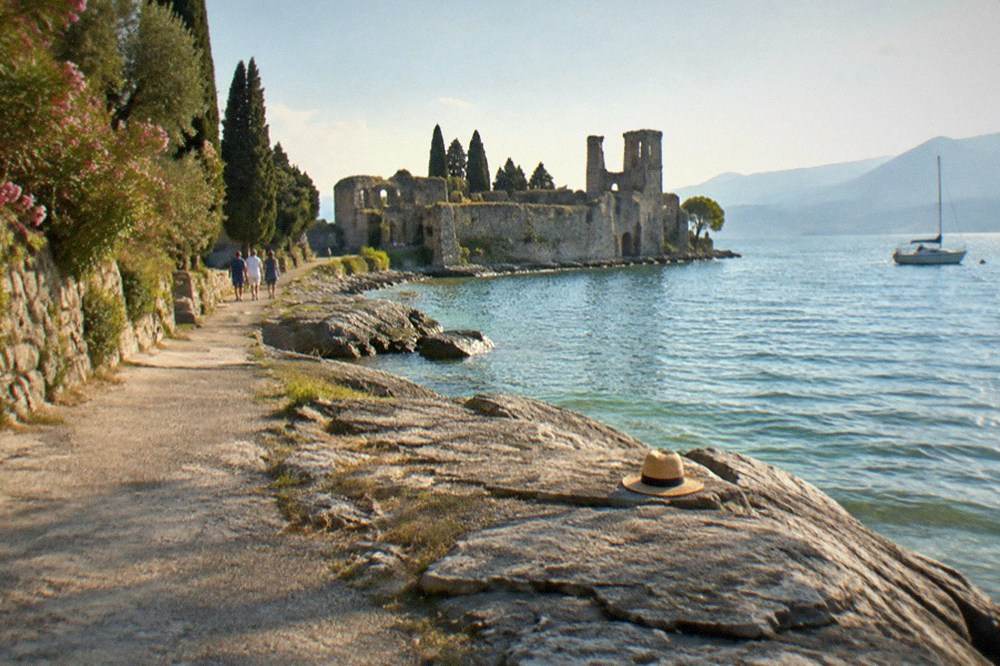
The walk is genuinely part of the pleasure. You pass under the Castello Scaligero, through the medieval streets, and out along the narrowing peninsula with water on both sides, before the olive groves of the villa site open up. It is flat for the most part, paved, and busy in the middle of the day in July and August. Coming back you are walking into the town, so the return feels shorter.
Drivers have the harder task. Sirmione's historic centre is a limited-traffic zone, and in 2026 the town is running 31 pedestrianisation days between April and September, closing the old centre to private vehicles entirely between 14.00 and 19.00 on those dates. The town's own rules are published by the municipality: the Sirmione ZTL regulations page. The practical consequence for a villa visit is simple: park at one of the edge car parks, walk or take the shuttle, and do not plan to drive to the site. Visitors arriving by boat sidestep the whole problem, which is one reason the water route to the villa is worth taking seriously.
Is The Combined Ticket Worth It?
The 20 euro combined ticket covers the Grotte di Catullo, the Castello Scaligero and the Villa Romana in Desenzano, and it is valid for seven days, so it pays off the moment you would otherwise buy two full-price entries. It saves nothing if you only visit the villa, and it makes most sense for visitors staying several days or touring both shores.
The arithmetic is straightforward. Two full-price entries bought separately cost 20 euro, exactly the combined price, so the third site, the Desenzano villa, comes free the moment you use the ticket twice. Use it three times and you have saved 10 euro against separate tickets. For a reduced-rate visitor the same logic applies at 4 euro against two 2 euro tickets. The seven-day validity removes the pressure: you do not need to fit all three into one day, and the Desenzano villa is an easy ferry ride away, about 20 to 25 minutes crossing from Sirmione according to the summer timetable.
Where it fits a boat-centred holiday: the combined ticket is the natural companion to a two-base plan. Spend a morning on the Sirmione peninsula doing the castle and the villa, then take a boat to Desenzano for the third site and the lakefront. That pairing, and the wider question of whether the town itself earns your time, is covered in is Sirmione worth visiting?.
| Plan | Sites visited | Cost | Verdict |
|---|---|---|---|
| Villa only | Grotte di Catullo | 10 euro | Right for a short stop |
| Castle only | Castello Scaligero | 10 euro | Right if time is tight |
| Two sites, separate tickets | Villa plus castle | 20 euro | No saving at all |
| Combined ticket, two sites | Villa plus castle | 20 euro | Breaks even, keeps options open |
| Combined ticket, three sites | Villa, castle, Desenzano villa | 20 euro | Saves 10 euro, best value |
The one caveat is the Monday problem again: the castle is closed Mondays and the villa closes at 13.00, so a combined-ticket weekend plan should keep the castle for Tuesday to Sunday. The Desenzano villa's hours are the least generous of the three, so check that site's day before committing the third visit.
Is The View From The Water Enough?
For many visitors, yes: a boat that rounds Punta Grotte shows the villa's terraces, its scale and its headland setting from exactly the angle its Roman owners designed it for, and the cheapest such loop costs from $13.77 per person. What the water view cannot give you is the interior, the mosaics, the museum and the sense of standing inside the walls.
This is the honest trade-off at the heart of the question. The villa was built to be seen from the lake; its long porticoes were composed for an approach by water, and a slow pass by boat delivers the composition the architects intended. Many travellers find that the water view satisfies their curiosity completely, and for a day-tripper with four hours on the peninsula, a boat loop plus the castle may beat a boat loop plus a 90 minute ruin walk.
The counter-argument is equally honest: from the water you see a green headland with stone walls in it, and without the interior visit you may not know which walls are Roman and which are later. The site's real character, the heated bath suite, the fresco fragments, the museum finds, only exists inside. The deciding factor is usually time. With a full day, do both: a short boat loop first, so you understand the headland's shape, then the walk and the interior. With half a day, choose one, and let your interest in Roman history make the call.
There is also a middle path that costs nothing extra: the public ferry from Desenzano to Sirmione passes the peninsula's western side on its approach, and passengers on the eastern-shore services see the headland from the south. It is a glimpse rather than a tour, but it is free with a ticket you were buying anyway. The wider ferry-versus-tour comparison, including the 3.50 euro one-way Sirmione to Desenzano fare, is set out in the ferry versus boat tour guide.
Which Boat Trip Shows It Best?
The best option for the villa specifically is the Sirmione boat, Grotte di Catullo and walking tour, a 3.5 hour trip rated 4.8 from 47 reviews, from $109.02 per person, which combines a boat loop with the walk and the ruins. For the water view alone, the 25-minute peninsula cruise, rated 4.7 from 3,495 reviews from $13.77, rounds the whole headland including Punta Grotte.
The combined tour is the one that answers this page's question directly, because it removes every friction the villa presents: the 1.4 km walk is absorbed into the itinerary, the timing is handled, and the interior visit is part of the package. It is the choice for a visitor who has decided the villa is worth it and wants the decision executed rather than planned. The listing carries free cancellation.
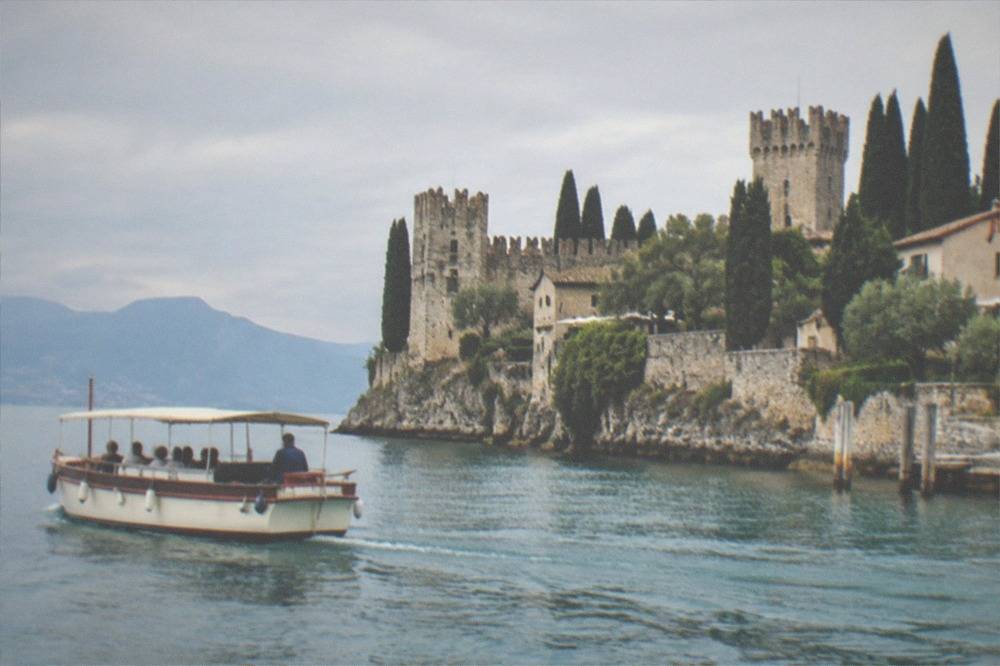
The 25-minute peninsula cruise is the pure sightseeing play. It is the most-reviewed boat product on the lake, it departs from the Sirmione landing, and it passes the villa's terraces at close range as it rounds the point. For a family or a couple with limited time it is the cheapest way to see the headland from the water, and it pairs naturally with a self-guided walk to the villa afterwards if the cruise whets the appetite.
Between those two sits the walking and boat combination, a 1h 30m tour rated 4.6 from 70 reviews from $67.71, which covers the village highlights and a boat leg. It suits a visitor who wants the old town and a taste of the water more than a deep dive into the Roman site. And for anyone whose curiosity extends past the peninsula, the private island trips across the bay are weighed in is it worth visiting Isola del Garda?, a different kind of villa on a different kind of headland.
| Boat listing | Duration | Rating and reviews | Price from | What it gives at the villa |
|---|---|---|---|---|
| Boat, Grotte di Catullo and walking tour | 3.5 hours | 4.8 from 47 reviews | $109.02 per person | Boat loop, guided walk and the ruins interior |
| 25-minute peninsula cruise | 25 minutes | 4.7 from 3,495 reviews | $13.77 per person | Close water pass of Punta Grotte |
| Village highlights walking and boat tour | 1h 30m | 4.6 from 70 reviews | $67.71 per person | Village walk plus a short boat leg |
| Public ferry Sirmione to Desenzano | about 20 to 25 minutes | standard service | 3.50 euro one way | A distant view of the headland en route |
The choice among these is really a choice of how much of your Sirmione day the villa deserves. The 25-minute cruise costs less than the villa ticket and takes a fraction of the time; the full tour costs several times more and hands you the whole experience without a single timetable decision. Both are defensible, and the fact that the cheapest option is also the most-reviewed one on the lake says something about what most visitors actually want from this headland. Whatever you choose, this is the sight that makes Sirmione more than a spa town, and it is the single best argument for the wider question of is Lake Garda worth visiting if Roman history is your thing. For the full picture of the town as a base, see the Sirmione guide, and for the broader water-side view of the peninsula, the reporting on this site, Lake Garda Boat Tours, covers every departure town on the lake.
Common Questions About The Grotte Di Catullo
Are The Grotte Di Catullo Worth Visiting?
Yes for most visitors who are already in Sirmione. The villa is the largest private Roman residence known in northern Italy, the adult ticket is 10 euro with a 2 euro reduced rate for EU visitors aged 18 to 25, and the headland setting is part of the experience. Skip it only if Roman ruins hold no interest and your time on the peninsula is short.
How much does it cost to visit the Grotte di Catullo?
The full adult ticket is 10 euro. The reduced ticket is 2 euro for EU citizens aged 18 to 25, and under-18s enter free under the national state-museum rules. A 20 euro combined ticket covers the villa, the Castello Scaligero and the Villa Romana in Desenzano over seven days.
What are the opening hours of the Grotte di Catullo?
Tuesday to Saturday 8.30 to 19.30, Sunday 10.00 to 19.30, and Monday only 9.00 to 13.00. Last entry is 40 minutes before closing, and the site closes on 1 January and 25 December.
How far is the walk from the Sirmione pier to the Grotte di Catullo?
About 1.4 km, roughly 19 minutes on foot, through the old town and along the peninsula road to the museum entrance at the top of the site. Allow the same distance back when planning your timing.
Can you see the Grotte di Catullo from a boat?
Yes. The 25-minute peninsula cruise rounds the whole headland, including Punta Grotte where the villa stands, from $13.77 per person. The 3.5 hour boat, Grotte di Catullo and walking tour adds the interior visit and the guided walk.
Is the Grotte di Catullo suitable for children?
The site is manageable for families, but the terrain has slopes, stairs and unguarded drops at the headland edges, and it is mostly open air with little shade. Pushchairs cope on the main paths but not everywhere. Short visits of 30 to 45 minutes work well with children.