Do You Need A Licence To Rent A Boat In Italy?
The Italian law on licence-free boat rental explained: the 40.8 CV ceiling, the age limit, Lake Garda's own shore rules, required safety gear and what happens if you ignore them.
Do You Need A Licence To Rent A Boat In Italy?
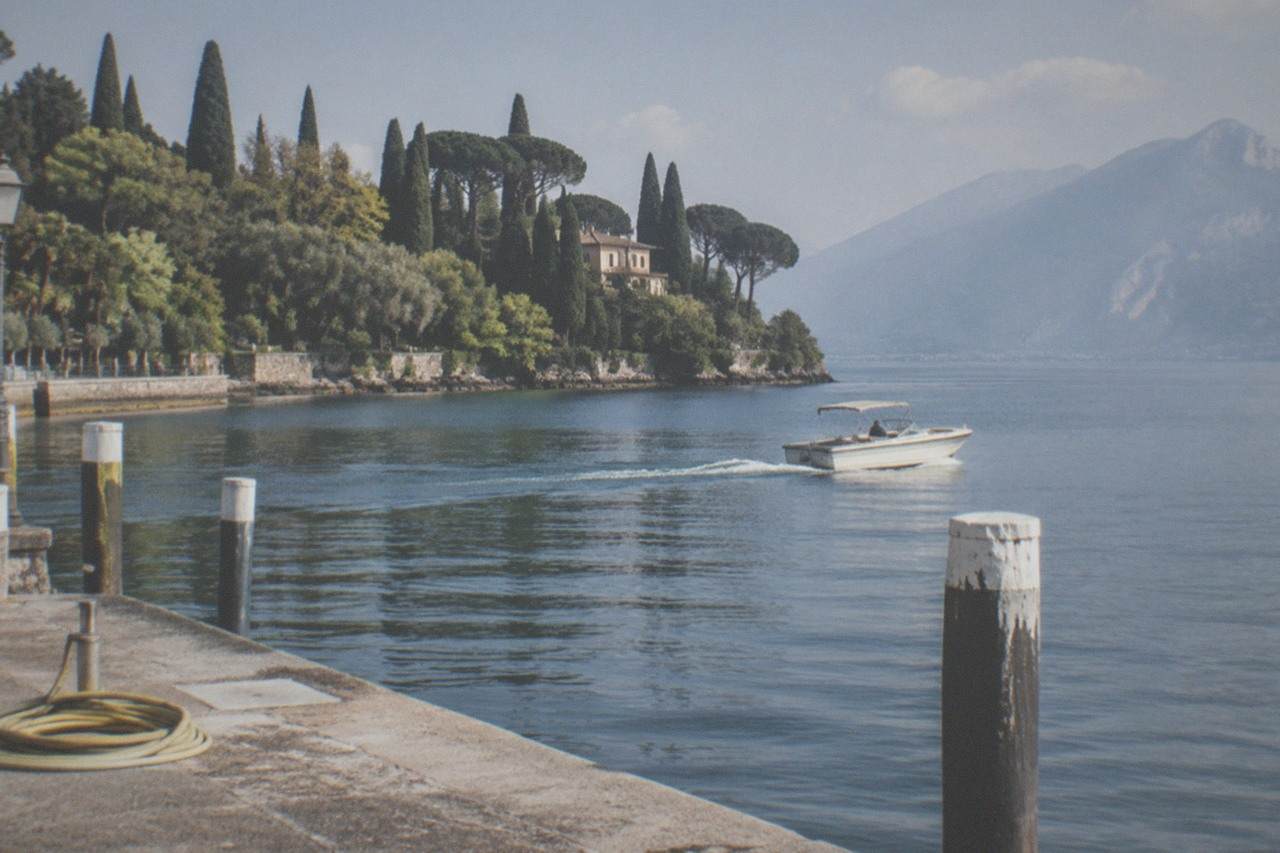
No, not for the kind of boat almost every Lake Garda rental fleet actually offers. Italian law, in article 39 of the Codice della nautica da diporto, allows anyone aged eighteen or over to drive a boat without a licence as long as the engine stays below 40.8 CV, which is 30 kW. That ceiling covers the standard 40 HP rental boats, so the licence question is usually answered by the boat's own spec sheet.
That single paragraph settles the question most visitors arrive with, but the details matter more than people expect. The law draws its line with engine numbers, not with a friendly "small boat" label, and a rental operator is legally required to hand you only boats that fall under it. On Lake Garda, the fleets advertise exactly that class of craft: open motorboats around five to six metres long, fitted with 40 HP outboards, deliberately engineered to sit just below the threshold. The Fiat 500-styled hire boats in Sirmione run the same 40 CV rating.
So the honest answer is yes with a footnote and no with a caveat. You do not need a licence for the boat you will almost certainly be offered. You do need to be an adult, you need to respect the lake's own navigation rules, which are stricter than most visitors assume, and you need the legally required safety equipment on board. The rest of this article walks through each of those layers in the order you will meet them.
If you already know you want the self-drive experience, the three options below are the licence-free and skippered formats this site covers in most detail.
One more framing note before the law itself. The question "do you need a licence" is really two questions: what does the national rule permit, and what does the specific lake you are standing on permit. Italy answers the first one nationally and the second one regionally, because Lake Garda spans three administrations, Veneto, Lombardy and Trentino, and each applies its own text. A renter in Sirmione faces a different rulebook from a renter in Riva del Garda, even though both are on the same water. That split is where most of the confusion online comes from, and this article keeps the two layers separate throughout.
What Does The Law Actually Say?
The governing text is article 39 of the Codice della nautica da diporto, legislative decree 18 July 2005 number 171. Its first comma lists engine size thresholds by fuel type and installation, and any engine above them requires a licence; comma 3 sets the alternative path, allowing licence-free use below those thresholds for boats up to 24 metres within six miles, provided the driver is at least eighteen.
The thresholds are worth reading as written, because they explain why the market standardises on one engine class. The law names engine configurations by fuel type and installation: over 750 cc for two-stroke carburettored engines, over 900 cc for two-stroke injected, over 1,000 cc for four-stroke outboards whether carburettored or injected, and over 2,000 cc for non-supercharged diesel, with inboard and supercharged diesel classes carrying their own figures in the same list. Every one of those is qualified by the same closing phrase: in any case with power above 30 kW, which is 40.8 CV. The full text sits on the normattiva national law database.
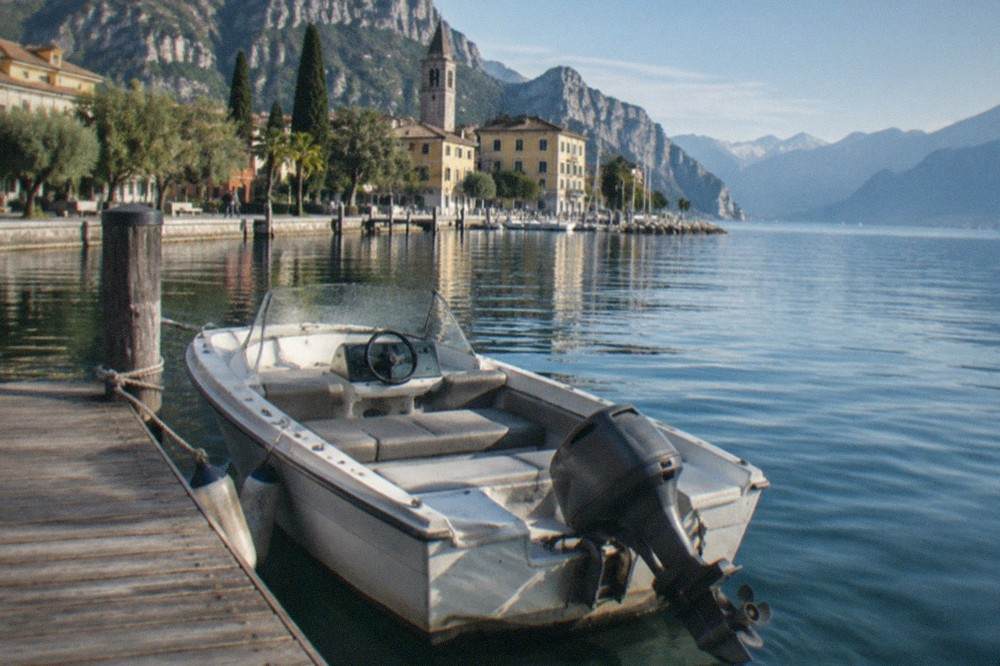
What does that mean in practice for a renter? It means the horsepower figure, not the boat's length or its number of seats, is the whole test. A six-metre boat with a 40 HP outboard is licence-free. A smaller, lighter boat with a 60 HP engine is not. Rental fleets on Garda buy engines that sit under the line with a small margin, and the "senza patente" label you see on every operator's price list is a claim about the engine, nothing else.
The age rule in comma 3 deserves its own sentence, because it is the one people trip over. Licence-free driving of an imbarcazione requires the driver to have turned eighteen. An operator may set a higher minimum for their own insurance, and some do: one national rental booking service requires twenty-one from renters without a nautical licence, and eighteen only for those who hold one. The national floor is eighteen; the contract in your hand may say more.
There is also a newer distinction in Italian charter law that touches this question from the other side. A reform passed in 2026 created a "locazione con prescrizione di comandante" category, a rental with a designated professional skipper, and capped those boats at twelve passengers excluding the commander. The cited pages do not carry the law's number or publication date, so this article does not print them. What matters for you is simpler: if you rent a boat that comes with a professional skipper, that is a different legal product from the self-drive hire, and the passenger cap of twelve applies to it.
How Powerful Can A Licence-Free Boat Be?
The ceiling is 40.8 CV, or 30 kW, and every licence-free rental on Lake Garda sits at or just under it, typically as a 40 HP four-stroke outboard. That is enough power for planing speeds with four to six people aboard, but not enough to legally require a licence, which is exactly why the entire self-drive rental market standardises on this engine class.
To make the thresholds concrete, here is the article 39 table as the law orders it. Any engine at or below these figures, combined with the 30 kW power cap, falls in the licence-free band for inland waters like Lake Garda.
| Engine type | Licence required above | Notes |
|---|---|---|
| Two-stroke, carburettored | 750 cc | Also above 30 kW / 40.8 CV in every case |
| Two-stroke, injected | 900 cc | Same power cap applies |
| Four-stroke outboard, carburettored or injected | 1,000 cc | The typical rental configuration |
| Diesel, non-supercharged | 2,000 cc | Rare in small hire boats |
| Four-stroke inboard and supercharged diesel | Their own thresholds in the same list | Same 30 kW / 40.8 CV power cap applies |
A 40 HP outboard sits comfortably inside the cap. It will push a five-metre open boat onto the plane with a family aboard, handle the short chop the southern lake produces on a breezy afternoon, and still cruise economically. What it will not do is tow a serious water-skier at speed or cover the full 54 kilometre length of the lake in an afternoon hire slot. The lake's own speed limits, covered below, cap you at 20 knots in daylight anyway, so the engine and the law meet at roughly the same performance ceiling.
The hire market prices this class openly. One Sirmione operator lists its 40 HP boats, maximum six people, at EUR 90 for one hour rising to EUR 390 for a full day, with fuel and insurance included and a EUR 300 deposit. A Peschiera operator lists a six-person 40 HP open boat at EUR 30 per hour with fuel charged on consumption and a EUR 150 deposit. The spread between those two price lists, for the same legal class of boat, is mostly location and what is bundled in; our companion piece on what hiring a boat on Lake Garda costs breaks the ranges down town by town.
If you would rather not deal with any of this, an electric hire boat sidesteps the engine question entirely. The San Felice del Benaco e-boat, for instance, is a licence-free electric rental rated 5 from 4 reviews, from $164.11 for the boat for up to six people, with slots of two to four hours.
Electric or petrol, the licence-free band is genuinely capable. Several travellers who have rented on Garda describe the 40 HP class as more than adequate for a half-day circuit of a peninsula or a hop between beaches. The honest limit is range and weather, not power: plan a route within thirty to sixty minutes of your base and the engine class will never feel like the constraint.
How Old Do You Have To Be To Drive It?
The national minimum is eighteen, set by comma 3 of article 39 for licence-free imbarcazioni. Operators can and do add their own margin: some rental companies require twenty-one from renters who hold no nautical licence, and ask for a deposit and photo ID at handover regardless. The binding rule is the higher of the two, the law's floor and the contract's condition.
In practice the age question resolves at the desk. You will be asked for a valid identity document, and the operator will check it against their own minimum-age policy. One national booking service publishes the clearest version of the market norm: eighteen if you hold a nautical licence, twenty-one if you do not, with a EUR 150 deposit on licence-free rentals. A Sirmione operator sets its minimum at eighteen with a larger EUR 300 deposit. Neither figure is a legal requirement beyond the national floor; both are contract terms you accept when you sign.
Deposits are worth a word, because they surprise people. The deposit is held against the hull and the engine, typically by card pre-authorisation, and released after the hand-back inspection. The amounts in the market run from EUR 150 to EUR 300 for the licence-free class. Fuel is a separate line: some operators include it in the hourly price, others charge it on consumption at the end, and the price list will say which. Reading that line before you book is the difference between the price you expected and the price you pay.
There is no test, no briefing exam and no practical check. The operator will give you a short briefing on the controls, the local rules and the boat's limits, hand you a chart or a marked map of where you may go, and send you off. That freedom is the product's whole appeal, and it is also why the next two sections matter: the lake's own rules are the real licence exam, and nobody checks you passed it until something goes wrong.
Does Lake Garda Add Its Own Rules?
Yes, three layers of them. Veneto law bans motor navigation inside a 300 metre shore band except for perpendicular crossings at 3 knots, cut to 150 metres in named gulfs; regional speed limits run 20 knots by day and 5 by night, 3 knots in ports; and Trentino's provincial law prohibits motor boats entirely on the Riva and Torbole water, so a licence-free hire boat cannot go north of Limone and Malcesine.
The shore band is the rule most renters never hear about and most need. The Veneto regional law, Legge regionale 52 of 1989, article 12, reserves the first 300 metres off the shore for sailing dinghies, rowing boats, pedal craft and sailboards, and allows motor boats to cross it only perpendicular to the coast, at no more than 3 knots, when approaching or leaving. The band shrinks to 150 metres in the Gulf of Salò, the stretch between the Barbarano stream and the Rocca di Manerba, around Isola del Garda, and off the tip of the Sirmione peninsula. The text is published on the Veneto regional council's law page.
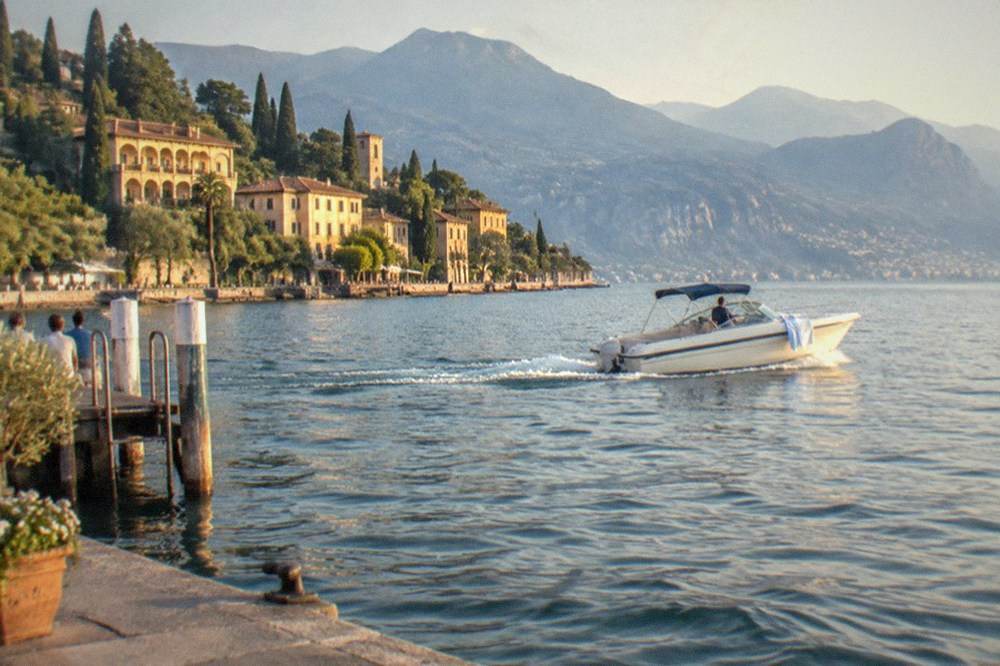
Then there is the bathing season ordinance, which tightens things further in summer. The Veneto safety ordinance for the bathing season reserves the first 100 metres off the Veneto shore, from Malcesine to Peschiera, for swimmers, forbidding navigation and mooring of any craft in that band except rowed or paddled craft, and requiring motor boats to reach the shore only through launch corridors or, where no bathers are present, perpendicular approaches at up to 3 knots. In plain terms: in July and August, the strip of water you most want to linger in, the warm shallow water off the beach, is the one place your rental boat may not go. Other pages covering the same trip are gathered on Lake Garda Boat Tours.
The northern limit is absolute. Provincial law 9 of 2001, article 14, comma 3, prohibits motor navigation in the Trentino waters of the lake, the Riva del Garda and Torbole area, reserving it for sailing, with exceptions only for authorised professional, rescue and limited resident fishing units. One Sirmione rental operator states the practical consequence on its own site: its no-licence boats may not navigate into the Trentino area and cannot go further north than the latitude of Limone sul Garda and Malcesine. Note the geography, because it is misstated constantly: Malcesine is in Veneto and Limone sul Garda is in Lombardy. Neither is in Trentino. The ban covers the water north of them, not the towns themselves.
| Rule | Limit | Where it applies |
|---|---|---|
| Shore protection band | No motor navigation within 300 m of shore; perpendicular crossing only, max 3 knots | Veneto shore of Lake Garda |
| Reduced band in named gulfs | 150 m instead of 300 m | Gulf of Salò, Barbarano to Rocca di Manerba, around Isola del Garda, Sirmione peninsula tip |
| Bathing season reserve | No navigation or mooring within 100 m of shore | Veneto shore, Malcesine to Peschiera, in the bathing season |
| Day speed limit | 20 knots | Lake Garda, daylight hours |
| Night speed limit | 5 knots | Lake Garda, hours of darkness |
| Port speed limit | 3 knots | All ports and harbours |
| Motor ban | No motor boats at all | Trentino water, Riva del Garda and Torbole area |
A renter in the south, say Peschiera or Sirmione, will feel the shore band and the speed limits but never the Trentino ban, because a one or two hour hire never reaches that far north. A renter in Malcesine or Limone should plan a route that turns back before the provincial line. Our guide to hiring a boat on Lake Garda maps which towns have fleets and which rules bind each shore.
What Safety Gear Has To Be On Board?
The mandatory baseline for inland navigation is one lifejacket per person on board, plus a ring buoy with 30 metres of line and a smoke signal. The safety annex specifies lifejackets of at least category 100 for every person the boat can carry, crew included. The rental operator supplies this kit with the boat; your job is to check it is there and to actually wear the jackets rather than stow them under the bench.
The category 100 specification comes from the safety-equipment annex published in the official gazette, and it is the figure to hold on to: the rule is written in categories, not in a Newton figure or a distance-from-shore threshold, and any summary that quotes those instead is paraphrasing something the cited text does not say. The gazette page carries the annex, and the Gazzetta Ufficiale record is the primary source.
Beyond the legal minimum, a competent Garda operator hands over more: an anchor with line, a bailer, fenders, a fire extinguisher, a phone holder and a marked map of the no-go areas. Ask for the briefing to include where the lifejackets are stowed and how the kill-cord works if the boat has one. If the operator's briefing skips both, that tells you something about the rest of their operation.
Children are a special case worth planning for rather than litigating. The law specifies jackets for everyone aboard, and operators welcome children on the licence-free class, but the jackets must fit. If you are renting with a toddler or a small child, say so when you book so child-size jackets are on the boat at handover, not discovered missing after you have left the jetty. Our piece on renting your own boat on Lake Garda covers the family logistics in more detail.
One last gear note that is not law but is good practice: take a phone in a waterproof pouch, agree a return time with the operator, and note the wind forecast. The lake's afternoon wind, the Ora from the south, builds through the day and can put a short chop on the water that makes the return leg harder than the outbound one. Nothing in the safety kit substitutes for turning back early.
What Happens If You Break The Rules?
Most breaches are administrative: the shore-band and speed rules carry fines under the regional and provincial texts, and the ZTL-style enforcement on the water is done by the coast guard and local patrols. Crossing into Trentino water with a motor boat, ignoring the bathing reserve or speeding in port all fall under texts that name sanctions. The cheaper mistake is financial rather than legal: most breaches also void the deposit terms of your rental contract.
The fines are real but rarely the headline. What hits renters harder, and more often, is the contract. Every rental agreement makes you liable for the hull, the engine and the recovery costs if you run aground, and the deposit exists precisely for that. A grounding on a rocky shelf at 15 knots, an anchor dropped on a swimmer's head, or a propeller chewed on the shallows off a beach all land on your card. The legal ceiling of 40.8 CV keeps you out of the licence system, but nothing in article 39 protects you from your own throttle.
The rules most often broken, in no particular order, are the shore band, the bathing reserve and the northern line. The shore band gets broken because it is invisible from the water: 300 metres is further than it looks, and the temptation to cut inside it for a photo is constant. The bathing reserve gets broken because it is exactly where the pretty water is. The Trentino line gets broken by renters in Malcesine who follow the coast north without realising the law changes at the provincial boundary. All three are avoidable with a map and thirty seconds of attention at the briefing.
Weather cancellations sit in a different drawer. If the operator cancels for conditions beyond their control, the standard terms across the major booking platforms refund the booking price in full; if you cancel, the norm is a full refund up to 24 hours before the start, with the specific listing's terms overriding that default. The rule this site gives every reader is the same: check the cancellation terms on the live listing before you pay, and prefer listings that show free cancellation. The Fiat 500 boat hire in Sirmione, for example, carries free cancellation on its listing.
There is one more category of consequence worth naming, because it is the one with no fine attached: the safety one. The category 100 lifejacket rule exists because the lake is deep, cold below the first metres, and busy in August. A swimmer in the middle of the channel, a sudden Ora gust on a boat with an inexperienced hand on the wheel, these are the incidents the rules are written to prevent. The law's sanctions are an afterthought; its equipment list is the part that keeps people alive.
Which Licence-Free Boat Should You Book?
Match the boat to your route, not to the brochure. For a first licence-free drive on the southern lake, the Sirmione Fiat 500 Boat hire is the most reviewed option of its kind, 4.9 from 187 reviews, from $146.32 for the boat, up to four people, for an hour. For a quieter western-shore circuit, the San Felice electric boat from $164.11 for up to six people suits a two to four hour slot.
The Fiat 500 boat deserves its popularity on the numbers alone: 187 reviews at 4.9 is a substantial pool for a single-boat rental product, and the car-shaped hull is a genuine conversation piece on the Sirmione waterfront. It is a 40 CV licence-free craft, so everything in this article applies to it, and it departs from Sirmione, which puts the peninsula loop, the thermal spring and the Grotte di Catullo cliffs within a comfortable hour's circuit. At $146.32 for the boat, split between four people it lands in the same range as a shared tour ticket, with the whole lake to yourselves.
The San Felice e-boat is the contrast case worth knowing about. It is electric, so it is quieter, it is slower, and it is immune to the fuel-billing question entirely. Its review pool is small, 5 from 4 reviews, so treat it as a promising niche option rather than a proven crowd-pleaser. What it does offer is a calm two to four hour window on the San Felice del Benaco shore, close to Isola del Garda and the western bays, for $164.11 for the boat with up to six people aboard.
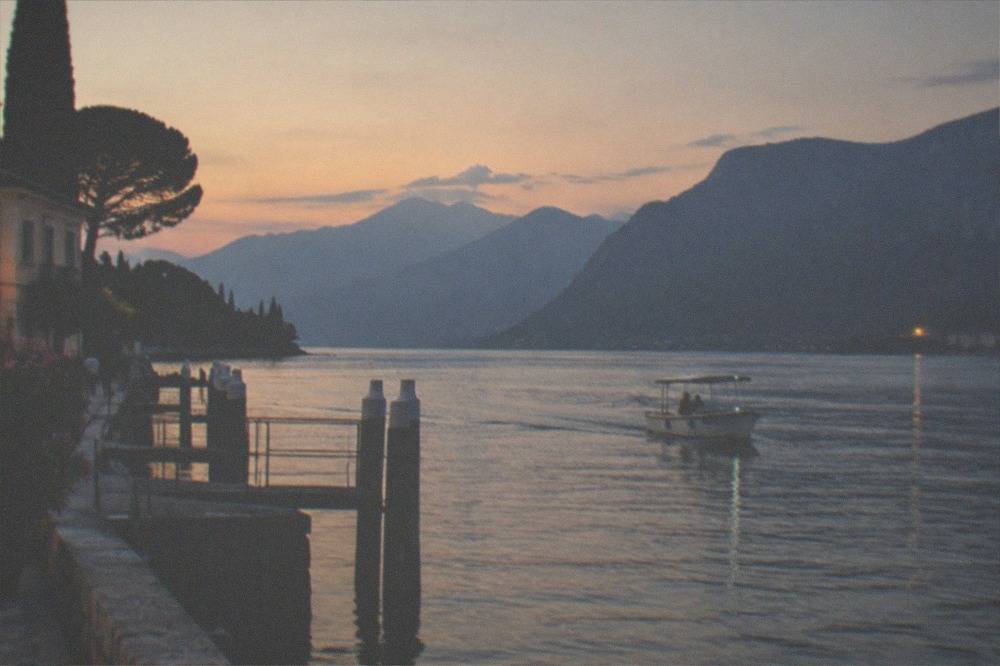
The third format is not self-drive at all, and it exists for the reader who has decided the licence question is interesting but the driving is not. A private skippered tour, like the 25-minute Sirmione peninsula loop at from $152.20 for the boat for up to five people, rated 4.7 from 81 reviews, gives you the same water, the same sights and a professional at the helm, with none of the rules in this article to remember. For many visitors that comparison, drive yourself versus let someone else drive, is the real decision, and our article on whether renting a boat is worth it works it through with real costs.
| Licence-free self-drive | Skippered private tour | |
|---|---|---|
| Licence needed | No, under 40.8 CV, age 18+ | No, the skipper holds it |
| Typical Lake Garda price | From $146.32 for the boat, up to 4 people, 1 hour | From $152.20 for the boat, up to 5 people, 25 minutes |
| Where you can go | Anywhere south of the Trentino line, inside the shore-band rules | Wherever the skipper is licensed to take you |
| Paperwork at handover | ID, deposit, signed contract, safety briefing | ID and booking confirmation |
| Who drives | You | A professional |
| Best for | The experience of driving, your own route, your own pace | Sightseeing, groups with mixed confidence, zero responsibility |
Whichever format you choose, book the slot that matches the wind, not just the weather. Mornings on Garda are typically calm under the Pelèr's dying hours; afternoons build with the Ora. A first-time driver will enjoy a 9 a.m. slot on flat water far more than a 3 p.m. slot in a freshening breeze, and the same boat feels like two different products in those two windows. If you want the full format comparison across the lake, our guide to private boat tours on Lake Garda sets out the skippered side in detail.
That is the complete picture: a national law that says yes under 40.8 CV and eighteen years, a lake that adds a shore band, a speed limit and a northern line, and a market that has organised itself neatly inside all of it. Lake Garda Boat Tours keeps the full rental and skippered roster, and the three formats below are the ones this article's readers book most.
Common Questions About Renting A Boat Without A Licence In Italy
Do You Need A Licence To Rent A Boat In Italy?
No. Article 39 of the Codice della nautica da diporto allows anyone aged eighteen or over to drive a boat without a licence when the engine is below 40.8 CV, or 30 kW, which covers every standard rental boat on Lake Garda.
How Fast Can A Licence-Free Boat Go?
The engine class itself will plane a small open boat, but the lake's rules cap you at 20 knots in daylight, 5 knots at night and 3 knots in ports, so the legal limit bites before the engine's does.
Can You Take A Rental Boat Anywhere On Lake Garda?
No. Motor boats are banned outright in the Trentino water around Riva del Garda and Torbole, and the Veneto shore has a 300 metre protection band, reduced to 150 metres in named gulfs, plus a 100 metre bathing reserve in summer.
Do Children Need Their Own Lifejacket On A Rental Boat?
Yes. The safety annex requires lifejackets of at least category 100 for every person the boat can carry, crew included, and children need correctly sized jackets, so tell the operator when you book.
Can You Rent A Boat In Italy At 16?
No. The national minimum for driving a licence-free imbarcazione is eighteen, and some rental operators require twenty-one from renters who hold no nautical licence.
What ID Do You Need To Rent A Boat Without A Licence?
A valid identity document at handover, plus a deposit, typically EUR 150 to EUR 300 held against the hull and engine, and a signed rental contract.